

Class: Primary Six
Term: First Term
Subject: Pre-vocational Studies
Curriculum Theme: agricultural Science
Previous Lesson: Meaning Of Farm Produce Preservation
Topic: Reasons For Preservation of Farm Produce
Content/Learning Area: Retain Freshness, Reduce Loss
Time Allocation: Not Specified
Performance Objectives
by the end of the lesson, pupils should be able to:
- Cognitive Domain:
– Explain the reasons for preserving farm produce.
- Affective Domain:
– Appreciate the importance of reducing food wastage thru proper preservation.
- Psychomotor Domain:
– Demonstrate how farm produce can be properly stored to retain freshness.
- Social Domain:
– Discuss the impact of food preservation on reducing hunger in the community.
Reference Materials
- 9 – Years Basic Education Curriculum
- Abuja Educational Resource Center Scheme of work
- NAPPS National Unified Scheme of Work
- Online Facts from FOOD PRESERVING – 10 REASONS TO PRESERVE YOUR OWN FOOD
- relevant Textbooks
Instructional Materials
To deliver this lesson, the teacher will employ the help of the following materials:
- Samples of fresh and preserved farm produce
- Posters showing different preservation techniques
- Storage containers (e.g., baskets, bags)
- Whiteboard and markers
Rationale for the Lesson
Understanding the reasons for preserving farm produce is crucial. It teaches pupils about reducing food waste,maintaining freshness,and the economic benefits of proper storage. This knowledge is vital for reducing hunger and improving food security.
Prerequisite/Previous Knowledge
Pupils have prior knowledge of different types of farm produce.
Lesson Content
Reasons For Preservation Of Farm Produce
Preserving farm produce is vital for several reasons. This ensures food lasts longer and stays fresh. Key reasons include:
- ##### Retaining Freshness
Farm produce loses freshness quickly without proper storage. Preservation keeps it fresh and nutritious longer. Such as, storing tomatoes in a cool, dry place keeps them fresh for days.
- ##### Reducing Loss
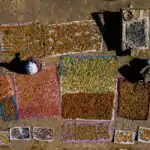
Unpreserved produce spoils easily, leading to vital waste. Preservation methods like drying grains prevent spoilage and reduce loss.
Reasons for Preserving Farm Produce
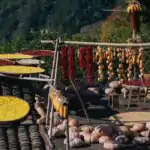
Produce is preserved to reduce post-harvest loss, maintain quality, improve availability outside the harvest season, support transport and marketing, and provide time for processing or consumption.
A method should also be economical and safe. Keeping food longer has no benefit if contamination, excessive cost or poor packaging makes it unsafe or unsaleable.
Teaching Methods
To deliver this lesson, the teacher will adopt the following methods: Discussion, Lecture, Presentation, and questioning.
Instructional procedures
To deliver this lesson, the teacher will adopt the following steps:
Step 1: Introduction (Set Induction)
Time: 5 mins
Teaching Skill: Set Induction
teacher’s Activity: Displays fresh and preserved produce. Asks,“Why do you think we preserve food?”
Pupils’ Activity: Observe and share ideas on why food is preserved.
Step 2: Clarification of Key Concepts (retain Freshness)
Time: 7 mins
Teaching Skill: Lecture
Teacher’s Activity: Explains how preserving farm produce maintains freshness.
Pupils’ Activity: Listen and take notes.
Step 3: clarification of Key Concepts (Reduce Loss)
Time: 7 mins
Teaching Skill: Lecture
Teacher’s Activity: Explains how preservation reduces spoilage and wastage.
Pupils’ Activity: Listen and ask clarifying questions.
Step 4: Demonstration/Guided Practice
Time: 8 mins
Teaching Skill: Demonstration
Teacher’s Activity: Demonstrates simple preservation techniques (e.g.,storing vegetables in baskets).
Pupils’ Activity: Participate in the demonstration.
Step 5: Note-Taking
Time: 5 mins
Teaching Skill: Writng
Teacher’s Activity: Guides pupils in copying key points from the board.
Pupils’ Activity: Copy notes into exercise books.
Step 6: Evaluation/Review
Time: 5 mins
Teaching Skill: Questioning
Teacher’s Activity: Asks questions to check understanding (e.g., “Why should we preserve farm produce?”)
Pupils’ Activity: Answer the questions.
step 7: Conclusion
Time: 3 mins
Teaching Skill: Recap
Teacher’s Activity: Summarizes the lesson and reinforces key points.Pupils’ Activity: Listen and reflect.
Lesson Keywords
- Preservation – The process of keeping food safe and fresh for a longer time.
- Freshness – The state of being recently produced, not stale or spoiled.
- Spoilage – The process in which food decays and becomes unfit for consumption.
- Wastage – The act of using or consuming something carelessly or allowing it to be lost or destroyed.
- Nutrition – the process of providing or obtaining the food necessary for health and growth.
Lesson evaluation
To evaluate the learning, the teacher asks pupils to:
- Define farm produce preservation.
- Explain two reasons why farm produce is preserved.
- Discuss how preserving farm produce helps retain its freshness.
- Give one example of how food preservation can reduce loss.
- Why is it notable to prevent food wastage in the community?
Assignment/Homework
- Research and list three additional methods of preserving farm produce.
- Interview a family member about their experiences with food preservation.
- Write a short paragraph on the importance of reducing food waste in Nigeria.
Differentiation
- For slower learners: Provide one-on-one assistance and simplify explanations.
- for advanced learners: Research additional preservation methods and present their findings to the class.
- For visual/auditory/kinesthetic learners: Use visual aids, demonstrations, and hands-on activities to reinforce learning.
note for Teachers
Ensure to bring a variety of fresh and preserved farm produce to class to make the lesson more engaging. Encourage pupils to share their personal experiences with food preservation at home.

Community Join the conversation Open discussion +