

Class: Primary 6
Term: 3rd Term
Subject: National Value Education
curriculum Theme: Social Studies
Previous Lesson: Causes Of Group Conflicts
Topic: Consequences Of Conflicts
Content/Learning Area: Consequences Of Conflicts
Time Allocation: 40 minutes
Performance Objectives
By the end of the lesson, pupils should be able to:
- Cognitive Domain: Identify at least four consequences of conflicts in society
- Affective Domain: Show concern about the effects of conflict in their communities
- Psychomotor Domain: Role-play situations that show the results of conflict
- Social Domain: Work cooperatively to discuss and suggest ways to avoid conflict
Reference Materials
The following resources were used in planning this lesson:
- 9 Years Basic Education Curriculum
- Abuja educational Resource Center scheme of work
- NAPPS National Unified Scheme of work
- Online Information from: wikipedia – Conflict
- Relevant Textbooks
instructional materials
To deliver this lesson, the teacher will employ the help of the following materials:
Chart showing effects of conflict, video clips of conflict impact in communities, flashcards with conflict scenarios, real-life newsprint examples, marker board and marker.
Rationale for the Lesson
Understanding the consequences of conflict helps pupils to become peace-loving and responsible citizens in their schools and communities.
Prerequisite/Previous Knowledge
Pupils have been taught the meaning and causes of conflict and can identify types of conflict around them.
Lesson Content
Consequences Of Conflicts
Conflict means a serious disagreement or fight. When peopel or groups fight, it can cause problems in society. These problems are called consequences of conflict.
The following are consequences of conflicts:
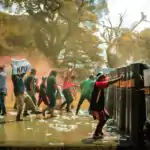
- Loss of Lives and Properties: When there is conflict, people can get hurt or even die. Properties like houses and cars may also be destroyed. For example, during communal clashes, many lives are lost, and homes are burned down.
- Displacement and Suffering: Conflict makes people run away from their homes.They become refugees or internally displaced persons. They often lack food, shelter, and medical care, leading to immense suffering.
- Economic Breakdown: Conflict stops people from working and businesses from running. Markets are closed, farms are abandoned, and trade routes are disrupted, leading to poverty and hunger.
- Emotional and Social Impact: Conflict causes fear and makes people sad. It also destroys relationships among people.trust is eroded,and communities are divided along ethnic or religious lines.
- Environmental Degradation: Conflicts can lead to the destruction of natural resources and ecosystems. For example,armed groups may destroy forests,pollute water sources,and disrupt wildlife habitats.
- Increased Crime Rates: In conflict-affected areas, there is often a breakdown of law and order, leading to increased crime rates. People may resort to looting, theft, and other criminal activities to survive.
- Spread of Diseases: Conflicts can disrupt healthcare systems and lead to the spread of infectious diseases. Overcrowded refugee camps and lack of sanitation can create breeding grounds for diseases like cholera, malaria, and typhoid.
Teaching Methods
To deliver this lesson, the teacher will adopt the following methods: Discussion, lecture, storytelling, description, visual aids, group work.
Instructional Procedures
To deliver this lesson, the teacher will adopt the following steps:
Step 1: Introduction (Set Induction)
Time: 5 mins
Teaching Skill: Set Induction
Teacher’s Activity: Tells a short story of a village fight and asks pupils what happened after the fight.
Pupils’ Activity: Pupils listen and share what they think happened.
Step 2: Loss of Lives and Properties
Time: 7 mins
Teaching Skill: Explanation
Teacher’s Activity: Explains how conflicts destroy lives and properties using pictures and videos.
Pupils’ activity: Pupils watch,listen and mention examples.
Step 3: Displacement and Suffering
Time: 5 mins
Teaching skill: Storytelling
Teacher’s Activity: Describes how people leave homes during conflict using a short story.
Pupils’ Activity: Pupils listen and describe how people feel.
Step 4: Economic Breakdown
Time: 5 mins
Teaching Skill: Discussion
teacher’s Activity: Leads discussion on how fighting affects work and money.
Pupils’ Activity: Pupils discuss how conflict stops business and increases suffering.
Step 5: Emotional and Social Impact
Time: 5 mins
Teaching Skill: Group Work
Teacher’s Activity: Divides pupils into groups to act short drama on fear or broken friendships caused by conflict.
Pupils’ activity: Pupils act short drama to show emotional impact.
Step 6: Note-Taking
Time: 3 mins
Teaching Skill: Writing
Teacher’s Activity: Guides pupils to write down the summary note from the board.
pupils’ Activity: Pupils copy notes neatly into their books.
step 7: Evaluation/Review
Time: 5 mins
Teaching Skill: Questioning
teacher’s Activity: Asks questions based on the lesson and gives group task.
Pupils’ Activity: Pupils answer questions and perform tasks.
Objective-aligned checks:
- Identify at least four consequences of conflicts in society.
- Show concern about the effects of conflict in their communities.
- Role-play situations that show the results of conflict.
Step 8: Conclusion
Time: 5 mins
Teaching Skill: cognitive, Instructional, Social Closure
Teacher’s Activity: Reviews lesson, gives moral talk on peace and advises pupils to avoid fighting.
Pupils’ Activity: Pupils listen, ask questions and reflect.
Lesson Keywords
- Conflict – A serious fight or disagreement
- Displacement – When people run away from home because of danger
- Economic Breakdown – When money and business activities stop
- Emotional Impact – How something affects feelings
- Refugees – People who run from their country because of war
Lesson Evaluation
To evaluate the learning, the teacher asks pupils to:
- Mention two things that happen when there is conflict
- Explain what displacement means
- Say two ways conflict affects business
- Role-play a scene of conflict and its effect
- List four consequences of conflict
Assignment/Homework
- Research and write about a recent conflict in Nigeria and its consequences.
- Interview a community leader about the impact of conflict on their community.
- write a short essay on how conflict can be prevented in schools and communities.
Differentiation
- For slower learners: Provide simplified notes and visual aids, and pair them with stronger learners during group activities.
- For advanced learners: Assign them to research and present on specific conflicts and their long-term consequences.
- For visual/auditory/kinesthetic learners: Use videos, discussions, and role-playing to cater to different learning styles.
Note for Teachers
Encourage pupils to relate the lesson to news or real-life situations they know and always promote peace and cooperation in the classroom.



Community Join the conversation Open discussion +