

Class: Junior Secondary School 2 (JSS2, JSS 2)
Term: 1st Term
Week: 7
Age: 13 years
Duration: 45 minutes
Subject: Cultural And Creative Arts
Curriculum Theme: Cultural And Creative Arts
Previous Lesson: Production of Woven Mat Using Paper and Plate Using Clay
Topic: Colour
Subject Matter: Definition of colours, Sources of local colours, Classification of colours: Primary, Secondary, Tertiary colours, Harmony
Specific Objectives
By the end of the lesson, pupils should be able to:
- Cognitive Domain:
(a) Define colour and identify its basic classifications.
(b) Explain the sources of local colours.
(c) Describe colour harmony and its importance in art. - Affective Domain:
(a) Appreciate the beauty of colours in artworks and everyday life.
(b) Show interest in identifying and using colours harmoniously. - Psychomotor Domain:
(a) Demonstrate colour mixing to produce secondary and tertiary colours.
(b) Arrange colours in a harmonious pattern on a colour wheel. - Social Domain:
(a) Work cooperatively in groups to identify colour classifications and sources.
Reference Materials
The following resources was used in planning this lesson:
- 9 Years Basic Education Curriculum
- Lagos State Unified Scheme of Work for Junior Secondary Schools
- Britannica – Color | Definition, Perception, Types, & Facts
- Relevant Textbooks
Instructional Materials
The teacher will teach this lesson with the aid of:
- Colour charts and colour wheel
- Samples of local dyes and pigments (e.g., indigo, charcoal, red soil)
- Art brushes and mixing palette
- Paints, crayons, and coloured pencils
- Flashcards showing primary, secondary, and tertiary colours
Rationale for the Lesson
Understanding colours and their harmony helps students appreciate artistic beauty, communicate creatively, and develop practical skills for visual expression.
Prerequisite/Previous Knowledge
Pupils are familiar with different colours from their environment and have used crayons, paints, or markers in their previous art activities.
Lesson Content/Board Summary
Colour
Definition of Colour
Colour is the visual effect produced when light reflects on an object and reaches the eyes. It makes objects beautiful, attractive, and easy to identify.
Sources of Local Colours
Local colours are obtained from natural materials found in the environment. They were used by traditional artists before modern paints were made.
The following are sources of local colours:
- Plants such as leaves, roots, and barks (e.g., indigo for blue).
- Soils and clay (e.g., red or brown tones).
- Charcoal and soot (for black).
- Minerals and stones (for white and other tones).
- Insects like cochineal (for red).
Classification of Colours
Colours are classified into three main groups according to how they are formed.
1. Primary Colours
These are the basic colours from which all other colours are made.
They are:
- Red
- Blue
- Yellow
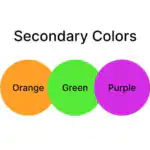
2. Secondary Colours
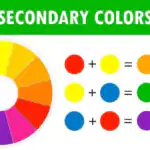
These are colours made by mixing two primary colours in equal parts.
Examples are:
- Red + Blue = Purple
- Red + Yellow = Orange
- Blue + Yellow = Green
3. Tertiary Colours
These are made by mixing a primary colour with a nearby secondary colour.
Examples include:
- Red + Orange = Red-Orange
- Blue + Green = Blue-Green
- Yellow + Green = Yellow-Green
Colour Harmony
Colour harmony means the pleasing arrangement or combination of colours in an artwork. It makes the artwork beautiful and balanced.
The following are ways to achieve colour harmony:
- Using colours that match or blend well together.
- Avoiding clashing or disturbing colour combinations.
- Balancing warm and cool colours.
- Using colours suitable for the mood or message of the artwork.
Teaching Methods/Instructional Techniques:
Lecture, Discussion, Demonstration, Question and Answer, Group Work, Illustration, Visual Aids
Instructional Procedures
To deliver this lesson, the teacher will adopt the following steps:
Step 1: Introduction
Time: 5 minutes
Teaching Skill: Set Induction
Teacher’s Activity: Teacher shows colourful artworks and asks pupils to describe what makes them attractive.
Pupils’ Activity: Pupils respond by mentioning colours they see in the artworks.
Learning Point: Pupils’ interest in the lesson is stimulated through colourful examples.
Step 2: Definition and Sources of Colours
Time: 10 minutes
Teaching Skill: Explanation
Teacher’s Activity: The teacher defines colour and explains the sources of local colours using real examples of natural dyes.
Pupils’ Activity: Pupils observe and identify the local materials shown.
Learning Point: Pupils understand what colour is and where local colours come from.
Step 3: Classification of Colours
Time: 10 minutes
Teaching Skill: Demonstration
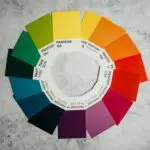
Teacher’s Activity: Teacher presents a colour wheel and demonstrates how to mix primary colours to obtain secondary and tertiary colours.
Pupils’ Activity: Pupils mix colours on palettes and identify their outcomes.
Learning Point: Pupils learn how colours are grouped and mixed.
Step 4: Colour Harmony
Time: 10 minutes
Teaching Skill: Discussion
Teacher’s Activity: Teacher explains colour harmony, shows examples of harmonious artworks, and guides pupils to identify matching colours.
Pupils’ Activity: Pupils discuss examples of colour harmony in clothing, art, or decoration.
Learning Point: Pupils understand how to combine colours to achieve harmony.
Step 5: Note-Taking
Time: 5 minutes
Teaching Skill: Explanation
Teacher’s Activity: Teacher dictates or writes the board summary for pupils to copy.
Pupils’ Activity: Pupils copy the note into their exercise books.
Learning Point: Pupils have a written record of the key lesson points.
Step 6: Evaluation/Review
Time: 3 minutes
Teaching Skill: Questioning
Teacher’s Activity: The teacher evaluates the learning by asking the following questions:
- Mention two sources of local colours.
- List the three primary colours.
- What are secondary colours and give two examples.
- Define colour harmony.
- Mention two ways of achieving colour harmony.
Pupils’ Activity: Pupils answer questions orally.
Learning Point: Pupils demonstrate understanding of the lesson objectives.
Step 7: Conclusion
Time: 2 minutes
Teaching Skill: Reinforcement
Teacher’s Activity: The teacher summarizes the lesson and encourages pupils to use harmonious colours in their drawings.
Pupils’ Activity: Pupils listen attentively and ask questions where necessary.
Learning Point: Pupils appreciate the use and balance of colours in art.
Lesson Keywords
- Colour – the visual effect produced by light reflection.
- Primary Colours – the three main colours used to create others.
- Secondary Colours – colours formed by mixing two primary colours.
- Tertiary Colours – colours formed by mixing a primary and a secondary colour.
- Harmony – the pleasing combination of colours in an artwork.
Differentiation
The teacher supports slower learners with step-by-step demonstrations and provides additional examples, while faster learners mix their own colours and assist peers.
Note for teachers using this lesson plan
Encourage active participation by allowing pupils to handle colours and experiment. Emphasize safety when using dyes or paints and guide them on proper cleanup after class.
Community Join the conversation Open discussion +