

Class: Primary 4
Term: 3rd Term
Subject: History
Curriculum Theme:
Previous Lesson: Some Nigerian People, Isoko, Itsekiri and Urhobo People
Topic: Some Nigerian People
Content/learning Area: Some people in Nigeria e.g. The awori, The Oro
time Allocation: not specified
Performance Objectives
By the end of the lesson, pupils should be able to:
- Cognitive Domain: Identify and name at least two different ethnic groups in Nigeria.
- Affective Domain: Show gratitude for the diversity of cultures within Nigeria.
- Psychomotor Domain: Locate the general regions in Nigeria where the Awori and Oro people are found on a map.
- Social Domain: Respectfully share details about their own ethnic backgrounds and listen to others.
Reference Materials
- Nigeria social Studies Book for Primary 4.
- 9 Years Basic Education Curriculum
- Abuja Educational Resource Center Scheme of work
- NAPPS National Unified Scheme of Work
Instructional Materials
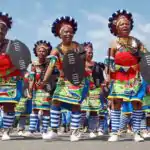
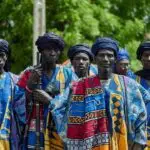
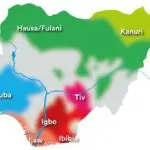
To deliver this lesson, the teacher will employ the help of the following materials: Map of Nigeria, pictures or illustrations of people from different ethnic groups in Nigeria, textbooks, and writing materials.
Rationale for the Lesson
Understanding Nigeria’s diverse ethnic groups fosters national unity and cultural appreciation among pupils.
Prerequisite/Previous Knowledge
Pupils are familiar with the concept of Nigeria as a contry with many states.
Lesson Content
Some Nigerian People: The Awori People and The Oro/Oron People
Nigeria is made up of many different ethnic groups and communities, each with its own language, customs, and traditions. These people help shape the culture and identity of the country. Among them are the Awori and Oro people.
1. The Awori People
Origin and Historical Background
The Awori people are a sub-group of the Yoruba ethnic group, believed to have originated from Ile-Ife, the cradle of Yoruba civilization. According to oral history, the progenitor of the Awori people, Olofin Ogunfunminire, was a prince of Oduduwa who left Ile-Ife in search of a new settlement. Around the 12th century AD, Olofin and his followers journeyed through various locations using a sacred mud pot (a ritual item) to determine where they would finally settle.
Migration Path and Settlement
The migration path included stops at places like Isheri, Ebute Metta, and eventually to Iddo and Lagos Island. The pot reportedly stopped at Isheri, which became one of the earliest Awori settlements. Over time, the Awori established numerous communities across what is today Lagos and parts of Ogun State.
Geographical Location
Today, the Awori people are found in areas such as:
-
Lagos State (e.g., Ikeja, Agege, Isolo, Ojo, Badagry, and Lagos Island)
-
Ogun State (e.g., Ado-Odo, Ota, and Igbesa)
Culture and Beliefs
The Awori practice traditional Yoruba religion, with notable deities like Ogun, Obatala, and Esu, although many are now Muslims or Christians. They celebrate festivals like the Oro Festival, Egungun Festival, and the Osun Festival.
Historical Significance
-
The Awori were among the first inhabitants of Lagos and played a central role in its early administration.
-
In the 19th century, during the expansion of British colonial rule, Lagos (then largely Awori) was annexed by the British in 1861 under the Lagos Treaty of Cession.
Controversies and Historical Debates
The Awori identity and indigeneity in Lagos State have been subjects of political and historical debate, especially concerning land ownership and traditional leadership rights, as Lagos became more cosmopolitan.
2. The Oro People
Origin and Historical Background
The Oro people are an ethnic group located in Akwa Ibom State, in the Niger Delta region of Southern Nigeria. They are closely related to the Efik and Ibibio ethnic groups, and their language, Oron (or Oro), is part of the Lower Cross River language family.
Oral tradition suggests the Oro people migrated from Usakedet (in present-day Cameroon or southeastern Nigeria) around 300–500 years ago and settled in the coastal and riverine areas of what is now Akwa Ibom.
Geographical Location
The Oro people primarily inhabit the Oron Nation in Akwa Ibom State. Major towns include:
-
Oron
-
Okobo
-
Udung Uko
-
Mbo
-
Urue-Offong/Oruko
Culture and Occupation
The Oro people are traditionally fishermen, traders, and boat builders, owing to their proximity to the Atlantic Ocean and numerous rivers. Their culture emphasizes respect for elders, traditional worship, and community leadership through village heads and council of elders.
They celebrate festivals such as:
-
Ekpe Festival
-
Ekong Festival
-
Ndidiong Ufok
Historical Significance
-
The Oron Museum in Akwa Ibom houses many important cultural artifacts of the Oro people, including traditional carvings and masks.
-
The Oro people played a role during the Biafran War (1967–1970), as part of the Southeastern resistance.
Controversies and Challenges
-
The Oro people have experienced political marginalization, especially in demands for more local government autonomy and federal presence.
-
The dredging of river ports and oil exploration in the region has led to environmental degradation and economic hardship for fishing communities.
The Awori shaped early Lagos history and still influence its culture. The Oro maintain strong coastal traditions and are key to Akwa Ibom’s heritage. Both groups contribute richly to Nigeria’s diverse identity.
Teaching Methods
To deliver this lesson, the teacher will adopt the following methods: Discussion, description, Visual Aids, storytelling.
Instructional Procedures
To deliver this lesson, the teacher will adopt the following steps:
Step 1: Introduction (Set Induction)
Time: 5 minutes
teaching Skill: Set Induction
Teacher’s Activity: The teacher asks pupils to name some ethnic groups they know in Nigeria.
Pupils’ Activity: Pupils mention ethnic groups they know.
Step 2: Overview of Nigeria’s People
Time: 5 minutes
Teaching Skill: Explanation
Teacher’s Activity: The teacher explains that Nigeria is home to over 250 ethnic groups, each with unique histories, cultures, and traditions. The focus of the lesson is on two of these groups: the Awori and the Oro.
Pupils’ Activity: Pupils listen and ask questions about Nigeria’s ethnic diversity.
Step 3: The Awori People
Time: 10 minutes
Teaching Skill: Storytelling
Teacher’s Activity: The teacher shares a brief story about the origin and location of the Awori people, using a map to point out Lagos and Ogun States.
Pupils’ Activity: Pupils listen to the story and observe the map.
Step 4: The Oro People
Time: 10 minutes
Teaching Skill: Explanation
Teacher’s Activity: The teacher explains the location and cultural importance of the Oro people, focusing on their traditional Oro festival.
Pupils’ Activity: Pupils listen and ask questions about the Oro festival.
Step 5: Note-Taking
Time: 5 minutes
Teaching Skill: Writing
Teacher’s Activity: The teacher writes a summary of the lesson on the board.
Pupils’ Activity: Pupils copy the summary into their notebooks.
Step 6: Evaluation/review
Time: 5 minutes
Teaching Skill: Questioning
Teacher’s Activity: The teacher asks questions to review the lesson.pupils’ Activity: Pupils answer the questions.
Step 7: Conclusion
Time: 5 minutes
Teaching Skill: Summarizing
teacher’s Activity: The teacher summarizes the main points of the lesson.Pupils’ Activity: Pupils listen to the summary.
Lesson Keywords
- Awori – A Yoruba subgroup primarily residing in Lagos and ogun States.
- Oro – A Yoruba subgroup known for their traditional Oro festival.
- Ethnic group – A community or population made up of people who share a common cultural background or descent.
- Culture – The customs, arts, social institutions, and achievements of a particular nation, people, or group.
Lesson Evaluation
To evaluate the learning, the teacher asks pupils to:
- Name two ethnic groups in Nigeria discussed in the lesson.
- where are the Awori people primarily located?
- What is the Oro people known for?
assignment/Homework
- Find out the origin of your own ethnic group and write a short paragraph about it.
- Draw a map of Nigeria and label the states where the Awori and oro people are found.
Differentiation
- For slower learners: Provide simplified notes and focus on identifying the location of the ethnic groups on a map.
- For advanced learners: Encourage them to research othre ethnic groups in Nigeria and present their findings to the class.
- For visual/auditory/kinesthetic learners: use visual aids like pictures and maps, tell stories, and incorporate movement activities like pointing out locations on a large map.
Note for Teachers
Ensure to use visual aids and real-life examples to make the lesson more engaging and relatable for the pupils.Encourage pupils to share their own experiences and knowledge about different ethnic groups in Nigeria.

Community Join the conversation Open discussion +