

Note for teachers using this lesson plan
This lesson introduces pupils to the major ethnic groups associated with Nigeria’s early regions. Teachers should prepare a clear map of Nigeria showing the Northern, Western, Eastern, and Mid-Western regions. Emphasise the diversity within each region and encourage pupils to appreciate Nigeria’s rich cultural heritage. By the end of the lesson, pupils should be able to identify key ethnic groups in each of these historical regions.
Class: Primary 4
Term: Second Term
Week: 5
Age: 9 years
Duration: 45 minutes
Subject: Nigerian History
Curriculum Theme: Political Developments in Nigeria
Focal competence: Recognising and appreciating the changes in Nigeria’s political evolution
Key competencies/values: Collaboration; Information Literacy; ICT and Digital Competencies
Skills:
- Identification of the four regions
- Analyses of the reasons for creation of four regions
Previous Lesson: Early Regions in Nigeria, Names and Locations
Topic: The Early Regions In Nigeria: Peoples Of The Regions
Subject Matter: Major ethnic groups associated with the early regions
Specific Objectives
By the end of the lesson, pupils/students should be able to:
Cognitive Domain
- Identify the four early regions of Nigeria.
- Mention major ethnic groups associated with each early region.
Affective Domain
- Appreciate the cultural diversity of Nigeria’s early regions.
- Show respect for people from different ethnic backgrounds.
Psychomotor Domain
- Point to the early regions on a map of Nigeria.
- Match ethnic groups to their respective early regions.
Social Domain
- Collaborate with peers in identifying ethnic groups.
Reference Materials
The following resources were used in planning this lesson:
- 2025 Revised 9 Years Basic Education Curriculum
- Relevant State Unified Scheme of Work
- Macmillan Primary History for Nigeria, Primary 4
- The HeadTeacher Scheme of work
Instructional Materials
The teacher will teach this lesson with the aid of:
- Map of Nigeria showing the early regions
- Charts displaying the names of early regions and associated ethnic groups
- Pictures or video clips showing people from different ethnic groups
- Textbooks
Rationale for the Lesson
This lesson is important for pupils to understand the historical administrative divisions of Nigeria and the diverse ethnic groups that inhabited them. It helps to lay a foundation for understanding Nigeria’s political evolution and promotes an appreciation for the country’s rich cultural heritage. Learning about these groups fosters a sense of national identity and respect for diversity.
Prerequisite/Previous Knowledge
Pupils should have a basic understanding of Nigeria as a country and know that it is made up of different people.
Lesson Content/Board Summary
The Early Regions In Nigeria: Peoples Of The Regions
The Early Regions of Nigeria
Nigeria was initially divided into three main regions during its early political development, which later became four regions before the creation of states. These regions were:
- Northern Region
- Western Region
- Eastern Region
- Mid-Western Region (created in 1963)
Major Ethnic Groups Associated with the Early Regions
Northern Region
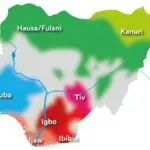
The Northern Region was the largest of the early regions. Major ethnic groups found here include:
- Hausa
- Fulani
- Kanuri
- Nupe
- Tiv
- Gbagyi
Western Region
The Western Region was known for its vibrant culture and rich history. Major ethnic groups in this region included:
- Yoruba
- Edo
- Urhobo
- Isoko
- Itsekiri
Eastern Region
The Eastern Region was densely populated and rich in natural resources. Key ethnic groups in this region were:
- Igbo
- Ijaw
- Efik
- Ibibio
- Ogoja
Mid-Western Region
The Mid-Western Region was created from the Western Region in 1963. Major ethnic groups found in this region included:
- Edo
- Urhobo
- Isoko
- Itsekiri
- Ijaw (parts of)
Teaching Methods/Instructional Techniques
Discussion, Explanation, Question and Answer, Map Work, Group Work, Visual Aids
Instructional Procedures
Step 1: Introduction
Time: 5 minutes
Teaching Skill: Activating prior knowledge
Teacher’s Activity: The teacher greets the pupils and asks them to name some groups of people they know in Nigeria. The teacher then introduces the topic: “The Early Regions in Nigeria: Peoples of the Regions.”
Pupils’ Activity: Pupils respond by naming different groups of people in Nigeria.
Learning Point: Introduction to topic
Step 2: Explanation of Early Regions
Time: 7 minutes
Teaching Skill: Explanation/Demonstration
Teacher’s Activity: The teacher uses a map of Nigeria to show and explain the four early regions: Northern, Western, Eastern, and Mid-Western. The teacher explains that these were the major administrative divisions of Nigeria in the past.
Pupils’ Activity: Pupils observe the map and listen attentively, identifying the regions as pointed out by the teacher.
Learning Point: Identification of regions
Step 3: Northern Region Ethnic Groups
Time: 7 minutes
Teaching Skill: Discussion/Visualisation
Teacher’s Activity: The teacher points to the Northern Region on the map and discusses the major ethnic groups associated with it, such as Hausa, Fulani, Kanuri, Nupe, Tiv, and Gbagyi, using charts or pictures.
Pupils’ Activity: Pupils identify the Northern Region on their maps and listen to the teacher, repeating the names of the ethnic groups.
Learning Point: Northern ethnic groups
Step 4: Western Region Ethnic Groups
Time: 7 minutes
Teaching Skill: Discussion/Visualisation
Teacher’s Activity: The teacher points to the Western Region on the map and discusses its major ethnic groups like Yoruba, Edo, Urhobo, Isoko, and Itsekiri, showing relevant pictures.
Pupils’ Activity: Pupils identify the Western Region and learn the names of its associated ethnic groups.
Learning Point: Western ethnic groups
Step 5: Eastern Region Ethnic Groups
Time: 7 minutes
Teaching Skill: Discussion/Visualisation
Teacher’s Activity: The teacher points to the Eastern Region on the map and explains the major ethnic groups such as Igbo, Ijaw, Efik, Ibibio, and Ogoja, using visual aids.
Pupils’ Activity: Pupils locate the Eastern Region and learn about its ethnic groups.
Learning Point: Eastern ethnic groups
Step 6: Mid-Western Region Ethnic Groups
Time: 5 minutes
Teaching Skill: Discussion/Visualisation
Teacher’s Activity: The teacher points to the Mid-Western Region on the map and highlights its major ethnic groups, including Edo, Urhobo, Isoko, Itsekiri, and parts of Ijaw.
Pupils’ Activity: Pupils locate the Mid-Western Region and learn about its ethnic groups.
Learning Point: Mid-Western ethnic groups
Step 7: Evaluation/Review
Time: 5 minutes
Teaching Skill: Questioning/Assessment
Teacher’s Activity: The teacher evaluates the learning by asking the following questions:
- Name the four early regions of Nigeria.
- Mention two major ethnic groups from the Northern Region.
- Which region is associated with the Igbo people?
- Name one ethnic group from the Mid-Western Region.
Pupils’ Activity: Pupils answer orally and in writing.
Learning Point: Identification of regions and groups
Step 8: Note-Taking
Time: 4 minutes
Teaching Skill: Guided Writing
Teacher’s Activity: The teacher guides pupils to copy the essential Board Summary notes about the early regions and their associated ethnic groups into their notebooks.
Pupils’ Activity: Pupils copy the notes carefully into their notebooks.
Learning Point: Recording lesson information
Step 9: Conclusion
Time: 3 minutes
Teaching Skill: Summarisation
Teacher’s Activity: The teacher briefly summarises the lesson, reminding pupils about the importance of knowing and respecting Nigeria’s diverse ethnic groups from the early regions. The teacher encourages unity despite differences.
Pupils’ Activity: Pupils listen and participate in a brief recap.
Learning Point: Lesson consolidation
Continuous Assessment/Further Study
Type: Homework
Instruction: In your history notebook, draw a simple map of Nigeria and label the four early regions. Then, for each region, write down three major ethnic groups found there.
- Draw a map of Nigeria.
- Label the Northern, Western, Eastern, and Mid-Western Regions.
- List three ethnic groups for each region.
Lesson Keywords
- Regions – Large administrative areas into which Nigeria was divided in the past.
- Ethnic groups – Groups of people who share a common culture, language, or history.
- Northern Region – One of Nigeria’s largest early administrative divisions.
- Western Region – An early administrative division, home to groups like the Yoruba.
- Eastern Region – An early administrative division, home to groups like the Igbo.
- Mid-Western Region – A region created in 1963 from parts of the Western Region.
Differentiation
For weaker learners, the teacher can provide pre-labelled maps or charts with ethnic groups to match. Faster learners can be challenged to research and name more ethnic groups from each region or discuss the main characteristics of one of the regions.
Suggested Lesson Videos
For further understanding, pupils can watch videos on the history of Nigeria’s regions and ethnic groups. Search on YouTube for: Early Regions of Nigeria Primary 4
Teacher Guide for Using This Lesson Plan
Before the lesson, ensure you have a clear, large map of Nigeria showing the early regions. Prepare charts or flashcards with the names of the regions and their associated major ethnic groups. During the lesson, actively engage pupils by asking questions and encouraging them to point out regions on the map. Pay attention to pronunciation of ethnic group names. When pupils are copying notes, ensure they do so neatly and accurately. For pupils who struggle, provide additional support by simplifying explanations or offering visual cues. Encourage all pupils to participate and foster an environment of respect for Nigeria’s diverse heritage.
Community Join the conversation Open discussion +