

Class: Primary Four
Term: First Term
Subject: History
Curriculum Theme:
previous lesson: Federal Capitals
Topic: Federal Capitals
Content/Learning Area: What is a federal Capital?, Current Federal Capital Abuja, Map exploration, Discussion on Importance
Time Allocation: 40 minutes
Performance Objectives
By the end of the lesson, pupils should be able to:
- Cognitive Domain:
1. Name the current federal capital and the year it was created.
2. Locate the old and the new current federal capital territories on the map of Nigeria.
3. Explain the reasons for moving the capital from Lagos to Abuja.
- Affective Domain:
1. Show interest in learning about Nigeria’s history and geography.
- Psychomotor Domain:
1. Identify Abuja on a map of Nigeria.
- Social Domain:
1. Participate actively in class discussions.
Reference Materials
- 9 – Years Basic Education Curriculum
- Abuja Educational Resource Centre Scheme of Work
- NAPPS National Unified Scheme of Work
- relevant Textbooks
Instructional Materials
To deliver this lesson, the teacher will use the following materials:
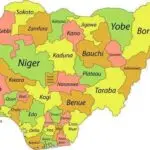
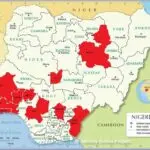
- A map of Nigeria
- Pictures of Abuja
- Whiteboard or chart paper
- Markers or crayons
Rationale for the Lesson
Understanding the history of Nigeria’s federal capital helps pupils appreciate the country’s political growth and geographical features. This knowledge is crucial for their civic understanding.
Prerequisite/Previous Knowledge
The teacher will start by asking pupils what they know about the capital city of Nigeria. A brief discussion will follow, leading into the lesson’s topic.
Lesson Content
Meaning of a Federal Capital
A federal capital is the city where the main institutions of the federal government are based. Nigeria’s federal capital is Abuja in the Federal Capital Territory (FCT).
From Lagos to Abuja
The FCT was created in 1976 so a planned capital could be developed in a more central location. Abuja officially replaced Lagos as Nigeria’s capital on 12 December 1991. Lagos remains a major commercial and cultural centre but is not the federal capital.
Important National Institutions in Abuja
- the National Assembly
- the Presidential Villa
- the Supreme Court
- many federal ministries and agencies
Reasons for the move included central location, room for planned development, reduced pressure on Lagos and the hope that a new capital would support national unity. Pupils should locate both Lagos and Abuja on a current map and distinguish Abuja city from the wider FCT.
Teaching Methods
To deliver this lesson, the teacher will adopt the following methods: Discussion, Question and answer, Map work
Instructional Procedures
To deliver this lesson, the teacher will adopt the following steps:
Step 1: Introduction
Time: 5 minutes
Teaching skill: Set Induction
Teacher’s activity: Asks pupils what they know about the capital city of Nigeria.
Pupils’ Activity: Respond to the teacher’s questions.
Step 2: Clarification of Key Concepts
Time: 10 minutes
Teaching skill: Explaining
Teacher’s Activity: Explains the meaning of a federal capital and its significance.
Pupils’ Activity: Listen attentively and ask clarifying questions.
Step 3: Map Presentation
Time: 10 minutes
Teaching Skill: Demonstrating
Teacher’s Activity: Shows the location of Abuja and Lagos on a map of Nigeria.
Pupils’ Activity: observe and identify the locations on the map.
Step 4: Independent Map Practice
Time: 5 minutes
Teaching Skill: Monitoring
Teacher’s Activity: guides pupils in locating key features of Abuja on the map.
Pupils’ Activity: Locate key features of Abuja on the map independently.
Step 5: note-Taking
Time: 5 minutes
Teaching Skill: Note-taking
Teacher’s Activity: Guides pupils in taking notes on the key points of the lesson.
Pupils’ Activity: Take notes on the key points of the lesson.
Step 6: Evaluation/Review
Time: 5 minutes
Teaching Skill: Questioning
Teacher’s Activity: Asks review questions to assess pupils’ understanding.
Pupils’ Activity: Answer the review questions.
Objective-aligned checks:
- Name the current federal capital and the year it was created.
- Explain the reasons for moving the capital from Lagos to Abuja.
- Show interest in learning about Nigeria’s history and geography.
Step 7: Conclusion
time: 2 minutes
Teaching Skill: Summarizing
Teacher’s Activity: Summarizes the key points of the lesson.
Pupils’ activity: Listen and ask any remaining questions.
Lesson Keywords
- Federal Capital – The main city of a country where the government is located.
- Abuja – The current federal capital of Nigeria, officially made the capital on 12 December 1991.
- Lagos – The former federal capital of Nigeria.
- National Assembly – The legislative branch of the Nigerian government.
- Presidential Villa – The official residence and office of the President of Nigeria.
Lesson Evaluation
To evaluate the learning, the teacher asks pupils to:
- what is the current federal capital of Nigeria, and when was it established?
- Locate Abuja and Lagos on a map of Nigeria.
- Name three important buildings in Abuja.
- Why was the capital moved from Lagos to Abuja?
Assignment/Homework
- Draw a picture of Abuja and label its key features.
- research and write a short paragraph about one of the key features of Abuja.
- list five reasons why Abuja is a better location for the federal capital than Lagos.
Differentiation
- For slower learners: Provide one-on-one assistance and use simpler language.
- For advanced learners: Encourage them to research additional information about Abuja.
- for visual/auditory/kinesthetic learners: Use visual aids,discussions,and hands-on activities like map work.
Note for Teachers
Ensure to use visual aids such as maps and pictures to enhance understanding. Encourage active participation by asking questions and facilitating discussions. Provide additional support to pupils who need it and challenge advanced learners with extra research tasks.

Community Join the conversation Open discussion +