

Class: Primary Three
Term: Second Term
Subject: Basic Science and Technology
Curriculum theme: Basic Technology
previous Lesson: Definition And Uses Of Energy
Topic: Energy
Content/Learning Area: What is energy?, Some of the major forms of energy
Time Allocation: 40 minutes
Performance Objectives
By the end of the lesson, pupils should be able to:
- Cognitive Domain:
1. Identify and list three forms of energy.
2. Explain what energy is.
3. differentiate between different forms of energy.
- Affective Domain:
1. appreciate the importance of different forms of energy.
- Psychomotor Domain:
1. Demonstrate understanding by participating in a class activity related to forms of energy.
- Social Domain:
1. Collaborate with peers to create a list of forms of energy.
Reference Materials
- 9 – Years Basic Education Curriculum
- Abuja Educational Resource Centre Scheme of Work
- NAPPS National Unified Scheme of work
- Online Details
- Relevant Textbooks
Instructional Materials
To deliver this lesson, the teacher will use the following materials:
- Whiteboard or chart paper
- Markers
- Pictures or diagrams showing different forms of energy
Rationale for the Lesson
Understanding energy is basic to comprehending how the world works. This lesson provides a basic foundation for future science lessons and helps pupils appreciate the role of energy in their daily lives.
Prerequisite/Previous Knowledge
Pupils have prior knowledge of basic concepts like light, heat, and movement from their everyday experiences.
Lesson Content
What is Energy?
Energy is the ability to do work. Work is done when a force moves an object. Such as, lifting a book is work.
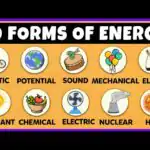
Some of the major forms of energy include:
Different forms of energy play crucial roles in our daily lives,powering everything from our homes to our transportation systems.
Light Energy
Light energy is what we see as light. It comes from the sun, light bulbs, and other sources. Examples are:
- Sunlight
- Lamplight
- Firefly light
- Laser pointers
- Television screens
Heat Energy
Heat energy is what we feel as heat. It comes from the sun, fire, and other sources. Examples are:
- Heat from a stove
- campfire
- Our bodies
- Electric heaters
- Geothermal vents
Sound Energy
Sound energy is what we hear as sound. It comes from vibrations. Examples are:
- A bird singing
- A car horn
- A musical instrument
- Human speech
- A ringing bell
Mechanical Energy
Mechanical energy is the energy of motion. It’s the energy an object has because of its movement or position. Examples are:
- A moving car
- A rolling ball
- A running person
- A spinning top
- A flowing river
For more information on mechanical energy, you can check out this resource: mechanical energy.
chemical Energy
Chemical energy is stored in the bonds of molecules and is released when these bonds are broken. Examples are:
- Energy stored in food
- Batteries
- Wood
- Coal
- Natural gas
To learn more about chemical energy, you can visit: chemical energy.
Teaching Methods
To deliver this lesson, the teacher will adopt the following methods: Discussion, Question and answer, Group activity.
Instructional Procedures
to deliver this lesson, the teacher will adopt the following steps:
Step 1: Introduction
Time: 5 minutes
Teaching Skill: Set Induction
Teacher’s Activity: Ask pupils what thay know about energy.
Pupils’ Activity: Share their ideas and prior knowledge.
step 2: Description of Key Concepts
Time: 10 minutes
Teaching Skill: Clarification
teacher’s Activity: Define energy and explain its importance.
Pupils’ Activity: Listen attentively and ask clarifying questions.
Step 3: Presentation/Guided Practise
Time: 10 minutes
Teaching Skill: Presentation
Teacher’s Activity: show examples of different forms of energy using pictures and real-life examples.
Pupils’ activity: Observe and participate in discussions.
Step 4: Autonomous practice
Time: 5 minutes
Teaching Skill: Guided Practice
Teacher’s Activity: Guide pupils in a group activity to identify forms of energy.
Pupils’ Activity: Work in groups to identify and list forms of energy.
Step 5: Note-Taking
Time: 5 minutes
teaching Skill: Note-Taking
Teacher’s Activity: Guide pupils in taking notes on the key concepts.
Pupils’ Activity: write down key points and examples.
Step 6: Evaluation/Review
Time: 5 minutes
Teaching Skill: Questioning
Teacher’s Activity: Ask review questions to assess understanding.
Pupils’ Activity: answer questions to demonstrate understanding.
Objective-aligned checks:
- Identify and list three forms of energy.
- Explain what energy is.
- Demonstrate understanding by participating in a class activity related to forms of energy.
Step 7: Conclusion
Time: 2 minutes
Teaching Skill: Summarizing
Teacher’s Activity: Summarize the key concepts and assign homework.
pupils’ Activity: Listen to the summary and note the homework.
Lesson Keywords
- Energy – the ability to do work.
- Light Energy – Energy we see as light.
- Heat Energy – Energy we feel as heat.
- Sound Energy – Energy we hear as sound.
- Mechanical Energy – Energy of motion.
- Chemical Energy – Energy stored in molecular bonds.
lesson Evaluation
To evaluate the learning, the teacher asks pupils to:
- What is energy?
- List three forms of energy and give an example of each.
- How is sound energy produced?
- Give an example of how light energy is used in our daily lives.
- What is the difference between heat energy and mechanical energy?
Assignment/Homework
- Find and list five more examples of different forms of energy in their homes.
- Draw pictures of three different sources of energy.
Differentiation
- For slower learners: Provide one-on-one assistance and use simpler examples.
- For advanced learners: Encourage them to research additional forms of energy.
- For visual/auditory/kinesthetic learners: Use visual aids, discussions, and hands-on activities to cater to different learning styles.
note for Teachers
Ensure to use real-life examples and visual aids to make the lesson engaging and understandable for primary three pupils. Encourage active participation and provide constructive feedback.



Community Join the conversation Open discussion +