

Class: Primary Three
Term: First Term
Subject: Basic Science and Technology
Curriculum Theme: Basic Technology
Previous Lesson:
Topic: Meaning of Technology & Examples of Technology-related Products
Content/Learning Area: Meaning of Technology, Examples of Technology-related Products, The Uses of Technology in Our Daily Lives
Time Allocation: 40 minutes
Performance Objectives
By the end of the lesson, pupils should be able to:
- Cognitive Domain:
– Define technology.
– Identify examples of technology-related products.
– Explain how technology is used in our daily lives.
- Affective Domain:
– Show interest in learning about technology.
– Appreciate the role of technology in our lives.
- Psychomotor Domain:
– Participate actively in class discussions.
– Complete the quiz accurately.
- Social Domain:
– Work cooperatively with classmates.
– Share ideas and opinions respectfully.
Reference Materials
- 9 – Years Basic Education Curriculum
- Abuja Educational Resource center Scheme of Work
- NAPPS National Unified Scheme of Work
- Relevant Textbooks
Instructional Materials
To deliver this lesson, the teacher will use the following materials:
- Whiteboard or chart paper
- Markers or pens
- Pictures or real-life examples of technology-related products
- Quizzes
Rationale for the Lesson
This lesson is crucial for primary school pupils to understand the essential concept of technology and it’s impact on their daily lives. It lays the groundwork for future learning in science and technology.
Prerequisite/Previous Knowledge
Pupils have basic knowledge of everyday objects and tools.
Lesson Content
Meaning of technology
Technology involves using scientific knowledge and tools to create things that solve problems or simplify tasks. It includes things like computers, phones, and machines that help us in daily life and work.
Examples of Technology-Related Products
Technology-related products are tools and devices created using scientific knowledge to solve problems or make tasks easier.
Examples are:
- Computers: Used for writing, playing games, and research.
- Smartphones: Used for calling, messaging, and internet access.
- Cars: For traveling long distances.
- Refrigerators: Keep food cold.
- Televisions: For entertainment and information.
- Microwaves: For swift heating and cooking.
- Air Conditioners: Regulate indoor temperature.
- Washing Machines: Automatically clean clothes.
- Digital cameras: Capture and store photos.
- GPS Navigation Systems: Help find locations and directions.
- Solar Panels: Convert sunlight into electricity.
- Medical Imaging Devices: Aid in diagnosing illnesses.
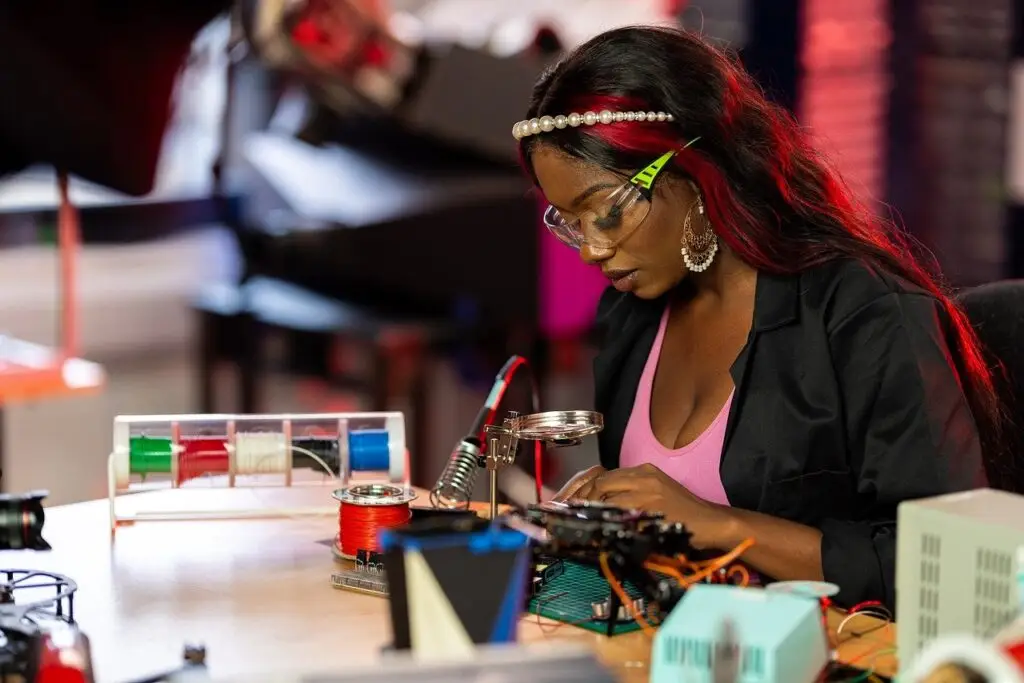
The uses of Technology in Our Daily Lives
Technology is integrated into various aspects of our daily routines, enhancing efficiency and convenience.
These include:
- At home: Refrigerators, televisions, washing machines.
- In school: Computers, projectors, tablets.
- In dialogue: Phones and the internet.
- In Transportation: Cars, buses, airplanes (examples of technology that help us travel).
- In Healthcare: X-ray machines, medicines.
- In Agriculture: Tractors, irrigation systems.
- In Construction: Cranes, bulldozers.
- in Entertainment: Video games,streaming services.
- in Banking: ATMs, online banking platforms.
- In Security: Surveillance cameras, alarm systems.
Teaching Methods
To deliver this lesson, the teacher will adopt the following methods: Discussion, Question and answer, Interactive teaching.
Instructional Procedures
to deliver this lesson, the teacher will adopt the following steps:
Step 1: introduction (Set Induction)
Time: 5 minutes
Teaching Skill: Questioning
Teacher’s Activity: Ask pupils what they use daily that makes things easier. Introduce the topic: “meaning of Technology & examples of Technology-related Products.”
Pupils’ Activity: Respond to the teacher’s questions and listen attentively.
Step 2: Clarification of Key Concepts
Time: 10 minutes
Teaching Skill: Explaining
Teacher’s Activity: Define technology and give examples.
Pupils’ Activity: Listen attentively and take notes.
Step 3: Presentation/Guided Practice
Time: 10 minutes
Teaching Skill: Demonstrating
Teacher’s Activity: Show pictures or real-life examples of technology-related products.Discuss their uses.
Pupils’ Activity: Observe and participate in discussions.
Step 4: Independent Practice
Time: 5 minutes
Teaching Skill: Monitoring
Teacher’s activity: Administer a short quiz.
pupils’ Activity: Complete the quiz individually.
Step 5: Note-taking
Time: 5 minutes
Teaching Skill: Guiding
Teacher’s Activity: Guide pupils in summarizing key points.
pupils’ activity: write down key points in their notebooks.
Step 6: Evaluation/Review
time: 5 minutes
teaching Skill: Assessing
Teacher’s Activity: Review answers to the quiz and address any questions.
Pupils’ Activity: Participate in the review and ask questions.
Step 7: Conclusion
Time: 2 minutes
Teaching Skill: Summarizing
Teacher’s Activity: Summarize the key points of the lesson.
Pupils’ Activity: Listen and ask any remaining questions.
Lesson Keywords
- Technology – The request of scientific knowledge for practical purposes.
- Products – Items made through a process, often using technology.
- Innovation – The introduction of something new or a new idea.
- Devices – A piece of equipment designed for a specific purpose.
- Tools – An instrument used to carry out a particular function.
Lesson Evaluation
To evaluate the learning, the teacher asks pupils to:
- What is technology?
- Give five examples of technology-related products.
- How does technology help us in our daily lives?
Assignment/Homework
- List five additional examples of technology you see around your home.
- Explain how one of these technologies makes your life easier.
Differentiation
- For slower learners: Provide one-on-one assistance and use simpler language.
- For advanced learners: Encourage them to research additional examples of technology and its uses.
- For visual/auditory/kinesthetic learners: Use visual aids, discussions, and hands-on activities to cater to different learning styles.
Note for Teachers
Ensure to use real-life examples and visual aids to make the lesson engaging and relatable for primary school pupils. encourage active participation and provide support to those who need it.


Community Join the conversation Open discussion +