

Performance Objectives
By the end of the lesson,pupils should be able to:- cognitive Domain:
- Affective domain: Express an appreciation for different technological levels.
- Psychomotor domain: Demonstrate the use of products from underdeveloped technology.
- Social domain: Discuss the social activities related to the uses of products from underdeveloped technology.
Reference Materials
- 9 – Years Basic Education Curriculum
- Abuja Educational Resource Center Scheme of Work
- NAPPS National Unified Scheme of Work
- Relevant Textbooks
Instructional Materials
To deliver this lesson, the teacher will use the following materials:- Whiteboard or chart
- Markers or chalk
- Pictures or real-life examples of underdeveloped technology
Rationale for the Lesson
understanding underdeveloped technology provides context for appreciating technological advancements. It highlights the ingenuity of past societies and the evolution of tools and machines, fostering an understanding of technology’s impact on daily life.Prerequisite/Previous Knowledge
The teacher will begin by asking pupils what tools or machines they use daily. The teacher will then introduce the concept of underdeveloped technology as tools and machines used before modern technology, leading into a discussion about their characteristics and examples.Lesson Content
what is Underdeveloped Technology?
Underdeveloped technology refers to simple tools or machines created using basic materials and methods. These are frequently manual, have limited functions compared to modern technology, and represent technology used before significant advancements.Characteristics of Underdeveloped Technology
Underdeveloped technology has several defining features that distinguish it from modern technology. The following are characteristics of underdeveloped technology:- Simplicity: Easy to use and understand.
- handmade: Created using customary techniques.
- No Electricity: Function without electricity.
- Basic Materials: Made from readily available materials (wood, stone, clay).
- Low Cost: Inexpensive materials and methods.
- Durability: Built to last using strong materials.
- Labor-Intensive: Require physical effort.
- Limited Output: Less efficient than modern alternatives.
- Old Design: Basic design, may look old-fashioned.
- Time-consuming: Tasks take longer due to less efficient tools.
- Limited Updates: Little betterment over time.
- Cultural Meaning: Tied to cultural traditions.
- Environmentally Amiable: low environmental impact.
- Localized use: Designed for specific local needs.
- Reliability: Reliable in rural or off-grid settings.
- Manual Operation: Require direct human control.
Examples and Uses of products of Underdeveloped Technology
Underdeveloped technology includes a variety of tools and devices that were essential in the past and are still used in some regions today. Examples are:- Grinding Stones: Used for grinding grains and spices.
- Brooms: Used for sweeping.
- Hand Fans: Used for cooling.
- Clay Pots: Used for storing water and cooking.
- Wooden Spoons: used for eating and stirring.
- Sickles: Used for harvesting crops.
- Weaving Looms: Used for making cloth.
- Spinning Wheels: Used for making yarn.
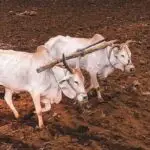
- Ploughs: Used for tilling soil.
- Mortar and Pestle: Used for crushing spices and grains.
- Manually Operated Water Pumps: used for drawing water from wells.
- Charcoal Stoves: Used for cooking with charcoal.
- Earthen Ovens: Simple clay ovens for baking and cooking.
- Hand Looms: Used for making textiles manually.
- Hand-Pulled Rickshaws: Used for transporting people.
- Fishing Nets: Basic nets for catching fish.
- Bucket and Pulley System: Used for drawing water from wells.
- Threshing Boards: Used to separate grains from straw.
- Stone Axes: Used for cutting wood and clearing land.
- Horse and Donkey Carts: Used for transporting goods.
- Firewood Heaters: used for heating and cooking.
- Hand-Crank Radios: Simple radios powered by manual cranking.
- manual Typewriter: A machine for writing that requires pressing keys to create letters.
- Abacus: A counting tool using beads for arithmetic calculations.
- Gramophone: A device that plays music using a large disc.
- Candlestick Telephone: A telephone using a rotary dial for making calls.
- Phonograph: An early music player using rotating record and a needle.
- Hand-Cranked Washing Machine: Requires turning a crank manually to wash clothes.
- Steam Engine: An early engine that used steam to generate power.
- Film Projector: Displays motion pictures using reels of film.
- Oil Lamp: A lighting device using oil to produce light.
- black-and-White Television: Early television sets that displayed only black-and-white images.
- Quill and Ink: Tools used for writing before modern writing instruments.
- Wooden Plow: used for tilling the soil for farming.
- Traditional Water Wells: Used for collecting and storing water from the ground.
- Manual Sewing Machine: Used for sewing clothes without electricity.
- Woven Basket: Used for carrying and storing items, made by hand from natural fibers.
- Analog Telephones: Used for interaction over long distances using wired connections.
- Mechanical Clocks: used for telling time with mechanical gears and springs.
- Simple Hand Tools (e.g.,hammers,screwdrivers): Used for manual labor tasks.
- Coal Stoves: Used for cooking and heating using coal as fuel.
- Basic Thermometers (e.g., mercury thermometers): Used for measuring temperature using mercury.
- Simple Mechanical Watches: Used for telling time with simple mechanical movement.
Teaching Methods
To deliver this lesson, the teacher will adopt the following methods: Discussion, Question and answer, Show and tellInstructional Procedures
To deliver this lesson, the teacher will adopt the following steps:Step 1: Introduction
Time: 5 minutes Teaching Skill: Set Induction Teacher’s Activity: Ask pupils about tools they use daily. Introduce the topic: Underdeveloped Technology. Pupils’ Activity: Respond to teacher’s questions and listen attentively.Step 2: Description of Key Concepts
Time: 10 minutes Teaching Skill: Explaining Teacher’s Activity: Define underdeveloped technology and explain its characteristics using examples. Pupils’ Activity: Listen attentively and take notes.Step 3: Presentation/Guided Practice
Time: 10 minutes Teaching Skill: Demonstrating Teacher’s Activity: Show pictures or real-life examples of underdeveloped technology. Guide pupils in identifying characteristics. Pupils’ Activity: Observe and participate in identifying characteristics.Step 4: Autonomous Practice
Time: 5 minutes Teaching Skill: Monitoring Teacher’s Activity: Ask pupils to list examples of underdeveloped technology and their uses. Pupils’ Activity: List examples and uses independently.Step 5: Note-Taking
Time: 5 minutes Teaching skill: guiding Teacher’s Activity: Guide pupils in summarizing key points in their notebooks.Pupils’ Activity: Wriet notes summarizing key points.Step 6: evaluation/Review
Time: 5 minutes Teaching Skill: Questioning Teacher’s Activity: Ask evaluation questions to assess understanding. Pupils’ Activity: Answer evaluation questions.Step 7: Conclusion
Time: 5 minutes Teaching Skill: Summarizing Teacher’s Activity: Summarize the key concepts of underdeveloped technology and its meaning in history. Assign homework. Pupils’ Activity: Listen to the summary and note the homework assignment.Lesson Keywords
- Underdeveloped Technology – Simple tools or machines created using basic materials and methods.
- Simplicity – Easy to use and understand.
- Handmade – Created using traditional techniques.
- Basic Materials – Readily available materials like wood, stone, and clay.
Lesson Evaluation
To evaluate the learning, the teacher asks pupils to:- What is underdeveloped technology?
- List three characteristics of underdeveloped technology.
- Give three examples of underdeveloped technology and explain how they are used.
- what are some advantages and disadvantages of underdeveloped technology?
- How has technology developed over time?
Assignment/Homework
- Find additional examples of underdeveloped technology.
- Share your findings in the next class.
Differentiation
- For slower learners: Provide one-on-one assistance and use simpler examples.
- For advanced learners: Encourage them to research and present additional examples of underdeveloped technology.
- For visual/auditory/kinesthetic learners: Use visual aids, discussions, and hands-on activities to cater to different learning styles.


Community Join the conversation Open discussion +