

Class: Primary Four
Term: First Term
Subject: History
Curriculum Theme:
Previous Lesson: Nigerian Peoples I, Respect and Tolerance for Other Ethnic Groups
Topic: The Four Early Regions In Nigeria
Content/Learning Area: What are Ethnic Groups?, Northern Region, eastern Region, Western Region, Midwestern Region
Time Allocation: 40 minutes
Performance Objectives
By the end of the lesson, pupils should be able to:
- Cognitive Domain:
1. Name the ethnic groups of each of the early regions.
2. Understand the importance of cultural diversity in Nigeria.
- Affective Domain:
1.Show thankfulness for Nigeria’s cultural diversity.
2. Develop a sense of national unity.
- Psychomotor Domain:
1. Actively participate in class discussions.
2. Take notes on the lesson.
- Social Domain:
1. Work collaboratively with peers.
2. Respect diverse viewpoints.
Reference Materials
9 – Years Basic Education Curriculum
abuja Educational Resource Center Scheme of Work
NAPPS National Unified Scheme of Work
online Details
* Relevant Textbooks
Instructional Materials
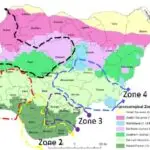
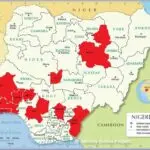
to deliver this lesson, the teacher will use a whiteboard or chart paper, markers, and relevant pictures or maps of Nigeria.
Rationale for the Lesson
Understanding Nigeria’s early regions and ethnic groups is crucial for developing a sense of national identity and appreciating the country’s rich cultural heritage. This knowledge forms a foundation for future learning about Nigerian history and society.
Prerequisite/previous Knowledge
The teacher will start by asking pupils what they know about the different parts of Nigeria. A brief discussion will follow, leading into the lesson’s topic.
Lesson Content
What are Ethnic Groups?
Ethnic groups are communities of people who share a common culture, language, and history. This shared heritage gives them a strong sense of belonging and identity.
Northern Region
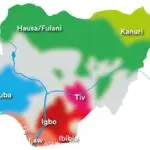
The Northern Region was home to several ethnic groups. Major ethnic groups in the Northern Region included the Hausa-Fulani, Kanuri, Nupe, Tiv, and Jukun.
Eastern region
The Eastern Region was home to several ethnic groups. the major ethnic groups in the Eastern Region were the Igbo, Ibibio, Efik, and Idoma.
Western Region
The Western Region was home to several ethnic groups. The Western Region’s major ethnic groups included the Yoruba, Edo, Urhobo, and Itsekiri.
Midwestern Region
The Midwestern Region was home to several ethnic groups. The midwestern Region comprised mainly the Bini (Edo), Isoko, and ijaw.It’s vital to remember that Nigeria’s ethnic diversity is vast and complex, and these are just some of the main groups within each historical region.
Teaching Methods
To deliver this lesson, the teacher will adopt the following methods: Discussion, question and Answer, and use of Visual Aids.
Instructional Procedures
To deliver this lesson, the teacher will adopt the following steps:
Step 1: Introduction
Time: 5 minutes
Teaching Skill: Set Induction
Teacher’s Activity: Briefly review the previous lesson and introduce the topic: the Four Early regions in Nigeria.
Pupils’ Activity: Listen attentively and respond to the teacher’s questions.
Step 2: Description of Key Concepts
Time: 10 minutes
Teaching Skill: Explaining
Teacher’s Activity: Explain the concept of ethnic groups and the historical context of the four regions.
Pupils’ Activity: Listen attentively and take notes.
Step 3: Regional Ethnic Groups
Time: 10 minutes
Teaching Skill: Modeling
Teacher’s Activity: Discuss each region, naming major ethnic groups and showing relevant maps or pictures.Pupils’ Activity: Participate in discussions and ask questions.
Step 4: Autonomous Practice
Time: 5 minutes
Teaching Skill: Monitoring
Teacher’s Activity: Pupils individually list ethnic groups from each region.
Pupils’ activity: Complete the activity independently.
Step 5: Note-Taking
Time: 5 minutes
Teaching Skill: Guiding
Teacher’s activity: Guide pupils in summarizing key points.
Pupils’ Activity: Write down key points in their notebooks.
Step 6: Evaluation/Review
Time: 5 minutes
Teaching Skill: Assessing
Teacher’s Activity: Ask review questions.
Pupils’ Activity: Answer the questions.
Objective-aligned checks:
- Name the ethnic groups of each of the early regions.
- Show thankfulness for Nigeria’s cultural diversity.
Step 7: Conclusion
Time: 5 minutes
Teaching Skill: Summarizing
Teacher’s activity: Summarize the key points and assign homework.
Pupils’ Activity: Listen attentively and note the homework.
Lesson Keywords
- Ethnic Group – A community of people who share a common culture, language, and history.
- Northern Region – One of the early regions in Nigeria, known for its diverse ethnic groups.
- Eastern Region – One of the early regions in Nigeria, known for its diverse ethnic groups.
- Western region – One of the early regions in Nigeria, known for its diverse ethnic groups.
- Midwestern Region – One of the early regions in Nigeria,known for its diverse ethnic groups.
Lesson Evaluation
To evaluate the learning, the teacher asks pupils to:
- Name one major ethnic group from each of the four early regions.
- Why is it important to learn about Nigeria’s diverse ethnic groups?
- What are some cultural differences between the four early regions?
- How did the British colonial government affect the advancement of these regions?
- What are some challenges and opportunities of living in a diverse country?
Assignment/Homework
- Research and write a short paragraph about one of the ethnic groups discussed in class.
- Draw a map of Nigeria and label the four early regions.
- Interview a family member about their ethnic background and share with the class next lesson.
Differentiation
- For slower learners: Provide one-on-one assistance and simplified explanations.
- For advanced learners: encourage research and presentation on a specific ethnic group from one of the regions.
- For visual/auditory/kinesthetic learners: Use visual aids, discussions, and hands-on activities to cater to different learning styles.
Note for Teachers
Encourage pupils to appreciate Nigeria’s cultural diversity and promote a sense of national unity. Provide additional resources for further research and exploration.
Community 11 comments Open discussion +