Class: Primary One
Term: First Term
Subject: National Values Education
Curriculum Theme: Social Studies
Previous Lesson: Meaning of Culture
Topic: Culture
Content/Learning Area: Defining culture, Listing types of culture
Time Allocation: 40 minutes
Performance Objectives
By the end of the lesson, pupils should be able to:
- Cognitive Domain:
– Define culture.- List three types of culture.
- Psychomotor Domain:
– Actively participate in class discussions.
- Affective Domain:
– Show recognition for diverse cultures.
- Social Domain:
– Respect the cultural practices of others.
Reference Materials
- 9 – Years Basic Education curriculum
- Abuja Educational Resource center Scheme of Work
- NAPPS National Unified Scheme of Work
- Relevant Textbooks
Instructional Materials
To deliver this lesson, the teacher will use a whiteboard or chart paper, markers, and relevant pictures or illustrations.
Rationale for the Lesson
Understanding culture promotes tolerance,respect,and appreciation for diversity,essential for harmonious living and global citizenship. This lesson lays the foundation for future learning about different societies and their values.
Prerequisite/Previous Knowledge
The teacher will start by asking pupils about their favorite foods,clothes,and songs,leading into a discussion about how these things differ between people and places,introducing the concept of culture.
Lesson Content
What is Culture?
Culture is how a group of people live. It includes their traditions, beliefs, customs, and practices. Its everything from their language and food to their art and religion.Culture is always changing and is affected by where people live and how they interact.
Types of Culture
Culture manifests in various forms, shaping how people live and interact.
the following are examples of different types of culture:
- Food culture: This is how people prepare,eat,and share food. It includes the ingredients used and the customs around meals. For example, some cultures eat wiht their hands, while others use utensils. Other examples include specific dietary restrictions, traditional cooking methods, and communal dining practices.
- Clothing culture: This is how people dress.It includes the fabrics and styles of clothing. Some cultures wear conventional clothing, while others prefer modern styles. Wearing traditional clothing is common in many places. Examples include the use of specific colors, materials, and designs that reflect cultural identity and status.
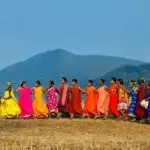
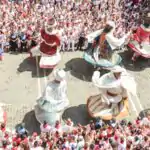
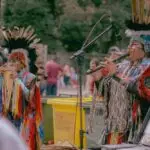
- Music and dance culture: This is how people express themselves through music and dance.It includes the instruments used and the styles of music and dance. Music and dance are used in many cultures to celebrate or express religious beliefs. Examples include traditional musical instruments,dance styles for ceremonies,and songs passed down through generations.
- Language and communication culture: This is how people communicate. It includes the language they speak and nonverbal cues. In some cultures,eye contact is polite,while in others,it’s considered rude. Examples include greetings, forms of address, and storytelling traditions.
Teaching Methods
To deliver this lesson, the teacher will adopt the following methods: Discussion, Question and Answer, Use of visual Aids.
Instructional Procedures
To deliver this lesson, the teacher will adopt the following steps:
Step 1: Introduction
Time: 5 minutes
Teaching Skill: set Induction
Teacher’s Activity: Asks pupils about their favorite foods, clothes, and songs.
Pupils’ Activity: Respond to the teacher’s questions.
Step 2: Clarification of key Concepts
Time: 10 minutes
Teaching Skill: Explaining
Teacher’s Activity: Defines culture and explains its various aspects.
Pupils’ Activity: Listen attentively and ask clarifying questions.
Step 3: Exhibition/Guided Practice
Time: 10 minutes
teaching Skill: Demonstrating
Teacher’s Activity: Provides examples of different types of culture using pictures and real-life examples.
Pupils’ Activity: Participate in discussions and provide examples.
Step 4: Independent Practice
Time: 5 minutes
Teaching Skill: Monitoring
Teacher’s Activity: Guides pupils in completing a short activity related to identifying different cultural aspects.
Pupils’ Activity: Complete the activity independently.
Step 5: Note-Taking
Time: 5 minutes
Teaching Skill: Note-taking
Teacher’s Activity: Summarizes key points on the board.
Pupils’ Activity: Copy the key points in their notebooks.
Step 6: Evaluation/Review
Time: 5 minutes
Teaching Skill: Questioning
Teacher’s Activity: Asks review questions.
pupils’ Activity: Answer the review questions.
Step 7: Conclusion
Time: 5 minutes
Teaching Skill: Summarizing
Teacher’s Activity: Summarizes the key points and encourages pupils to continue learning about different cultures and appreciating their diversity.
Pupils’ Activity: Listen attentively.
Lesson Keywords
- Culture – The customs,arts,social institutions,and achievements of a particular nation,people,or group.
- Traditions – Customs or beliefs passed down from generation to generation.
- customs – A traditional and widely accepted way of behaving or doing something that is specific to a particular society, place, or time.
- Beliefs – An acceptance that a statement is true or that something exists.
- Practices – The actual application or use of an idea,belief,or method,as opposed to theories relating to it.
Lesson Evaluation
To evaluate the learning, the teacher asks pupils to:
- What is culture?
- Give three examples of different types of culture.
- How does culture affect our lives?
- Why is it vital to respect different cultures?
- How can we learn about different cultures?
Assignment/Homework
- Ask your parents or grandparents about a tradition in your family and write a short paragraph about it.
- Draw a picture of your favorite traditional clothing or food.
- Find out about a cultural celebration in Nigeria and share what you learned with the class next time.
Differentiation
- For slower learners: The teacher will provide one-on-one assistance and simplified explanations.
- For advanced learners: The teacher will encourage them to research and present on a specific culture.
- For visual/auditory/kinesthetic learners: Use visual aids, songs, and hands-on activities to engage different learning styles.
Note for Teachers
Encourage pupils to share their own cultural experiences and perspectives to create a rich and inclusive learning habitat. Be sensitive to cultural differences and avoid stereotypes.