

Class: Primary One
Term: Second Term
Subject: National Values Education
Curriculum Theme: Social Studies
Previous Lesson: Definition of Reasons For Taking Substance Into The Body
Topic: Reasons For Taking Substance Into The Body: Imitation, Curiosity, Availability
Content/Learning Area: Imitation, curiosity, availability
Time allocation: 40 minutes
Performance Objectives
By the end of the lesson, pupils should be able to:
- Cognitive Domain:
1. Explain imitation, curiosity, and availability as reasons for taking substances into the body.
- Affective Domain:
1. Express an understanding of the dangers of imitating harmful actions.
- Psychomotor Domain:
1. Demonstrate actions to avoid harmful substances.
- Social Domain:
1. Discuss with peers why some substances can be harmful if taken unnecessarily.
Reference Materials
- 9–Years Basic Education Curriculum
- Abuja Educational resource Center Scheme of Work
- NAPPS National Unified Scheme of Work
- Online facts from: Desert Hope – Understand the Methods of Drug Management
- Relevant Textbooks
Instructional Materials
To deliver this lesson, the teacher will use the following materials:
- A chart with pictures showing imitation, curiosity, and availability scenarios
- A short video clip demonstrating safe and unsafe behaviors
- Flashcards with key terms (Imitation, Curiosity, Availability)
- A whiteboard and markers
Rationale for the Lesson
This lesson is crucial for teaching children about the reasons behind substance intake, helping them understand the influence of others and their own curiosity. This knowledge empowers them to make safer choices and promotes healthy habits.
Prerequisite/Previous Knowledge
The teacher will begin by asking pupils what they have eaten or drunk that day, prompting a discussion about why people take substances into their bodies.This will lead into a discussion about the reasons for taking substances, setting the stage for the lesson.
Lesson content
Reasons For Taking Substances into The Body: Imitation, Curiosity, Availability
Reasons for taking substances into the body can be varied and complex, especially among young children. These include imitation, where children copy behaviors they observe; curiosity, which drives them to explore new things; and availability, where easy access influences their choices.
The following are reasons for taking substances into the body:
1. Imitation: Children often copy what they see adults or older children doing. For example, a child might drink soda becuase they see their parent drinking it, or a child might mimic taking medicine when they see a sibling doing so.
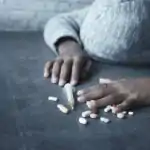
2. Curiosity: Sometimes, people try new things out of curiosity. A child might try a new food because they are curious about its taste,or a child might explore a colorful liquid to see what it is.
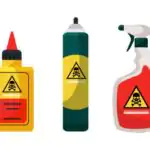
3. Availability: If something is easily accessible, people are more likely to take it. For example, if sweets are left out, a child might eat them, or if a cleaning product is within reach, a child might play with it.
Teaching Methods
To deliver this lesson, the teacher will adopt the following methods: Set induction, Direct instruction, Demonstration, Guided note-taking, Assessment, Summarization.
Instructional Procedures
To deliver this lesson, the teacher will adopt the following steps:
Step 1: Introduction
Time: 5 mins
Teaching Skill: Set induction
Teacher’s Activity: Introduce the lesson by asking pupils why they think people take certain substances (like food or medicine).
Pupils’ Activity: Respond to questions and share their thoughts.
Step 2: clarification of Key Concepts
Time: 10 mins
Teaching Skill: Direct instruction
Teacher’s Activity: Explain “imitation, curiosity, availability” using examples and flashcards.
Pupils’ Activity: Listen, observe the flashcards, and ask questions.
Step 3: Demonstration/Guided Practice
Time: 10 mins
Teaching Skill: Demonstration
teacher’s Activity: Share a story about a child imitating harmful behavior and ask pupils to act out safer choices.
Pupils’ Activity: Participate in role-play and answer questions.
Step 4: Self-reliant Practice
Time: 5 mins
Teaching Skill: Guided Practice
teacher’s Activity: Guide pupils to draw pictures representing imitation, curiosity, and availability.
Pupils’ Activity: Draw pictures in their notebooks.
Step 5: Note-Taking
Time: 5 mins
Teaching Skill: Guided note-taking
Teacher’s Activity: Guide pupils to write short notes about the topic on the board.
Pupils’ Activity: Copy the notes in their exercise books.
Step 6: Evaluation/Review
Time: 5 mins
Teaching Skill: Assessment
Teacher’s Activity: Ask comprehension questions based on the lesson objectives.
Pupils’ Activity: Answer the questions orally.
Objective-aligned checks:
- Explain imitation, curiosity, and availability as reasons for taking substances into the body.
- Demonstrate actions to avoid harmful substances.
Step 7: Conclusion
Time: 5 mins
Teaching Skill: Summarization
Teacher’s Activity: Summarize the key points, emphasizing the importance of making safe and healthy choices.Praise the pupils for their participation and encourage them to continue making good decisions.Pupils’ Activity: Listen attentively and reflect on the lesson.
Lesson Keywords
- Imitation – Copying what others do.
- Curiosity – Wanting to know or explore something new.
- Availability – Being easily accessible or within reach.
Lesson Evaluation
to evaluate the learning, the teacher asks pupils to:
1. What does it meen to take a substance due to imitation?
2. Give an example of curiosity leading someone to take a substance.3. How can availability make someone take a substance?
4. Why is it critically important to think before taking a substance?
5. What should you do when you see someone doing something unsafe?
Assignment/Homework
1. Draw a picture of a safe choice you can make when you are curious about something.
2. Write down one thing you should never imitate and explain why.3. Ask your parents or guardians about substances that should be kept out of reach and list them.
Differentiation
- For slower learners: Provide one-on-one assistance and use simpler language.
- For advanced learners: Encourage them to think of additional examples and discuss the long-term consequences of taking substances due to imitation, curiosity, or availability.
- For visual/auditory/kinesthetic learners: Use visual aids, storytelling, and role-playing to cater to different learning styles.
Note for Teachers
Ensure to use real-life examples that are relatable to the pupils’ surroundings to enhance understanding. Emphasize the importance of seeking guidance from trusted adults when unsure about taking any substance.

Community Join the conversation Open discussion +