

Class: Junior Secondary School 3 (JSS3, JSS 3)
Term: 2nd Term
Week: 4
Age: 14 years
Duration: 45 minutes
Subject: Pre Vocational Studies
Curriculum Theme: Home Economics
Previous Lesson: Difference Between Natural and Synthetic Fibers
Topic: Textiles (part 4)
Subject Matter: Production of textiles e.g., woven table mat, table cloth etc., Laundering of fabrics
Specific Objectives
By the end of the lesson, pupils should be able to:
- Cognitive Domain:
(a) Define textiles and identify different types of woven fabrics.
(b) Explain the process of laundering fabrics and its importance. - Affective Domain:
(a) Demonstrate a positive attitude towards caring for textiles.
(b) Show appreciation for handmade textile products. - Psychomotor Domain:
(a) Demonstrate basic weaving techniques in producing simple textiles.
(b) Properly carry out laundering procedures on sample fabrics. - Social Domain:
(a) Collaborate with peers in group textile production activities.
(b) Share responsibilities in maintaining classroom textile projects.
Reference Materials
The following resources were used in planning this lesson:
- 9 Years Basic Education Curriculum
- Lagos State Unified Scheme of Work for Junior Secondary Schools
- Online Information from: Textile School – “Types of Textile Fabrics and Their Uses” (https://www.textileschool.com/298/types-of-fabric-and-their-uses/)
- Online Information from: Britannica – “Textile Production” (https://www.britannica.com/technology/textile-industry)
- Relevant Textbooks
Instructional Materials
The teacher will teach this lesson with the aid of:
- Samples of woven table mats and table cloths
- Assorted fabrics for laundering demonstration
- Weaving tools (shuttles, loom or cardboard loom for demonstration)
- Water, detergent, and basins for washing fabrics
- Charts and diagrams showing steps of weaving and laundering
- Projector or digital presentation of textile production stages
Rationale for the Lesson
This lesson enables pupils to acquire practical skills in textile production and fabric care, promoting self-reliance and appreciation for home economics.
Prerequisite/Previous Knowledge
Pupils are expected to have prior knowledge of basic textile types, the importance of textiles in daily life, and simple weaving and cleaning techniques learned in previous lessons.
Lesson Content/Board Summary
Textiles
Production of Textiles
Textile production is the process of creating cloth or fabric from fibres using weaving, knitting, or other methods. This helps in producing household items like table mats and table cloths.
The following are methods of textile production:
- Weaving – interlacing two sets of yarn at right angles.
- Knitting – looping yarns to create stretchable fabrics.
- Braiding – intertwining strands for decorative fabrics.
- Felting – matting fibres together using heat or pressure.
Woven Table Mats and Table Cloths
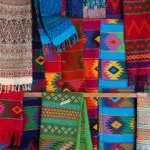
Woven table mats and table cloths are made by interlacing warp and weft threads. They are commonly used to protect furniture and decorate dining areas.
Examples include:
- Cotton woven table mat
- Polyester blend table cloth
- Silk decorative table runner
Laundering of Fabrics
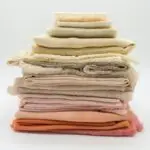
Laundering refers to the process of washing, drying, and ironing fabrics to maintain cleanliness and prolong their lifespan. Proper laundering prevents damage and maintains the fabric’s appearance.
The following are steps in laundering fabrics:
- Sorting fabrics according to colour and type.
- Pre-treating stains with detergent or soap.
- Washing manually or using a washing machine.
- Rinsing thoroughly to remove soap residue.
- Drying under shade or sunlight depending on the fabric.
- Ironing to remove wrinkles and improve appearance.
Teaching Methods/Instructional Techniques
Discussion, Lecture, Demonstration, Visual Aids, Group Work, Practical Exercise, Explanation
Instructional Procedures
To deliver this lesson, the teacher will adopt the following steps:
Step 1: Introduction
Time: 5 minutes
Teaching Skill: Set Induction
Teacher’s Activity: The teacher greets pupils, reviews the previous lesson on textile types, and introduces today’s topic by showing samples of table mats and table cloths.
Pupils’ Activity: Pupils observe the samples and respond to questions about their uses.
Learning Point: Pupils are introduced to textile production and laundering as essential life skills.
Step 2: Explaining Production of Textiles
Time: 10 minutes
Teaching Skill: Explanation
Teacher’s Activity: The teacher defines textile production, explains the methods, and uses charts to show weaving, knitting, braiding, and felting.
Pupils’ Activity: Pupils take notes and ask questions for clarification.
Learning Point: Pupils understand various textile production techniques.
Step 3: Demonstration of Woven Table Mats/Table Cloths
Time: 10 minutes
Teaching Skill: Demonstration
Teacher’s Activity: The teacher demonstrates how to weave a simple table mat using available materials.
Pupils’ Activity: Pupils observe the weaving steps and record key points.
Learning Point: Pupils learn practical techniques for producing simple woven fabrics.
Step 4: Laundering Fabrics
Time: 10 minutes
Teaching Skill: Demonstration/Practical
Teacher’s Activity: The teacher demonstrates proper sorting, washing, rinsing, drying, and ironing techniques on sample fabrics.
Pupils’ Activity: Pupils observe and note steps for proper fabric care.
Learning Point: Pupils understand how to launder fabrics correctly to maintain durability and cleanliness.
Step 5: Note-Taking
Time: 3 minutes
Teaching Skill: Guided Note-Taking
Teacher’s Activity: Teacher ensures pupils record the main points on production and laundering of textiles in their notebooks.
Pupils’ Activity: Pupils copy board summary accurately.
Learning Point: Pupils consolidate learning in written form for future reference.
Step 6: Evaluation/Review
Time: 5 minutes
Teaching Skill: Questioning/Discussion
Teacher’s Activity: The teacher evaluates the learning by asking the following questions:
- Define textile production.
- Mention two types of textile production methods.
- Give examples of woven table mats or table cloths.
- List the steps involved in laundering fabrics.
- Explain why laundering is important for fabrics.
Pupils’ Activity: Pupils answer questions individually or in pairs.
Learning Point: Assess pupils’ understanding of textile production and fabric care.
Step 7: Conclusion
Time: 2 minutes
Teaching Skill: Summary/Closure
Teacher’s Activity: The teacher summarizes the lesson, emphasizing practical skills in weaving and laundering, and provides a brief preview of the next lesson.
Pupils’ Activity: Pupils listen and prepare questions for next lesson.
Learning Point: Pupils leave the class with clear understanding of textile production and care.
Lesson Keywords
- Textile – cloth or fabric made from fibers
- Weaving – interlacing threads to make fabric
- Laundering – process of cleaning fabrics
- Warp – lengthwise threads in weaving
- Weft – crosswise threads in weaving
- Felting – matting fibers using heat/pressure
Differentiation
Group work, visual aids, and practical demonstrations allow all learners to engage according to their ability and learning style.
Note for teachers using this lesson plan
Use locally available materials for weaving demonstrations; supervise pupils closely during laundering to ensure safety; encourage collaborative work for social skills development.


Community Join the conversation Open discussion +