

Note for teachers using this lesson plan
Before this lesson, prepare a chart showing clear pictures of different weather conditions (sunny, rainy, windy, cloudy, cold). The central idea for pupils is to understand that weather describes how it feels and looks outside, and to identify common weather types through observation. Ensure a safe, supervised walk around the school compound for the observation activity. Successful learning will be evident when pupils can point to and name different weather conditions on the chart and describe the current weather outside.
Class: Pre-School Level 3
Term: Third Term
Week: 5
Age: 4 years
Duration: 30 minutes
Subject: Basic Science and Technology
Curriculum Theme: Not separately stated in the scheme.
Previous Lesson: Not specifically stated in the scheme.
Topic: WEATHER: MEANING
Subject Matter: Meaning of weather and different weather conditions.
Specific Objectives
By the end of the lesson, pupils should be able to:
Cognitive Domain
- Define weather in simple terms.
- Identify different weather conditions (e.g., sunny, rainy, windy) from pictures.
- State how the weather feels on a particular day.
Affective Domain
- Show curiosity about the weather around them.
- Participate actively in observing the weather outdoors.
Psychomotor Domain
- Point to specific weather conditions on a chart.
- Move around the school compound to observe the weather.
Social Domain
- Share their observations about the weather with their peers.
Reference Materials
- NAPPS National Unified Teaching Scheme for Pre-School Level 3.
- Relevant Early Childhood Care and Education resources.
Instructional Materials
- A large picture chart showing different weather conditions (sunny, rainy, windy, cloudy, cold).
- Flashcards with images of various weather types.
- The school compound/environment for observation.
- The classroom environment for comparison.
- A fan (to demonstrate wind, if possible).
Rationale for the Lesson
This lesson introduces young children to the concept of weather, which is a fundamental part of their daily experience. Understanding different weather conditions helps them make sense of their environment, choose appropriate clothing, and develop observational skills, connecting their learning to the world around them.Prerequisite/Previous Knowledge
Pupils can already feel hot or cold, have seen rain, and know that the sun shines. They also have a basic understanding of indoors and outdoors.Lesson Content/Board Summary
Meaning of Weather and Different Weather Conditions
Weather is how the air outside feels and looks each day. It can change from one day to the next, or even during the same day!Different Weather Conditions
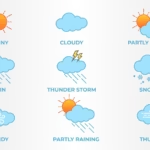
- Sunny Weather: When the sun is shining brightly and it feels warm or hot. We see the sun in the sky.
- Rainy Weather: When water falls from the sky. It makes everything wet. We often see dark clouds.
- Windy Weather: When the air moves fast. We can feel the wind blowing, and it makes leaves and clothes move.
- Cloudy Weather: When there are many clouds in the sky, covering the sun. It might look grey and dull.
- Cold Weather: When the air feels chilly, and we might shiver. We need to wear warm clothes.
Weather Rhyme
Tune: Twinkle, Twinkle Little Star
Lyrics:
Weather, weather, what do you see?
Sunny, rainy, windy for me.
Sometimes hot and sometimes cold,
Stories of weather to be told.
Weather, weather, what do you see?
Changing, changing, wild and free!
Actions: Point to the sky, make sun shape with hands, wiggle fingers down for rain, wave hands for wind, hug self for cold, shiver.
Watch and Learn About Weather
Key Words
- Weather – how the air outside feels and looks.
- Sunny – when the sun is out and it’s warm.
- Rainy – when water falls from the sky.
- Windy – when the air blows fast.
- Cold – when it feels chilly.
💡 Teacher Guide for Using This Board Summary
How to teach the content: Introduce “weather” by asking pupils how they feel today or what they see outside. Use simple, clear language for the definition. Explain each weather condition one by one, linking it to real-life experiences or feelings. Emphasize that weather changes.
What to show or demonstrate: Point to the large picture chart for each weather condition. Use facial expressions and body language (e.g., fanning self for hot, shivering for cold, wiggling fingers for rain, blowing for wind) to illustrate the feelings associated with each weather type. If possible, use a small fan to demonstrate wind.
How to use the rhyme/song: Teach the “Weather Rhyme” line by line, demonstrating the actions. Repeat it several times throughout the lesson to reinforce vocabulary and concepts. Encourage pupils to sing along and do the actions.
How to use the video: Introduce the video as a fun way to learn more about weather. Ask pupils to pay attention to the different weather conditions shown. After watching, discuss what they saw, asking them to name the weather types and describe how they looked or felt in the video.
What to watch for: Observe if pupils can correctly identify weather conditions on the chart and if they can use simple words to describe the current weather outside the classroom.
Teaching Methods/Instructional Techniques
Play-based Learning, Demonstration, Guided Practice, Songs and Rhymes, Picture Talk, Question and Answer, Observation, Practical Activity.Instructional Procedures
Step 1: Introduction
Time: 3 minutes
Teaching Skill: Engaging/Motivation
Teacher’s Activity: The teacher greets the pupils and asks them how they are feeling today. “Good morning, children! How are you all feeling today? Are you happy? Are you sleepy?” Then asks a simple question about the day’s weather: “Look outside, children. How does it feel today? Is it hot or cold?”
Pupils’ Activity: Pupils respond to the greetings and share how they are feeling. They look outside and give simple answers like “hot” or “cold.”
Learning Point: Pupils are engaged and begin to think about their environment.
Step 2: Introducing the Meaning of Weather
Time: 5 minutes
Teaching Skill: Explanation/Definition
Teacher’s Activity: The teacher introduces the topic “Weather.” “Today, we are going to learn about the weather! Weather is how the air outside feels and looks each day. It tells us if it’s hot or cold, if the sun is out, or if it’s raining.” The teacher shows the weather chart.
Pupils’ Activity: Pupils listen attentively and look at the weather chart. They repeat the word “weather.”
Learning Point: Pupils understand the simple meaning of weather.
Step 3: Exploring Different Weather Conditions
Time: 5 minutes
Teaching Skill: Identification/Demonstration
Teacher’s Activity: The teacher points to different weather conditions on the chart, naming and describing each one. “This is sunny weather! The sun is shining brightly. This is rainy weather! Water is falling from the sky.” (Sunny, Rainy, Windy, Cloudy, Cold). The teacher asks pupils to repeat the names.
Pupils’ Activity: Pupils observe the chart, listen to the descriptions, and repeat the names of the weather conditions after the teacher.
Learning Point: Pupils begin to recognise and name different weather conditions.
Step 4: Outdoor Weather Observation
Time: 5 minutes
Teaching Skill: Guided Observation/Practical Activity
Teacher’s Activity: The teacher leads the pupils on a short, supervised walk around the school compound. “Let’s go outside and see what the weather is like today!” The teacher encourages pupils to feel the air, look at the sky, and observe if leaves are moving. “How does the air feel? Is the sun out? Are the trees moving?”
Pupils’ Activity: Pupils move around the school compound, feeling the air, looking at the sky, and observing their surroundings. They share simple observations.
Learning Point: Pupils experience and observe current weather conditions directly.
Step 5: Comparing Indoor and Outdoor Weather
Time: 3 minutes
Teaching Skill: Comparison/Discussion
Teacher’s Activity: After returning to the classroom, the teacher asks pupils to compare the weather inside and outside. “How did it feel outside? Was it hot or cold? How does it feel inside the classroom now?” The teacher helps them articulate differences.
Pupils’ Activity: Pupils discuss their observations, comparing the temperature and feel of the air inside and outside the classroom.
Learning Point: Pupils understand that weather can be different in different places (indoors vs. outdoors) and can describe simple differences.
Step 6: Reinforcement with Rhyme and Video
Time: 4 minutes
Teaching Skill: Reinforcement/Engagement
Teacher’s Activity: The teacher leads the pupils in singing the “Weather Rhyme” with actions. “Let’s sing our weather song again!” Then, the teacher plays the short educational video about different weather conditions. “Now let’s watch a fun video about weather!”
Pupils’ Activity: Pupils sing the rhyme with actions and watch the video attentively, pointing out weather types they recognise.
Learning Point: Pupils reinforce their understanding of weather conditions through song and visual aids.
Step 7: Evaluation/Review
Time: 4 minutes
Teaching Skill: Questioning/Assessment
Teacher’s Activity: The teacher checks pupils’ understanding through short questions and practical tasks.
- “What is weather?” (Encourage a simple answer like “how it feels outside”).
- “Point to the sunny weather on our chart.”
- “Point to the rainy weather.”
- “How does it feel outside right now?”
Pupils’ Activity: Pupils respond orally and demonstrate the required skill by pointing to the correct pictures on the chart.
Learning Point: Pupils demonstrate understanding of the lesson.
Step 8: Conclusion
Time: 1 minute
Teaching Skill: Recap/Encouragement
Teacher’s Activity: The teacher praises the pupils for their participation and good learning. “You all did so well today learning about weather! Remember, weather is how it feels and looks outside.”
Pupils’ Activity: Pupils listen and clap for themselves.
Learning Point: Pupils feel a sense of accomplishment and retain key information.
Lesson Keywords
- Weather – how the air outside feels and looks.
- Sunny – when the sun is out and it’s warm.
- Rainy – when water falls from the sky.
- Windy – when the air blows fast.
- Cold – when it feels chilly.
- Hot – when it feels very warm.
Differentiation
- Support: For pupils who struggle, use larger, more distinct picture cards. Provide hand-over-hand guidance to point to the correct weather on the chart. Repeat names and descriptions slowly and clearly.
- Extension: Encourage advanced pupils to describe the weather using more than one word (e.g., “It’s sunny and hot”). Ask them to think of what they would wear in different weather conditions.

Community Join the conversation Open discussion +