

Class: Primary Three
Term: First Term
Subject: Basic Science and Technology
Curriculum Theme: Computer Studies
Previous Lesson:
Topic: History of Computer – (1)
Content/Learning area: Defining counting devices, Demonstrating counting using objects, Explaining the concept of early computing, Listing 5 devices/objects used in the early days of computers
Time Allocation: 40 minutes
Performance Objectives
By the end of the lesson, pupils should be able to:
- Cognitive Domain:
1. Define counting devices.
2. Explain the concept of early computing.
3. List five devices/objects used in the early days of computers.
- Psychomotor Domain:
1. Demonstrate counting using objects.
- Affective Domain:
1. Show interest in learning about the history of computers.
- social Domain:
1. Participate actively in class discussions.
Reference Materials
- 9 – Years Basic Education Curriculum
- Abuja Educational resource centre scheme of Work
- NAPPS National Unified Scheme of Work
- Online Details
- Relevant Textbooks
Instructional Materials
To deliver this lesson, the teacher will use the following materials:
- Whiteboard or chart
- Markers or chalk
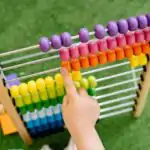
- Pebbles, stones, or other counting objects
Rationale for the Lesson
Understanding the history of computers helps pupils appreciate the evolution of technology and the importance of basic counting skills. This foundational knowledge will be beneficial in future computer studies.
Prerequisite/Previous Knowledge
The teacher will start by asking pupils what they already know about counting and numbers. A brief discussion about how people counted before calculators will lead into the lesson.
Lesson Content
history of Computer
Counting is the foundation of early computers.Counting devices are tools that help us count and keep track of numbers. These can be everyday items or special objects.
The Concept of Early Computing
In the days of early counting devices, computing meant performing mathematical operations manually or with simple tools.
Early Counting Devices
These include:
- Fingers and Toes: Our fingers and toes were the first counting tools. People used them to count objects and keep track of numbers.
- Pebbles, Stones, and Sticks: These objects were used to represent numbers.People woudl move them around to perform calculations.
- Cowries and Seeds: These were often used as currency in some cultures. They were also used for counting and keeping track of possessions.
- Knotted Ropes: Ancient civilizations used ropes with knots to keep track of quantities, such as inventory or calendar days.
- Tally Marks: Making marks on surfaces like clay tablets or cave walls was a simple way to record counts of items or events.
Teaching Methods
To deliver this lesson, the teacher will adopt the following methods: Discussion, Presentation, Practical Activity
Instructional Procedures
To deliver this lesson, the teacher will adopt the following steps:
Step 1: Introduction
Time: 5 minutes
Teaching Skill: Set Induction
Teacher’s Activity: Asks pupils about their understanding of counting and numbers. Introduces the topic: History of Computers.Pupils’ Activity: Respond to teacher’s questions and participate in the discussion.
Step 2: Clarification of Key Concepts
Time: 10 minutes
Teaching Skill: Explanation
Teacher’s Activity: Explains the concept of counting devices and early computing. Demonstrates counting using objects.
Pupils’ activity: Listen attentively and observe the demonstration.
Step 3: Demonstration/Guided Practice
Time: 10 minutes
Teaching Skill: Guided Practice
Teacher’s Activity: Guides pupils in using objects to count and perform simple calculations.
Pupils’ Activity: Participate in guided practice activities.
Step 4: Autonomous Practice
Time: 5 minutes
Teaching Skill: Monitoring
Teacher’s Activity: Monitors pupils as they independently practice counting using objects.
Pupils’ Activity: Independently practice counting using objects.
Step 5: Note-Taking
Time: 5 minutes
Teaching skill: Note-Taking
Teacher’s Activity: Guides pupils in taking notes on key concepts.
Pupils’ Activity: Take notes on key concepts.
Step 6: Evaluation/Review
Time: 5 minutes
Teaching Skill: Questioning
Teacher’s Activity: Asks evaluation questions to assess pupils’ understanding.Pupils’ Activity: Answer evaluation questions.
Objective-aligned checks:
- Define counting devices.
- Explain the concept of early computing.
- List five devices/objects used in the early days of computers.
Step 7: Conclusion
Time: 5 minutes
Teaching Skill: Summarizing
Teacher’s Activity: Summarizes the key points and assigns homework.Pupils’ Activity: Listen to the summary and note the homework.
Lesson Keywords
- Counting Devices – Tools used to help count and keep track of numbers.
- early Computing – Performing mathematical operations manually or with simple tools.
- Pebbles – small stones used for counting.
- Sticks – Small pieces of wood used for counting.
- Cowries – Shells used as currency and for counting.
Lesson Evaluation
To evaluate the learning, the teacher asks pupils to:
- What is the topic of our lesson today?
- Name two objects people used for counting in the past.
- Explain the importance of counting in computing.
- Demonstrate counting using pebbles or stones.
- List five devices/objects used in the early days of computers.
Assignment/Homework
- Research and list three additional early counting methods not discussed in class.
- Explain how fingers and toes were used as counting tools.
- Draw pictures of three different objects used for counting in the past.
Differentiation
- For slower learners: Provide one-on-one assistance and use simpler counting objects.
- For advanced learners: Encourage them to research other early counting methods and present their findings.
- For visual/auditory/kinesthetic learners: Use visual aids, verbal explanations, and hands-on activities to cater to different learning styles.
Note for Teachers
Ensure to provide a variety of counting objects to cater to different learning styles. Encourage pupils to participate actively in discussions and demonstrations. Provide additional support to pupils who need it.


Community Join the conversation Open discussion +