

Class: Primary Three
Term: Third Term
Subject: Basic Science and Technology
Curriculum Theme: Computer Studies
Previous Lesson: Hard Disk Drive, Differences Between Hard Disk And Floppy Disk
Topic: Uses of a Disk Drive
Content/Learning Area: What is a Disk Drive?, Uses of a Disk drive, evaluation Questions
Time Allocation: 40 minutes
Performance Objectives
By the end of the lesson, pupils should be able to:
- Cognitive Domain:
1. Define what a disk drive is.
2. List at least three uses of a disk drive.
3. Explain the importance of disk drives in daily computing activities.
4.Identify different types of disk drives using visual aids.
- Affective Domain:
1. Show interest in learning about disk drives.
2. Participate actively in class discussions.
- psychomotor Domain:
1. Work collaboratively in groups to discuss the uses of disk drives.
- Social Domain:
1. Work cooperatively with peers.
Reference Materials
- 9 – Years Basic Education curriculum
- Abuja Educational Resource Center Scheme of Work
- NAPPS National Unified Scheme of work
- Online Details
- Relevant Textbooks
Instructional Materials
To deliver this lesson, the teacher will use the following materials:
- Whiteboard or projector
- Markers or pens
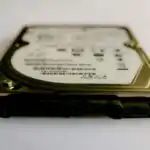
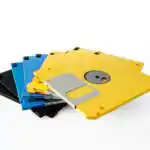
- Pictures of different types of disk drives
- A computer system (optional)
Rationale for the Lesson
Understanding disk drives is crucial for pupils to grasp the basic workings of a computer. This knowledge will be built upon in future lessons covering data management and computer operations, and is essential for navigating the digital world.
Prerequisite/Previous Knowledge
The teacher will start by asking pupils what they remember from the previous lesson on computer components. A brief review of the components will be done, leading into a discussion about where data is stored within the computer, setting the stage for the lesson on disk drives.
Lesson Content
What is a Disk Drive?
A disk drive is a computer part used to save and get back information. It’s like a storage place for things like the operating system, programs, and your files (documents, pictures, videos).
Uses of a Disk Drive
A disk drive is essential for various computing tasks, providing storage and retrieval capabilities. The following are some uses of a disk drive:
- Data Storage: Disk drives keep all the computer’s information safe.
- Data Retrieval: They let you find and use your saved information easily.
- Backup: You can make copies of crucial things on a disk drive, in case somthing goes wrong.
- Software Installation: New programs are put onto the computer using a disk drive.
- Data Transfer: Some disk drives can move information between computers.
- Operating System Loading: Disk drives are used to load the operating system when the computer starts.
- Multimedia Playback: They allow the playback of multimedia files such as music and videos.
Teaching Methods
To deliver this lesson, the teacher will adopt the following methods: Discussion, Question and answer, Visual aids, Group work
Instructional Procedures
To deliver this lesson, the teacher will adopt the following steps:
Step 1: Introduction
Time: 5 minutes
Teaching Skill: Set Induction
Teacher’s activity: Review previous lesson, introduce the topic of disk drives, and ask pupils what they already know.
Pupils’ Activity: respond to teacher’s questions, share prior knowledge.
step 2: Explanation of Key Concepts
Time: 10 minutes
Teaching Skill: Explaining
Teacher’s Activity: Define a disk drive and explain its function using simple language and visual aids.
Pupils’ Activity: Listen attentively, ask clarifying questions.
step 3: Exhibition/Guided Practice
Time: 10 minutes
Teaching Skill: Demonstrating
Teacher’s Activity: Show pictures of different disk drives (if available, show real examples). Guide pupils in identifying the types of disk drives.
Pupils’ Activity: Observe the demonstration, identify different types of disk drives.
Step 4: Independent Practice
Time: 5 minutes
Teaching Skill: Monitoring
Teacher’s Activity: Divide pupils into groups and assign them tasks to discuss the uses of disk drives.
Pupils’ Activity: Work in groups, discuss and list the uses of disk drives.
Step 5: Note-Taking
Time: 5 minutes
Teaching Skill: Summarizing
Teacher’s Activity: Summarize the key points of the lesson and guide pupils in taking notes.
Pupils’ Activity: Take notes on the key points of the lesson.
Step 6: Evaluation/Review
Time: 5 minutes
Teaching Skill: Questioning
Teacher’s Activity: Ask evaluation questions to assess pupils’ understanding.
Pupils’ Activity: Answer the evaluation questions.
Step 7: Conclusion
Time: 5 minutes
Teaching Skill: Summarizing
Teacher’s Activity: To conclude the lesson, the teacher will review the key points, answer any remaining questions, and assign homework (optional) for further practice.
Pupils’ Activity: Listen to the summary and ask any remaining questions.
Lesson keywords
- Disk Drive – A storage device that reads and writes data on a disk.
- Data Storage – Saving information on a computer.
- Data Retrieval – accessing saved information.
- Backup – Creating copies of crucial files.
- Software Installation – Putting new programs on a computer.
Lesson Evaluation
To evaluate the learning, the teacher asks pupils to:
- What is a disk drive and what does it do?
- Name three ways we use disk drives.
- Why are disk drives important for computers?
Assignment/Homework
- List five uses of a disk drive in everyday life.
- Draw a picture of a disk drive and label its parts.
Differentiation
- For slower learners: The teacher will provide one-on-one assistance and use simpler language.
- For advanced learners: The teacher will encourage them to research different types of disk drives and their specifications.
- for visual/auditory/kinesthetic learners: Use visual aids, verbal explanations, and hands-on activities to cater to different learning styles.
Note for Teachers
Ensure to use real-life examples and visual aids to make the lesson engaging and understandable for primary three pupils. Encourage active participation and group discussions to enhance learning.


Community Join the conversation Open discussion +