

Class: Primary Four
term: First Term
Subject: National Values Education
Curriculum Theme: Civic Education
Previous Lesson: Types of Government II
Topic: Functions of Government
Content/Learning Area: What is Government?, Making Laws, Providing Services, Maintaining Order, Defending the nation, Collecting Taxes
Time Allocation: 40 minutes
Performance Objectives
By the end of the lesson, pupils should be able to:
- Cognitive Domain:
1. List three functions of the government.
2. explain why it is important to know what the government does.
3. Describe how you can contribute to your community through government functions.
- Affective domain:
1. Show interest in learning about government functions.
2. Appreciate the importance of government in society.
- Psychomotor Domain:
1. Actively participate in class discussions.2. Take notes on the functions of government.
- Social Domain:
1. Work cooperatively with classmates.
2. Respect the opinions of others.
Reference Materials
- 9 – Years Basic Education Curriculum
- Abuja Educational resource Centre Scheme of Work
- NAPPS national Unified Scheme of Work
- Relevant Textbooks
Instructional Materials
To deliver this lesson, the teacher will employ the help of the following materials:
- Whiteboard or chart paper
- Markers or pens
- Relevant pictures or illustrations
Rationale for the Lesson
Understanding the functions of government is crucial for responsible citizenship. This lesson provides a foundation for future learning about civic duties and participation in society.
Prerequisite/Previous Knowledge
The teacher will begin by asking pupils what they know about rules and why we need them. A brief discussion will follow, leading into the introduction of the government’s role in creating and enforcing laws.
Lesson Content
What is Government?
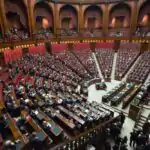
The government is a group of peopel who make and enforce laws for a country or region. These laws keep things organized and safe.
Making Laws
The government creates laws to ensure fairness and safety. Examples are:
- Traffic rules
- Rules about how to treat others
- Environmental protection laws
- Business regulations
- Educational standards
Providing Services
Governments provide essential services for citizens to live well. These include:
- Education: Schools for children.
- Healthcare: Hospitals and clinics.
- Transportation: Roads, bridges, and public transport.
- Public Safety: Police and firefighters.
- Sanitation: Waste management and clean water supply.
- Social Welfare: Support for vulnerable populations.
Maintaining Order
the government keeps things safe and peaceful using law enforcement agencies like the police, the Nigerian Security and Civil Defence Corps (NSCDC), and the Economic and Financial Crimes Commission (EFCC).
Defending the Nation
Governments protect the country from threats using a strong military, such as the Nigerian Army, Nigerian Navy, and Nigerian Air Force.
collecting Taxes
Governments collect taxes from citizens to fund the services they provide. Taxes are small amounts of money everyone pays to support government operations. Examples of taxes in Nigeria include:
- Personal Income Tax
- Value Added Tax (VAT)
- Company Income Tax
- Petroleum profit Tax
- Customs and Excise Duties
Teaching Methods
To deliver this lesson, the teacher will adopt the following methods: Discussion, Question and answer, Clarification, Illustrations.
Instructional Procedures
To deliver this lesson, the teacher will adopt the following steps:
Step 1: Introduction
Time: 5 minutes
Teaching Skill: Set Induction
Teacher’s Activity: Asks pupils what they know about rules and why we need them.
Pupils’ Activity: Respond to the teacher’s questions and participate in a brief discussion.
Step 2: Clarification of key Concepts
Time: 10 minutes
teaching Skill: Explanation
Teacher’s Activity: explains the concept of government and its main functions.Pupils’ activity: Listen attentively and ask clarifying questions.
Step 3: Examples of Government Functions
Time: 10 minutes
Teaching Skill: Guided Practice
Teacher’s Activity: Provides examples of government functions (making laws,providing services,etc.) and guides pupils through activities related to each function.
Pupils’ Activity: Participate in guided practice activities and ask questions.
Step 4: autonomous practice
Time: 5 minutes
Teaching skill: Independent Practice
Teacher’s activity: Asks pupils to list three functions of the government.
Pupils’ Activity: Complete the independent practice activity.
Step 5: Note-Taking
Time: 5 minutes
Teaching Skill: Note-Taking
Teacher’s Activity: Guides pupils in taking notes on the main points of the lesson.Pupils’ activity: Take notes on the main points of the lesson.
Step 6: Evaluation/Review
Time: 5 minutes
Teaching Skill: Questioning
Teacher’s Activity: Asks review questions to assess understanding.Pupils’ Activity: Answer review questions.
Objective-aligned checks:
- List three functions of the government.
- explain why it is important to know what the government does.
- Describe how you can contribute to your community through government functions.
Step 7: Conclusion
Time: 2 minutes
Teaching Skill: Summarizing
Teacher’s Activity: Summarizes the main points of the lesson.
Pupils’ Activity: Listen attentively.
Lesson Keywords
- government – A group of people who make and enforce laws for a country or region.
- Laws – Rules created to ensure fairness and safety.
- Taxes – Money collected from citizens to fund government services.
- Services – Essential provisions like education, healthcare, and transportation.
- Order – Keeping things safe and peaceful through law enforcement.
Lesson Evaluation
To evaluate the learning, the teacher asks pupils to:
- What are three functions of the government?
- Why is it important to know what the government does?
- How can you contribute to your community through government functions?
- Give examples of laws the government makes.
- How does the government help keep people safe?
Assignment/Homework
- List five services provided by the government in your community.
- Write a short paragraph explaining why it is important for citizens to pay taxes.
- Research and name three law enforcement agencies in Nigeria and their functions.
Differentiation
- For slower learners: Provide one-on-one assistance and simplified explanations.
- For advanced learners: Encourage them to research additional government functions and their impact on society.
- For visual/auditory/kinesthetic learners: Use visual aids, discussions, and hands-on activities to cater to different learning styles.
Note for Teachers
Encourage active participation by creating a supportive and inclusive classroom environment. Use real-life examples to illustrate the functions of government and make the lesson relatable to pupils’ experiences. Consider inviting a guest speaker from a local government office to provide additional insights.

Community Join the conversation Open discussion +