

Class: Primary Two
Term: First Term
Subject: Pre-vocational Studies
Curriculum Theme: Agricultural Science
Previous Lesson: Meaning and Examples of Grain Crops
Topic: Uses of Grain Crops
Content/Learning Area: What are Grain crops?, Uses of Grain Crops
Time Allocation: 40 minutes
Performance Objectives
By the end of the lesson, pupils should be able to:
- Cognitive Domain:
1. Identify grain crops.
2. Explain the various uses of grain crops.
- Affective domain:
1. Show interest in learning about grain crops.
2. Appreciate the importance of grain crops.
- Psychomotor Domain:
1. Participate actively in class discussions.
- Social Domain:
1.Work cooperatively with peers.
Reference materials
- 9 – Years Basic Education Curriculum
- Abuja Educational Resource Center Scheme of Work
- NAPPS National Unified Scheme of Work
- Relevant Textbooks
Instructional Materials
To deliver this lesson, the teacher will use the following materials:
- Whiteboard or chart
- markers or chalk
- Pictures of grain crops
Rationale for the Lesson
Understanding grain crops is crucial for pupils to appreciate the importance of agriculture and its role in food security and economic growth. This knowledge will be beneficial in future science lessons and everyday life.
Prerequisite/Previous Knowledge
The teacher will start by asking pupils what they ate for breakfast. This will lead into a discussion about the sources of food, eventually introducing the topic of grain crops.
Lesson Content
What are Grain Crops?
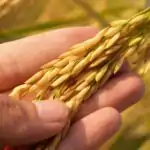
grain crops are plants that produce seeds used as food for humans and animals. Examples are:
- Rice: A staple food worldwide, especially in Asia. Learn more about rice.
- Maize (Corn): Used in cornflakes, tortillas, and animal feed.
- Wheat: Used for bread, pasta, and baked goods.
- Sorghum: Used for porridge, bread, and animal feed.
- Millet: A nutritious grain used in dishes and as birdseed.
- Oats: Commonly used for oatmeal and livestock feed.
- Barley: Used in brewing beer and as animal fodder.
Uses of Grain Crops
Grain crops have several uses that benefit humans and animals. These include:
- Food for People: Grain crops are a primary source of food for humans, used in various dishes. Learn more about agriculture.
- Animal Feed: They feed animals, helping them grow and providing us with milk, eggs, and meat. Learn more about body building food.
- Source of Income: Farmers sell grain crops to earn money, supporting their families and the economy.
- Making Flour: Grains are ground into flour for bread, cakes, and other baked goods.
- Seeds for Planting: Farmers use the seeds to plant new crops, ensuring a continuous supply.
- Production of Beverages: Some grains like barley are used in making beverages like beer.
- Industrial Uses: Corn can be processed into corn syrup and other industrial products.
Teaching Methods
To deliver this lesson, the teacher will adopt the following methods: Discussion, Question and answer, Use of visuals
Instructional Procedures
To deliver this lesson, the teacher will adopt the following steps:
Step 1: Introduction
Time: 5 minutes
Teaching Skill: Set Induction
Teacher’s Activity: Ask pupils what they ate for breakfast and lead a discussion about food sources.
Pupils’ Activity: Respond to teacher’s questions and participate in the discussion.
Step 2: Explanation of Key Concepts
Time: 10 minutes
Teaching Skill: Explaining
Teacher’s Activity: Introduce the concept of grain crops and show pictures of different types.
Pupils’ Activity: Listen attentively and observe the pictures.
step 3: Uses of Grain crops
Time: 10 minutes
Teaching Skill: Demonstrating
Teacher’s Activity: Discuss the uses of grain crops with examples.
Pupils’ Activity: Participate in the discussion and answer questions.
Step 4: Autonomous Practice
Time: 5 minutes
Teaching Skill: Monitoring
teacher’s Activity: Ask pupils to name three grain crops and two uses of grain crops.Pupils’ Activity: Answer the questions independently.
Step 5: Note-Taking
Time: 5 minutes
Teaching Skill: Guiding
Teacher’s Activity: Guide pupils in taking notes on the key points of the lesson.
Pupils’ Activity: wriet down the key points in their notebooks.
Step 6: Evaluation/Review
Time: 5 minutes
Teaching Skill: Assessing
Teacher’s Activity: Review the lesson and answer any questions.
Pupils’ Activity: Ask questions and participate in the review.
Objective-aligned checks:
- Identify grain crops.
- Explain the various uses of grain crops.
- Show interest in learning about grain crops.
Step 7: Conclusion
Time: 5 minutes
Teaching Skill: Summarizing
Teacher’s Activity: Summarize the key points about grain crops and their importance.
Pupils’ Activity: Listen to the summary and ask any remaining questions.
Lesson Keywords
- Grain Crops – Plants that produce seeds used as food.
- Rice – A common grain crop, staple food in many countries.
- Maize – also known as corn, used in various food products.
- Wheat – A grain used to make bread, pasta, and other baked goods.
- Sorghum – A grain used for porridge, bread, and animal feed.
- Millet – A nutritious grain used in dishes and as birdseed.
Lesson Evaluation
To evaluate the learning, the teacher asks pupils to:
- Name three different grain crops.
- What are two ways that grain crops are used as food?
- How do grain crops help farmers earn money?
Assignment/Homework
- List five different grain crops found in Nigeria.
- Describe three ways grain crops are used in your community.
Differentiation
- For slower learners: Provide one-on-one assistance and use simpler language.
- For advanced learners: Encourage them to research additional uses of grain crops and present their findings.
- For visual/auditory/kinesthetic learners: Use pictures, discussions, and hands-on activities to cater to different learning styles.
Note for Teachers
Ensure to use real-life examples and visual aids to make the lesson more engaging and understandable for the pupils. encourage active participation and provide positive reinforcement.



Community Join the conversation Open discussion +