

Class: Senior Secondary School 1 (SS1, SS 1, SSS1, SSS 1)
Term: 3rd Term
Week: 11
Age: 15 years
Duration: 45 minutes
Subject: Auto Mechanic Work
Curriculum Theme: Auto Mechanic Work
Previous Lesson: Tyres Functions, Sizes and Designation.
Topic: TYRES – Advantages and Disadvantages of Tube and Tubeless Tyres
Subject Matter: Advantages of tube tyres, disadvantages of tube tyres, advantages of tubeless tyres, disadvantages of tubeless tyres, selecting tyres for efficiency
Specific Objectives
By the end of the lesson, pupils should be able to:
Cognitive Domain:
- Define tube and tubeless tyres.
- State at least three advantages of tube tyres.
- List at least three disadvantages of tube tyres.
- Mention at least three advantages of tubeless tyres.
- Explain at least three disadvantages of tubeless tyres.
Affective Domain:
- Appreciate the importance of selecting the correct tyre type for different vehicle applications.
- Participate actively in discussions about tyre efficiency and safety.
Psychomotor Domain:
- Identify tube and tubeless tyres when presented with examples.
- Differentiate between the structural features of tube and tubeless tyres.
Social Domain:
- Collaborate with peers to discuss and compare the suitability of different tyre types.
Reference Materials
The following resources were used in planning this lesson:
- 9 Years Basic Education Curriculum for Auto Mechanic Work.
- National Unified Scheme of Work for Senior Secondary Schools (Auto Mechanic Work).
- Auto Mechanic Work for Senior Secondary Schools by A.O. Okoro.
- Modern Auto Mechanic Work Textbook for SSS 1.
Instructional Materials
The teacher will teach this lesson with the aid of:
- A tube tyre.
- A tubeless tyre.
- Charts showing cross-sections of tube and tubeless tyres.
- Lesson plan.
Rationale for the Lesson
Understanding the differences between tube and tubeless tyres is important for pupils as it helps them make informed decisions about vehicle maintenance and safety. This knowledge is useful for selecting appropriate tyres for various driving conditions, ensuring vehicle performance and driver safety.
Prerequisite/Previous Knowledge
Pupils should have basic knowledge of vehicle components and the general function of tyres from previous lessons.
Lesson Content/Board Summary
TYRES – Advantages and Disadvantages of Tube and Tubeless Tyres
Introduction to Tyres
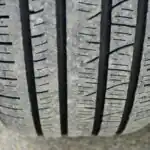
A tyre is a ring-shaped component that fits around a wheel’s rim to transfer the vehicle’s load from the axle to the ground and provide traction while travelling. Tyres are either tube or tubeless.
Tube Tyres
Tube tyres use an inner tube, which is a separate inflatable rubber bladder, to hold air pressure. The inner tube is placed inside the tyre casing and then inflated.
The following are advantages of tube tyres:
- They are generally less expensive to purchase.
- They are easier to repair in case of a puncture.
- They can be used on spoke wheels without air leakage.
The following are disadvantages of tube tyres:
- They are prone to sudden deflation upon puncture, which can be dangerous.
- They are heavier due to the additional inner tube.
- They generate more heat due to friction between the tube and the tyre casing.
- They are more susceptible to blowouts at high speeds.
Tubeless Tyres
Tubeless tyres do not use an inner tube. Instead, the tyre casing itself is designed to hold air, forming an airtight seal with the wheel rim. They have a special inner lining called a butyl rubber liner that prevents air leakage.
The following are advantages of tubeless tyres:
- They deflate slowly upon puncture, allowing the driver to maintain control.
- They are lighter, which can improve fuel efficiency and performance.
- They run cooler as there is no friction between a tube and casing.
- They are less prone to sudden blowouts.
- They are easier to balance.
The following are disadvantages of tubeless tyres:
- They are generally more expensive than tube tyres.
- They are harder to mount and dismount from the rim.
- They require specific rims designed to create an airtight seal.
- They can be difficult to repair if the sidewall or bead is damaged.
Selecting Tyres for Efficiency
Selecting the right tyre type depends on several factors:
- Vehicle type: Some vehicles are designed for specific tyre types.
- Driving conditions: Road type, weather, and terrain influence tyre choice.
- Budget: Cost of purchase and maintenance.
- Safety considerations: Tubeless tyres offer better safety during punctures.
- Performance requirements: Weight and heat generation affect performance.
Teaching Methods/Instructional Techniques
Discussion, Lecture, Demonstration, Question and Answer, Visual Aids
Instructional Procedures
Step 1: Introduction
Time: 5 minutes
Teaching Skill: Set Induction
Teacher’s Activity: The teacher greets the pupils and briefly reviews the previous lesson. The teacher then asks pupils to identify the rubber part of a vehicle that touches the ground and asks them to name different types if they know any. The teacher introduces the topic: “TYRES – Advantages and Disadvantages of Tube and Tubeless Tyres.”
Pupils’ Activity: Pupils respond to questions and listen attentively to the introduction of the new topic.
Learning Point: Pupils recall previous knowledge and are prepared for the new lesson.
Step 2: Explanation of Tube Tyres
Time: 10 minutes
Teaching Skill: Explanation/Demonstration
Teacher’s Activity: The teacher defines tube tyres, explaining their structure with an inner tube. The teacher then lists and explains the advantages and disadvantages of tube tyres, using the displayed tube tyre and charts.
Pupils’ Activity: Pupils listen, observe the demonstration, ask questions for clarification, and take notes.
Learning Point: Pupils understand the definition, advantages, and disadvantages of tube tyres.
Step 3: Explanation of Tubeless Tyres
Time: 10 minutes
Teaching Skill: Explanation/Demonstration
Teacher’s Activity: The teacher defines tubeless tyres, explaining how they hold air without an inner tube, using the displayed tubeless tyre and charts. The teacher then lists and explains the advantages and disadvantages of tubeless tyres.
Pupils’ Activity: Pupils listen, observe the demonstration, ask questions, and take notes.
Learning Point: Pupils understand the definition, advantages, and disadvantages of tubeless tyres.
Step 4: Practical Identification and Comparison
Time: 5 minutes
Teaching Skill: Demonstration/Observation
Teacher’s Activity: The teacher displays both a tube tyre and a tubeless tyre, pointing out the physical differences and how to identify each type. The teacher encourages pupils to observe closely.
Pupils’ Activity: Pupils observe the displayed tyres, identify their types, and note the differences.
Learning Point: Pupils can visually identify and differentiate between tube and tubeless tyres.
Step 5: Discussion on Tyre Selection for Efficiency
Time: 5 minutes
Teaching Skill: Discussion/Questioning
Teacher’s Activity: The teacher leads a discussion on factors to consider when selecting tyres for efficiency and safety, relating them to the advantages and disadvantages discussed. The teacher asks questions like “Which tyre would you prefer for long journeys and why?”
Pupils’ Activity: Pupils contribute to the discussion, share their opinions, and justify their choices based on the lesson content.
Learning Point: Pupils understand the factors influencing efficient tyre selection.
Step 6: Summarization
Time: 3 minutes
Teaching Skill: Summarization
Teacher’s Activity: The teacher quickly summarizes the key points of the lesson, reinforcing the main differences and applications of tube and tubeless tyres.
Pupils’ Activity: Pupils listen to the summary and compare it with their notes, asking any final questions.
Learning Point: Pupils consolidate their understanding of the lesson content.
Step 7: Evaluation/Review
Time: 5 minutes
Teaching Skill: Questioning/Assessment
Teacher’s Activity: The teacher evaluates the learning by asking the following questions:
- Define a tube tyre.
- State three advantages of tubeless tyres.
- Mention two disadvantages of tube tyres.
- What is one key factor to consider when selecting tyres for efficiency?
Pupils’ Activity: Pupils answer orally and in writing.
Learning Point: Pupils demonstrate understanding of the lesson.
Step 8: Conclusion
Time: 2 minutes
Teaching Skill: Closure
Teacher’s Activity: The teacher reviews pupils’ responses to the evaluation questions, corrects any misconceptions, and gives homework: “Research common tyre sizes and their meanings.” The teacher then dismisses the class.
Pupils’ Activity: Pupils listen to corrections, copy the homework, and prepare for dismissal.
Learning Point: Pupils solidify their understanding and are given tasks to extend their learning.
Lesson Keywords
- Tube tyre – A tyre that uses a separate inner rubber tube to hold air.
- Tubeless tyre – A tyre designed to hold air directly without an inner tube, sealing against the wheel rim.
- Puncture – A small hole or tear in a tyre or tube, causing air leakage.
- Inner tube – An inflatable rubber bladder inside a tube tyre that holds air.
- Efficiency – The ability to achieve maximum output with minimum effort or expense, in this context, relating to tyre performance and safety.
Differentiation
The lesson caters to diverse learners through visual aids (actual tyres, charts), auditory explanations, and opportunities for discussion. Group activities can be used to allow pupils to collaborate and support each other in understanding the concepts and identifying tyre types.
Note for teachers using this lesson plan
Ensure that actual tube and tubeless tyres are available for demonstration to enhance pupils’ understanding and practical identification skills. Encourage pupils to share any personal experiences or observations related to tyres to make the lesson more relatable. Emphasize the safety aspects associated with each tyre type.



Community Join the conversation Open discussion +