

Class: Senior Secondary School 1 (SS1, SS 1, SSS1, SSS 1)
Term: 3rd Term
Week: 4
Age: 15 years
Duration: 45 minutes
Subject: Auto Mechanic Work
Curriculum Theme: Auto Mechanic Work
Previous Lesson: Braking System: Mechanical and Hydraulic Operation.
Topic: BRAKING SYSTEM – Components of Hydraulic and Mechanical Brakes
Subject Matter: master cylinder, wheel cylinder, brake pipelines, calipers, brake disc, brake shoes, brake pedal, linkages, actuating rods, comparison of hydraulic and mechanical brake components
Specific Objectives
By the end of the lesson, pupils should be able to:
Cognitive Domain:
- Identify and list the main components of hydraulic and mechanical braking systems.
- Explain the function of each component of hydraulic and mechanical brakes.
- Differentiate between the components of hydraulic and mechanical brake systems.
Affective Domain:
- Appreciate the importance of properly functioning brake components for vehicle safety.
- Participate actively in discussions about different braking systems.
Psychomotor Domain:
- Sketch or label a simple diagram showing the main components of a braking system.
- Point out components of hydraulic and mechanical brakes on a live vehicle or diagram.
Social Domain:
- Work collaboratively to discuss the various components of braking systems.
Reference Materials
The following resources were used in planning this lesson:
- 9 Years Basic Education Curriculum for Auto Mechanic Work.
- State Unified Scheme of Work for Senior Secondary Schools.
- Auto Mechanic Work for Senior Secondary Schools, Textbook 1.
Instructional Materials
The teacher will teach this lesson with the aid of:
- A live vehicle (if available) or a model of a braking system.
- Actual brake components (master cylinder, wheel cylinder, brake disc, caliper, brake shoe, brake pedal, linkages, actuating rods).
- Charts and posters illustrating hydraulic and mechanical braking systems.
Rationale for the Lesson
Understanding braking systems is important for pupils to know how vehicles stop safely. This knowledge helps them appreciate the need for proper maintenance to prevent accidents and ensures their safety on the road.
Prerequisite/Previous Knowledge
Pupils should have basic knowledge of vehicle parts and the concept of how a vehicle moves.
Lesson Content/Board Summary
BRAKING SYSTEM – Components of Hydraulic and Mechanical Brakes
Introduction to Braking Systems
A braking system is a set of mechanical and hydraulic components designed to slow down or stop a moving vehicle. It converts the kinetic energy of the vehicle into heat energy through friction.
Components of Hydraulic Braking System
A hydraulic braking system uses brake fluid to transmit force from the brake pedal to the brake mechanism at the wheels. The main components include:
- Master Cylinder: This is a hydraulic pump that converts the mechanical force from the brake pedal into hydraulic pressure.
- Brake Pipelines (Brake Lines): These are metal or reinforced rubber tubes that carry the brake fluid under pressure from the master cylinder to the wheel cylinders or calipers.
- Wheel Cylinders: Found in drum brake systems, these cylinders are located at each wheel and use hydraulic pressure to push the brake shoes against the brake drum.
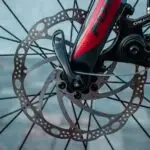
- Brake Calipers: Found in disc brake systems, these units house the brake pads and pistons. They use hydraulic pressure to clamp the brake pads against the brake disc.
- Brake Disc (Rotor): A metal disc that rotates with the wheel. When the brake pads clamp onto it, friction slows down the wheel.
- Brake Pads/Shoes: Friction materials that press against the brake disc (pads) or brake drum (shoes) to create friction and slow the vehicle.
Components of Mechanical Braking System
A mechanical braking system uses levers, rods, and cables to transmit force from the brake pedal or hand lever directly to the brake mechanism. It does not use fluid. Common components include:
- Brake Pedal/Hand Lever: The input device operated by the driver to apply the brakes.
- Linkages: These are a series of rods, cables, or levers that connect the brake pedal/lever to the brake mechanism at the wheels.
- Actuating Rods: Specific rods within the linkage system that transmit force to the brake shoes or other brake components.
- Brake Shoes: Friction materials that are mechanically forced against a brake drum to create friction. (Often used in parking brakes or older vehicle models).
Comparison of Hydraulic and Mechanical Brake Components
The following points highlight differences in components:
- Hydraulic brakes use a master cylinder and brake fluid, while mechanical brakes use linkages and actuating rods.
- Hydraulic brakes commonly feature wheel cylinders or calipers, discs, and pads. Mechanical brakes primarily use brake shoes and drums, especially for parking brakes.
- Hydraulic systems transmit force through incompressible fluid, while mechanical systems transmit force through solid connections.
Teaching Methods/Instructional Techniques
Discussion, Lecture, Demonstration, Question and Answer, Visual Aids
Instructional Procedures
Step 1: Introduction
Time: 5 minutes
Teaching Skill: Set Induction
Teacher’s Activity: The teacher greets the pupils and asks them what makes a car stop. The teacher then introduces the topic: “BRAKING SYSTEM – Components of Hydraulic and Mechanical Brakes.”
Pupils’ Activity: Pupils respond to the question and listen attentively to the introduction.
Learning Point: Pupils recall prior knowledge and are introduced to the lesson topic.
Step 2: Explanation of Hydraulic Braking System Components
Time: 10 minutes
Teaching Skill: Explanation/Demonstration
Teacher’s Activity: The teacher defines a hydraulic braking system and lists its key components. Using charts, diagrams, and actual components (if available), the teacher explains the function of the master cylinder, brake pipelines, wheel cylinders, calipers, brake disc, and brake pads/shoes.
Pupils’ Activity: Pupils observe the demonstration, listen to the explanations, and take notes.
Learning Point: Pupils identify and understand the function of hydraulic brake components.
Step 3: Explanation of Mechanical Braking System Components
Time: 10 minutes
Teaching Skill: Explanation/Illustration
Teacher’s Activity: The teacher defines a mechanical braking system and lists its key components. The teacher explains the function of the brake pedal, linkages, actuating rods, and brake shoes in a mechanical system, using diagrams or examples.
Pupils’ Activity: Pupils listen, observe illustrations, and take notes.
Learning Point: Pupils identify and understand the function of mechanical brake components.
Step 4: Practical Demonstration/Visual Aid Review
Time: 5 minutes
Teaching Skill: Demonstration/Visualisation
Teacher’s Activity: The teacher uses a live vehicle or a model to point out and demonstrate where these components are located and how they interact in both hydraulic and mechanical systems (e.g., parking brake).
Pupils’ Activity: Pupils observe the practical demonstration and ask questions for clarification.
Learning Point: Pupils gain a practical understanding of component location and interaction.
Step 5: Comparison of Hydraulic and Mechanical Brake Components
Time: 5 minutes
Teaching Skill: Comparative Analysis
Teacher’s Activity: The teacher guides pupils to differentiate between the components of hydraulic and mechanical brake systems, highlighting their unique features and operational principles.
Pupils’ Activity: Pupils actively participate in the comparison, stating differences and similarities.
Learning Point: Pupils can differentiate between the components of the two braking systems.
Step 6: Class Discussion and Question & Answer
Time: 5 minutes
Teaching Skill: Questioning/Facilitation
Teacher’s Activity: The teacher opens the floor for questions from pupils regarding any aspect of the lesson content. The teacher answers questions and encourages peer-to-peer explanation.
Pupils’ Activity: Pupils ask questions, contribute to answers, and clarify their understanding.
Learning Point: Pupils consolidate their understanding through active participation and clarification.
Step 7: Evaluation/Review
Time: 5 minutes
Teaching Skill: Questioning/Assessment
Teacher’s Activity: The teacher evaluates the learning by asking the following questions:
- Define a braking system.
- List four components of a hydraulic braking system.
- Mention three components commonly found in a mechanical braking system.
- State one key difference between hydraulic and mechanical braking systems.
Pupils’ Activity: Pupils answer orally and in writing.
Learning Point: Pupils demonstrate understanding of the lesson.
Step 8: Conclusion
Time: 5 minutes
Teaching Skill: Summarisation
Teacher’s Activity: The teacher summarises the key points of the lesson, re-emphasising the importance of understanding braking system components. The teacher assigns homework: “Draw and label a simple diagram of either a hydraulic or mechanical braking system.”
Pupils’ Activity: Pupils listen to the summary and copy down the homework.
Learning Point: Pupils recall the main points of the lesson and are given an assignment to reinforce learning.
Lesson Keywords
- Braking System – A system that slows down or stops a moving vehicle.
- Hydraulic Brake – A braking system that uses fluid pressure to operate.
- Mechanical Brake – A braking system that uses rods, cables, or linkages to transmit force.
- Master Cylinder – Converts pedal force into hydraulic pressure in a hydraulic system.
- Wheel Cylinder – Uses hydraulic pressure to actuate brake shoes in a drum brake.
- Caliper – Houses brake pads and presses them against the brake disc.
- Brake Disc – A rotating component that brake pads clamp onto.
- Brake Shoe – Friction material pressed against a drum to slow a wheel.
- Brake Pedal – The foot-operated lever for applying brakes.
- Linkages – Mechanical connections like rods or cables used to transmit force.
- Actuating Rods – Rods that transfer force in a mechanical braking system.
Differentiation
The teacher will use visual aids like charts and actual components to support visual learners. Kinesthetic learners will benefit from the demonstration of components. Auditory learners will be engaged through explanations and discussions. For pupils who struggle, the teacher will provide simplified diagrams and extra guidance. Advanced learners will be encouraged to research different types of braking systems (e.g., ABS) and present their findings.
Note for teachers using this lesson plan
Ensure all safety precautions are taken when handling actual vehicle components. Emphasise the practical application and safety aspects of a functional braking system. Encourage pupils to ask questions and relate the lesson to real-life driving experiences.


Community Join the conversation Open discussion +