

Class: Senior Secondary School 1 (SS1, SS 1, SSS1, SSS 1)
Term: 3rd Term
Week: 1
Age: 15 years
Duration: 45 minutes
Subject: Auto Mechanic Work
Curriculum Theme: Auto Mechanic Work
Previous Lesson: .
Topic: BRAKING SYSTEM – Friction Concept and Importance of Brakes
Subject Matter: Concept of friction in braking, Importance of brakes, Purpose of braking system, Effect of braking on moving vehicle
Specific Objectives
By the end of the lesson, pupils should be able to:
Cognitive Domain:
- Define friction as it relates to braking.
- State the purpose of a braking system in a vehicle.
- Explain the importance of brakes in ensuring vehicle safety.
- Describe the effect of braking on a moving vehicle.
Affective Domain:
- Appreciate the role of friction in the braking process.
- Value the importance of well-maintained brakes for road safety.
- Develop a sense of responsibility towards vehicle maintenance.
Psychomotor Domain:
- Identify major components of a braking system (e.g., brake pedal, master cylinder, brake pads/shoes, disc/drum).
- Demonstrate understanding of how brakes slow down or stop a vehicle.
Social Domain:
- Promote awareness of safe driving practices related to braking.
- Encourage discussions on vehicle safety within the community.
Reference Materials
The following resources were used in planning this lesson:
- 9 Years Basic Education Curriculum for Auto Mechanic Work.
- State Unified Scheme of Work for Senior Secondary School Auto Mechanic Work.
- Auto Mechanics by William H. Crouse and Donald L. Anglin.
- https://www.federalministryofeducation.gov.ng/
- https://www.nerdc.gov.ng/
Instructional Materials
The teacher will teach this lesson with the aid of:
- A live vehicle (if available, for demonstration).
- Various brake components (e.g., brake pads, brake disc, brake drum, master cylinder).
- Charts showing the layout of a braking system.
Rationale for the Lesson
This lesson helps pupils understand how a vehicle’s braking system works, focusing on the concept of friction. Understanding brakes is important for pupils to appreciate vehicle safety, maintenance, and the physics involved in stopping a moving object. This knowledge helps them make informed decisions about vehicle care and road safety.
Prerequisite/Previous Knowledge
Pupils are expected to have basic knowledge of vehicles and simple forces like friction from their previous science lessons.
Lesson Content/Board Summary
BRAKING SYSTEM – Friction Concept and Importance of Brakes
Concept of Friction in Braking
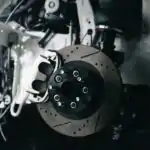
Friction is a force that opposes motion between two surfaces in contact. In a vehicle’s braking system, friction is generated between the brake pads (or shoes) and the brake disc (or drum). This friction converts the vehicle’s kinetic energy (energy of motion) into heat energy, causing the vehicle to slow down or stop.
Importance of Brakes
Brakes are essential for the safe operation and control of a vehicle. They allow drivers to:
- Slow down a vehicle from higher speeds.
- Bring a vehicle to a complete stop when necessary.
- Hold a stationary vehicle in place, especially on sloped surfaces.
- Control vehicle speed, particularly when driving downhill.
- Prevent accidents by enabling quick and controlled stopping.
Purpose of the Braking System
The main purpose of a vehicle’s braking system is to:
- Reduce the speed of a moving vehicle.
- Bring a moving vehicle to a complete and controlled stop.
- Keep a stationary vehicle from moving (using the parking brake).
- Ensure the safety of the driver, passengers, and other road users by providing effective stopping power.
Effect of Braking on a Moving Vehicle
When brakes are applied to a moving vehicle, the following effects occur:
- Deceleration: The vehicle’s speed decreases rapidly.
- Heat Generation: Significant heat is generated at the brake components due to the conversion of kinetic energy.
- Weight Transfer: The vehicle’s weight shifts towards the front wheels.
- Tire Grip: The tires rely on sufficient grip with the road surface to effectively transmit the braking force and stop the vehicle.
- Stopping Distance: The distance required to bring the vehicle to a complete stop is determined by factors such as initial speed, road conditions, and brake effectiveness.
Teaching Methods/Instructional Techniques
Discussion, Lecture, Demonstration, Question and Answer, Visual Aids
Instructional Procedures
Step 1: Introduction
Time: 5 minutes
Teaching Skill: Set Induction
Teacher’s Activity: The teacher greets the pupils and asks them to recall any safety features they know in a car. The teacher then guides the discussion towards the importance of stopping a moving vehicle safely.
Pupils’ Activity: Pupils respond by mentioning safety features like seatbelts, airbags, and then identify brakes as a means to stop a vehicle.
Learning Point: Pupils are introduced to the concept of vehicle safety and the role of brakes.
Step 2: Explanation of Friction in Braking
Time: 10 minutes
Teaching Skill: Explanation/Demonstration
Teacher’s Activity: The teacher explains the concept of friction using simple examples (e.g., rubbing hands together). The teacher then relates this to how brake pads and discs/drums create friction to slow down or stop a vehicle, perhaps using actual brake components to illustrate.
Pupils’ Activity: Pupils listen attentively, ask questions for clarification, and observe the demonstration of brake components.
Learning Point: Pupils understand the role of friction in the braking process.
Step 3: Discussion on Importance of Brakes
Time: 7 minutes
Teaching Skill: Discussion/Questioning
Teacher’s Activity: The teacher leads a discussion on why brakes are important for driving safety and control, asking pupils to give scenarios where brakes are essential.
Pupils’ Activity: Pupils contribute ideas, stating various reasons why brakes are important, such as preventing accidents and controlling speed.
Learning Point: Pupils grasp the significance of brakes for vehicle safety and operation.
Step 4: Outlining the Purpose of the Braking System
Time: 7 minutes
Teaching Skill: Lecture/Elaboration
Teacher’s Activity: The teacher systematically outlines the main purposes of the entire braking system, including stopping, slowing, and holding a vehicle stationary. The teacher uses the board to list these points.
Pupils’ Activity: Pupils listen, take notes, and ask questions to understand the various functions of the braking system.
Learning Point: Pupils learn the specific functions and objectives of a vehicle’s braking system.
Step 5: Explaining the Effect of Braking on a Moving Vehicle
Time: 6 minutes
Teaching Skill: Explanation/Illustration
Teacher’s Activity: The teacher explains what happens to a moving vehicle when the brakes are applied, discussing concepts like deceleration, heat generation, and weight transfer. The teacher uses simple diagrams or analogies if needed.
Pupils’ Activity: Pupils listen and try to visualize the physical effects of braking on a vehicle.
Learning Point: Pupils understand the physical changes and forces at play during braking.
Step 6: Identification of Brake Components
Time: 5 minutes
Teaching Skill: Demonstration/Identification
Teacher’s Activity: Using the instructional materials (live vehicle or brake components), the teacher points out and names key parts of the braking system such as the brake pedal, master cylinder, brake lines, calipers, brake pads, and brake disc/drum.
Pupils’ Activity: Pupils observe the components, listen to their names, and try to identify them.
Learning Point: Pupils can visually identify major components of a braking system.
Step 7: Evaluation/Review
Time: 5 minutes
Teaching Skill: Questioning/Assessment
Teacher’s Activity: The teacher evaluates the learning by asking the following questions:
- Define friction as it applies to a vehicle’s braking system.
- State three reasons why brakes are important in a vehicle.
- List two main purposes of a braking system.
- Explain one effect of braking on a moving vehicle.
Pupils’ Activity: Pupils answer orally and in writing.
Learning Point: Pupils demonstrate understanding of the lesson.
Step 8: Conclusion
Time: 5 minutes
Teaching Skill: Summarization
Teacher’s Activity: The teacher summarizes the key points of the lesson, reinforcing the importance of friction, the functions of the braking system, and its role in vehicle safety. The teacher assigns homework for pupils to research different types of braking systems (e.g., disc brakes, drum brakes, ABS).
Pupils’ Activity: Pupils listen to the summary and copy down the homework assignment.
Learning Point: Pupils consolidate their learning and are prepared for further study.
Lesson Keywords
- Friction – A force that opposes motion between surfaces in contact.
- Braking System – The mechanism in a vehicle used to slow down or stop its movement.
- Kinetic Energy – The energy possessed by an object due to its motion.
- Deceleration – The rate at which an object’s velocity decreases.
- Brake Pads – Components in disc brakes that press against the disc to create friction.
- Brake Drum – A rotating component in drum brakes that shoes press against to create friction.
Differentiation
For pupils who grasp concepts quickly, the teacher will encourage them to research the different types of braking systems (e.g., ABS, hydraulic brakes) and their advantages. For pupils needing more support, the teacher will provide simplified diagrams and offer one-on-one explanations, focusing on the core concepts of friction and the main purpose of brakes.
Note for teachers using this lesson plan
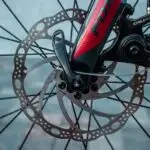
Teachers should ensure that actual brake components are available for demonstration to enhance understanding. Safety precautions must be observed if a live vehicle is used for demonstration. Encourage pupils to relate the concepts to their daily experiences with bicycles or other moving objects.


Community Join the conversation Open discussion +