

Class: Senior Secondary School 2 (SS2 / SSS2)
Term: Third Term
Week: 10
Age: 16 years
Duration: 45 minutes
Subject: Auto Mechanic Work
Curriculum Theme: Auto-mechanic Maintenance & Service
Previous Lesson: Wheel and Tyre Service—Wheel Construction: Explanation and Observation.
Topic: WHEELS AND TYRE SERVICE—TYRE REGULATIONS
Subject Matter: Meaning of WHEELS AND TYRE SERVICE—TYRE REGULATIONS, types of tyre construction, procedures involved in tyre construction.
Specific Objectives
By the end of the lesson, pupils should be able to:
Cognitive Domain:
- Define tyre regulations.
- Identify different types of tyre construction.
- State the main components of a tyre.
Affective Domain:
- Appreciate the importance of adhering to tyre regulations for safety.
- Show interest in understanding the construction of tyres.
Psychomotor Domain:
- Point out the different construction features on a tyre.
- Demonstrate basic inspection procedures related to tyre construction.
Social Domain:
- Collaborate with peers during practical identification of tyre features.
Reference Materials
The following resources were used in planning this lesson:
- Senior Secondary Schools Education Curriculum
- State Unified Scheme of Work
- Automobile Mechanics for Senior Secondary Schools.
- https://www.naijauto.com/car-maintenance/tyre-regulations-nigeria-7650
- https://www.continental-tyres.com/car/tire-knowledge/tire-technology/tire-construction
Instructional Materials
The teacher will teach this lesson with the aid of:
- Actual tyres and tubes (if available).
- Tyre pressure gauge.
- Vulcanizing equipment (for demonstration of related tools).
- Charts or diagrams illustrating tyre construction.
Rationale for the Lesson
Understanding tyre regulations and construction helps pupils ensure vehicle safety and performance. This knowledge is important for proper tyre maintenance and for identifying common tyre issues, which is a fundamental skill in auto mechanic work.
Prerequisite/Previous Knowledge
Pupils have basic knowledge of vehicle components and the general function of wheels and tyres.
Lesson Content/Board Summary
WHEELS AND TYRE SERVICE—TYRE REGULATIONS
Meaning of Tyre Regulations
Tyre regulations are a set of legal rules and standards established by government bodies and automotive organizations. These regulations govern the design, manufacturing, labeling, usage, and maintenance of tyres to ensure vehicle safety, performance, and environmental compliance. They cover aspects like tyre size, load capacity, speed rating, tread depth, and inflation pressure.
Types of Tyre Construction
Tyres are constructed in different ways, primarily categorized by how the plies (layers of fabric cords) are arranged. The main types of tyre construction are:
- Radial-ply Tyres: In radial tyres, the body plies run across the tyre from bead to bead at a 90-degree angle to the direction of travel. A belt of steel or fabric cords is placed under the tread to stabilize it. These tyres offer better grip, fuel economy, and longer tread life.
- Bias-ply (Cross-ply) Tyres: Bias-ply tyres have body plies that run diagonally from bead to bead, typically at angles of 30 to 45 degrees. Successive plies are laid in opposing directions, forming a crisscross pattern. These tyres provide a smoother ride but have less grip and generate more heat.
- Belted-bias Tyres: These are a hybrid of bias-ply and radial-ply constructions. They have bias-ply body cords and then a belt (similar to radial tyres) under the tread. They offer a compromise between the characteristics of radial and bias tyres.
Main Components of a Tyre
A typical tyre is made up of several key components that work together:
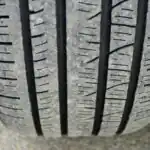
- Tread: The part of the tyre that makes contact with the road. It provides grip, traction, and sheds water.
- Sidewall: The flexible rubber part between the tread and the wheel rim. It protects the casing and contains important tyre information (size, type, load, speed rating).
- Casing (Body Plies): The main structure of the tyre, consisting of layers of fabric cords (e.g., polyester, nylon, rayon) embedded in rubber. It gives the tyre its strength and shape.
- Bead: A strong loop of high-tensile steel wire embedded in rubber, which anchors the tyre to the wheel rim, creating an airtight seal.
- Inner Liner: A layer of rubber (butyl rubber) on the inside of the tyre that forms an airtight barrier, preventing air from escaping.
Teaching Methods/Instructional Techniques
Discussion, Lecture, Demonstration, Question and Answer, Visual Aids, Practical
Instructional Procedures
Step 1: Introduction
Time: 5 minutes
Teaching Skill: Set Induction
Teacher’s Activity: The teacher greets the pupils, reviews the previous lesson, and introduces the new topic: “WHEELS AND TYRE SERVICE—TYRE REGULATIONS,” explaining its relevance to vehicle safety and maintenance.
Pupils’ Activity: Pupils respond to greetings, recall previous knowledge, and listen attentively to the introduction.
Learning Point: Pupils connect prior knowledge to the new topic and understand its importance.
Step 2: Meaning of Tyre Regulations
Time: 8 minutes
Teaching Skill: Explanation/Definition
Teacher’s Activity: The teacher defines what tyre regulations are, explaining why they are necessary for vehicle safety, performance, and environmental compliance. The teacher may list examples of what regulations cover.
Pupils’ Activity: Pupils listen, take notes, and ask questions for clarification on tyre regulations.
Learning Point: Pupils understand the definition and purpose of tyre regulations.
Step 3: Types of Tyre Construction
Time: 10 minutes
Teaching Skill: Explanation/Illustration
Teacher’s Activity: The teacher explains the different types of tyre construction: Radial-ply, Bias-ply, and Belted-bias. The teacher uses diagrams or actual tyres to illustrate the arrangement of plies for each type.
Pupils’ Activity: Pupils observe the diagrams/tyres, listen to explanations, and identify the construction types.
Learning Point: Pupils can differentiate between radial-ply, bias-ply, and belted-bias tyre constructions.
Step 4: Main Components of a Tyre
Time: 7 minutes
Teaching Skill: Identification/Description
Teacher’s Activity: The teacher describes the main components of a tyre: tread, sidewall, casing (body plies), bead, and inner liner. The teacher points out these parts on a physical tyre or a detailed diagram.
Pupils’ Activity: Pupils identify the different components as the teacher describes them and take notes.
Learning Point: Pupils can identify and understand the function of each main part of a tyre.
Step 5: Practical Demonstration of Tyre Features
Time: 5 minutes
Teaching Skill: Demonstration
Teacher’s Activity: The teacher uses available tyres to physically show and explain the construction features like tread patterns, sidewall markings, and how the bead fits into the rim. The teacher also demonstrates how to use a tyre pressure gauge.
Pupils’ Activity: Pupils observe the demonstration, handle the tyre pressure gauge, and ask questions about the features shown.
Learning Point: Pupils relate theoretical knowledge of tyre construction to practical examples.
Step 6: Guided Practice
Time: 5 minutes
Teaching Skill: Practical Application/Supervision
Teacher’s Activity: The teacher guides pupils to identify the different construction types (if multiple tyres are available) and components on various tyres. The teacher encourages pupils to discuss the implications of different constructions.
Pupils’ Activity: Pupils actively participate in identifying tyre features and components under the teacher’s supervision, discussing their observations.
Learning Point: Pupils apply their knowledge to practically identify and discuss tyre construction features.
Step 7: Evaluation/Review
Time: 5 minutes
Teaching Skill: Questioning/Assessment
Teacher’s Activity: The teacher evaluates the learning by asking the following questions:
- What are tyre regulations?
- Mention two types of tyre construction.
- List three main components of a tyre.
- Why is it important to adhere to tyre regulations?
Pupils’ Activity: Pupils answer orally and in writing.
Learning Point: Pupils demonstrate understanding of the lesson.
Step 8: Conclusion
Time: 2 minutes
Teaching Skill: Summarization/Assignment
Teacher’s Activity: The teacher summarizes the key points of the lesson, emphasizing the importance of understanding tyre regulations and construction for safety and vehicle maintenance. The teacher gives homework: “Research common tyre markings and their meanings.”
Pupils’ Activity: Pupils listen to the summary and copy the homework assignment.
Learning Point: Pupils reinforce their understanding and are prepared for further learning.
Lesson Keywords
- Tyre – A strong, flexible rubber covering, typically inflated with air, placed around the rim of a wheel to absorb shock and provide grip.
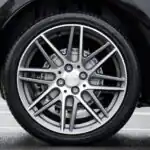
- Wheel – A circular object that revolves on an axle and is fixed below a vehicle, enabling it to move.
- Regulation – A rule or directive made and maintained by an authority.
- Radial – A type of tyre construction where plies run perpendicular to the direction of travel.
- Bias – A type of tyre construction where plies run diagonally across the tyre.
- Tread – The patterned outer surface of a tyre that contacts the road.
- Sidewall – The side portion of a tyre between the tread and the bead.
- Casing – The main body or structure of a tyre, containing the plies.
- Bead – The part of the tyre that sits on the wheel rim, usually reinforced with steel wire.
Differentiation
For pupils who are struggling, the teacher will provide simplified diagrams and focus on identifying the main parts of a tyre. For advanced learners, the teacher will encourage research into specific tyre ratings (e.g., speed, load index) and their implications for different vehicle types.
Note for teachers using this lesson plan
Teachers should ensure that safety precautions are observed if using actual tyres and tools during the practical demonstration. Emphasize the importance of correct tyre inflation and maintenance as a direct application of understanding tyre construction and regulations. Encourage pupils to bring in pictures of different tyre types if actual tyres are not readily available.


Community Join the conversation Open discussion +