

Class: Senior Secondary School 1 (SS1, SS 1, SSS1, SSS 1)
Term: 3rd Term
Week: 4
Age: 15 years
Duration: 45 minutes
Subject: Visual Art
Curriculum Theme: Visual Art
Previous Lesson: Methods of Modelling: Coiling, Slabbing, Pinching, Drying and Firing.
Topic: Sculpture
Subject Matter: Meaning of sculpture, common tools for sculpture, materials used in sculpture, techniques for using sculptural tools, types of sculpture (metal, cement, wax, wood, terracotta, plaster of Paris), simple modelling practice
Specific Objectives
By the end of the lesson, pupils should be able to:
Cognitive Domain:
- Define sculpture.
- List common tools used for sculpture.
- List materials used in sculpture.
- State techniques for using basic sculptural tools safely and correctly.
- List types of sculpture: metal, cement, wax, wood, terracotta, and plaster of Paris.
Affective Domain:
- Show interest in creating simple sculpture forms.
- Demonstrate care and patience during modelling and tool use.
Psychomotor Domain:
- Identify sculptural tools by name and use.
- Use basic sculptural tools to cut, smoothen, and shape a material.
- Model a simple form using clay or any available modelling material.
Social Domain:
- Work in groups to share materials and tools responsibly.
- Participate in class discussion by describing tools, materials, and types of sculpture.
Reference Materials
The following resources were used in planning this lesson:
- 9 Years Basic Education Curriculum
- State Unified Scheme of Work
- Visual Art for Senior Secondary Schools (Textbook)
- Encyclopaedia Britannica: Sculpture
- Tate: Sculpture (Art Term)
- The Metropolitan Museum of Art: Sculpture
Instructional Materials
The teacher will teach this lesson with the aid of:
- Clay or modelling material
- Wood pieces (small off-cuts where available)
- Basic sculptural tools (modelling tools, scrapers, spatula, loop tools)
- Improvised tools (old spoon, blunt knife, small plastic card)
- Water container and cloth for cleaning
- Sample pictures of different types of sculpture
- Work surface (desk, tray, or board)
Rationale for the Lesson
Sculpture helps pupils understand how forms are created in three dimensions, not only on flat surfaces. The lesson supports creativity and improves hand skills needed for craft work, decorations, and practical art tasks.
Prerequisite/Previous Knowledge
Pupils can draw simple forms and have handled basic art materials such as pencil, paper, and colour.
Lesson Content/Board Summary
Sculpture
Meaning of Sculpture
Sculpture is an art form of making three-dimensional (3-D) objects by carving, modelling, moulding, or constructing materials into forms.
The following are common features of sculpture:
- It has height, width, and depth.
- It can be viewed from different sides.
- It can be made by adding material (modelling) or removing material (carving).
Common Tools for Sculpture
Sculptural tools are used to shape, cut, smoothen, and add details to materials.
The following are common tools for sculpture:
- Modelling tools (wooden or plastic)
- Loop tools
- Scrapers
- Spatula
- Wire cutter
- Chisel (for wood/stone)
- Mallet/hammer
- Rasp and file
- Sandpaper
Materials Used in Sculpture
Sculpture materials are substances used to create sculptural forms.
The following are materials used in sculpture:
- Clay
- Wood
- Metal
- Cement
- Wax
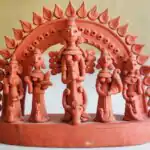
- Terracotta
- Plaster of Paris
Techniques for Using Sculptural Tools
Proper tool use helps to achieve neat finishing and prevents damage to the work and injury.
The following are techniques for using sculptural tools:
- Hold tools firmly and work on a stable surface.
- Use gentle pressure when shaping soft materials like clay.
- Cut away from the body when using sharp tools.
- Use loop tools for removing small parts and creating grooves.
- Use scrapers and spatula for smoothing and flattening surfaces.
- Use sandpaper for final smoothening of dry surfaces.
- Clean tools after use to prevent rust and dirt on work.
Types of Sculpture
Types of sculpture can be identified based on the main material used.
The following are types of sculpture:
- Metal sculpture
- Cement sculpture
- Wax sculpture
- Wood sculpture
- Terracotta sculpture
- Plaster of Paris sculpture
Simple Modelling Practice
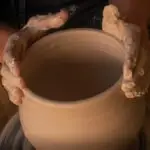
Modelling is a method of creating sculpture by adding and shaping material, usually clay or similar materials.
The following are steps for simple modelling practice:
- Knead the clay to remove air and make it soft.
- Form a basic shape (ball, cylinder, or block) as the base.
- Build the form by adding small pieces and joining properly.
- Use modelling tools to shape, cut, and add simple details.
- Smoothen surfaces with a spatula and small amount of water.
- Allow the model to dry and keep it safe from damage.
Teaching Methods/Instructional Techniques
Discussion, Lecture, Demonstration, Question and Answer, Visual Aids
Instructional Procedures
Step 1: Introduction
Time: 5 minutes
Teaching Skill: Set Induction
Teacher’s Activity: The teacher displays pictures or a small sample model and asks pupils to describe what makes it different from drawings on paper.
Pupils’ Activity: Pupils observe and mention that the object can be touched and viewed from all sides.
Learning Point: Sculpture is a three-dimensional art form.
Step 2: Meaning of Sculpture
Time: 7 minutes
Teaching Skill: Explanation
Teacher’s Activity: The teacher defines sculpture, explains key features, and writes the main points on the board.
Pupils’ Activity: Pupils listen, respond to questions, and copy notes.
Learning Point: Sculpture is made by modelling, carving, moulding, or constructing materials into 3-D forms.
Step 3: Tools for Sculpture
Time: 6 minutes
Teaching Skill: Demonstration
Teacher’s Activity: The teacher displays basic sculptural tools and explains their uses (cutting, shaping, smoothing, detailing).
Pupils’ Activity: Pupils identify the tools and match each tool to its use.
Learning Point: Different tools are used for different sculptural tasks.
Step 4: Materials Used in Sculpture
Time: 7 minutes
Teaching Skill: Discussion
Teacher’s Activity: The teacher leads discussion on materials used in sculpture and shows examples through pictures or real materials where available.
Pupils’ Activity: Pupils list materials and state which ones they have seen around them.
Learning Point: Sculpture can be made from clay, wood, metal, cement, wax, terracotta, and plaster of Paris.
Step 5: Techniques for Using Sculptural Tools
Time: 6 minutes
Teaching Skill: Demonstration
Teacher’s Activity: The teacher demonstrates safe and correct handling of tools on a small piece of clay and explains key techniques for shaping and smoothing.
Pupils’ Activity: Pupils observe closely and practise simple tool strokes on their materials.
Learning Point: Correct tool use improves neatness and safety.
Step 6: Practical Activity (Simple Modelling)
Time: 4 minutes
Teaching Skill: Guided Practice
Teacher’s Activity: The teacher guides pupils to model a simple object (fruit, cup, or basic animal form) and supervises finishing.
Pupils’ Activity: Pupils model simple forms and apply basic smoothing and detailing.
Learning Point: Modelling is done by adding and shaping material into a 3-D form.
Step 7: Evaluation/Review
Time: 5 minutes
Teaching Skill: Questioning/Assessment
Teacher’s Activity: The teacher evaluates the learning by asking the following questions:
- Define sculpture.
- List five tools used in sculpture.
- State four materials used in sculpture.
- List the types of sculpture based on material.
Pupils’ Activity: Pupils answer orally and in writing.
Learning Point: Pupils demonstrate understanding of the lesson.
Step 8: Conclusion
Time: 5 minutes
Teaching Skill: Summary
Teacher’s Activity: The teacher summarizes key points and gives classwork: produce a simple clay model and write short notes on five sculptural tools and their uses.
Pupils’ Activity: Pupils submit their practice work for checking and write the classwork.
Learning Point: Sculpture involves materials and tools used to create three-dimensional forms.
Lesson Keywords
- Sculpture – Three-dimensional art made by modelling, carving, moulding, or constructing.
- Modelling – Creating a form by adding and shaping material like clay.
- Carving – Creating a form by removing material from wood, stone, or similar materials.
- Loop Tool – A tool used for removing small parts and making grooves in soft materials.
- Terracotta – Baked clay used for making clay sculptures.
- Plaster of Paris – A white powder mixed with water for casting and modelling.
Differentiation
Pupils who learn faster will model a more detailed object and add surface texture, while pupils who need support will model a simple basic shape and receive guidance on joining parts and smoothing surfaces.
Note for teachers using this lesson plan
Control the use of sharp tools and ensure pupils work on stable surfaces to prevent injuries. Use simple modelling tasks to fit the lesson time and encourage neat finishing and proper cleaning of tools after practical work.

Community Join the conversation Open discussion +