

Class: Senior Secondary School 1 (SS1, SS 1, SSS1, SSS 1)
Term: 1st Term
Week: 9
Age: 15 years
Duration: 45 minutes
Subject: Visual Art
Curriculum Theme: Visual Art
Previous Lesson: Materials used in manual portfolios and Construct a simple folder.
Topic: Visual Sense
Subject Matter: Dynamics of basic shapes in objects; basic shapes of natural objects; basic shapes of man-made objects; identifying shapes in household objects like bottles and flasks; texture as surface likeness in objects.
Specific Objectives
By the end of the lesson, pupils should be able to:
Cognitive Domain:
- Define basic shapes and visual sense in relation to observing objects.
- Identify basic shapes found in natural objects.
- Identify basic shapes found in man-made objects.
- State examples of household objects and the shapes they can be reduced to.
- Define texture and state examples of textures on common objects.
Affective Domain:
- Show interest in careful observation of objects in the environment.
- Appreciate neatness and order when handling and arranging objects for study.
- Demonstrate willingness to participate during observation and identification activities.
Psychomotor Domain:
- Sort and arrange provided objects according to their basic shapes.
- Sketch simple outlines of objects using basic shapes (circle, rectangle, cylinder, cone, sphere).
- Make a simple texture-rubbing sample using paper and a textured object surface.
Social Domain:
- Work in groups to identify shapes and textures in shared objects.
- Share findings politely during class discussion.
- Cooperate by taking turns to handle objects and present group results.
Reference Materials
The following resources were used in planning this lesson:
- 9 Years Basic Education Curriculum
- State Unified Scheme of Work
- New Practical Fine Art for Senior Secondary Schools (section on basic elements of art: shape and texture)
- Encyclopaedia Britannica: Shape
- Encyclopaedia Britannica: Texture
- Tate: Shape (Art Term)
Instructional Materials
The teacher will teach this lesson with the aid of:
- Household objects such as bottles, flasks, spray can, cup, box, spoon
- Natural objects such as fruits (orange, apple), leaves, stones
- Papers, pencils, eraser, ruler
- Chart showing basic shapes (circle, triangle, square, rectangle, cylinder, cone, sphere)
- Cardboard or table surface for object display
Rationale for the Lesson
Understanding basic shapes and texture helps pupils to see objects clearly and draw them correctly. It also supports design, craft, and everyday problem-solving where objects must be described and represented accurately.
Prerequisite/Previous Knowledge
Pupils can identify common 2D shapes such as circle, square, triangle, and rectangle from earlier classes and basic mathematics lessons.
Lesson Content/Board Summary
Visual Sense
Meaning of Visual Sense
Visual sense is the ability to observe objects carefully and recognise their shapes, sizes, and surface features for correct identification and drawing.
Basic Shapes Found in Objects
Basic shapes are simple forms that objects can be reduced to during observation or drawing.
The following are common basic shapes in objects:
- Circle
- Triangle
- Square
- Rectangle
- Cylinder
- Cone
- Sphere
- Cube
Basic Shapes of Natural Objects
Natural objects are things found in nature such as fruits, leaves, stones, and seeds.
The following are examples of natural objects and their basic shapes:
- Orange or apple: sphere
- Leaf: oval or irregular shape
- Stone: irregular shape
- Banana: curved cylinder
- Seed/bean: oval
Basic Shapes of Man-Made Objects
Man-made objects are things produced by humans such as bottles, boxes, and tools.
The following are examples of man-made objects and their basic shapes:
- Bottle: cylinder (with cone or curve at the neck)
- Flask: cylinder or rectangular prism
- Spray can: cylinder
- Matchbox or carton: rectangle/cuboid
- Ball: sphere
- Cup: cylinder
Identifying Shapes in Household Objects
Objects can be reduced to basic shapes by focusing on the outline and main form before details.
The following are steps for identifying shapes in household objects:
- Observe the object from the front and side.
- Identify the main form (round, flat, tall, wide).
- Match the form with a basic shape (circle, rectangle, cylinder, cone, sphere).
- Note additional parts (handle, cover, neck) and reduce them to simple shapes.
- Combine the shapes to describe the full object.
Meaning of Texture
Texture is the surface quality of an object that can be seen or felt.
Examples of Texture on Common Objects
The following are examples of texture on objects:
- Smooth: glass bottle, plastic flask, polished metal spoon
- Rough: stone, unpolished wood, some clay surfaces
- Soft: fruit skin (ripe mango), fabric materials
- Hard: metal, glass, some plastics
- Bumpy/raised: patterned bottle surface, rough fruit skin (orange)
Teaching Methods/Instructional Techniques
Discussion, Lecture, Demonstration, Question and Answer, Visual Aids
Instructional Procedures
Step 1: Introduction
Time: 5 minutes
Teaching Skill: Set Induction
Teacher’s Activity: The teacher displays a bottle, a fruit, and a box and asks pupils to describe what they see in terms of shape and surface feel.
Pupils’ Activity: Pupils observe the objects and mention simple shapes and surface qualities.
Learning Point: Objects around us have basic shapes and surface features that can be observed.
Step 2: Meaning of Visual Sense and Basic Shapes
Time: 6 minutes
Teaching Skill: Explanation
Teacher’s Activity: The teacher explains visual sense and introduces basic shapes using a chart, linking each shape to an object example.
Pupils’ Activity: Pupils copy notes and mention one object that matches each shape.
Learning Point: Visual sense helps the observer to identify and reduce objects to basic shapes.
Step 3: Basic Shapes of Natural Objects
Time: 6 minutes
Teaching Skill: Demonstration
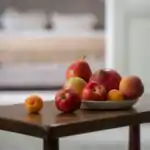
Teacher’s Activity: The teacher displays fruits and other natural items and guides pupils to identify the basic shapes in them.
Pupils’ Activity: Pupils state the basic shape of each natural object shown.
Learning Point: Natural objects can be described using basic shapes such as sphere, oval, and irregular forms.
Step 4: Basic Shapes of Man-Made Objects
Time: 6 minutes
Teaching Skill: Discussion
Teacher’s Activity: The teacher displays man-made objects (bottle, flask, spray can, box) and guides pupils to match them with basic shapes.
Pupils’ Activity: Pupils identify shapes and give examples from their homes.
Learning Point: Man-made objects can be reduced to basic shapes such as cylinder, cuboid, and cone.
Step 5: Identifying Shapes in Household Objects
Time: 6 minutes
Teaching Skill: Guided Practice
Teacher’s Activity: The teacher explains steps for identifying shapes, then asks groups to select one object and reduce it to two or three basic shapes.
Pupils’ Activity: Pupils work in groups to describe the chosen object using combined shapes and present briefly.
Learning Point: Objects can be described by combining simple shapes after careful observation.
Step 6: Texture in Objects
Time: 6 minutes
Teaching Skill: Demonstration
Teacher’s Activity: The teacher defines texture and demonstrates by allowing pupils to feel or closely observe surfaces (smooth, rough, bumpy) and lists examples on the board.
Pupils’ Activity: Pupils classify provided objects by texture and copy notes.
Learning Point: Texture describes the surface quality of an object and can be seen or felt.
Step 7: Evaluation/Review
Time: 5 minutes
Teaching Skill: Questioning/Assessment
Teacher’s Activity: The teacher evaluates the learning by asking the following questions:
- Define visual sense.
- List five basic shapes found in objects.
- State two natural objects and the basic shapes they can be reduced to.
- Explain what texture is and mention three examples of texture found on objects.
Pupils’ Activity: Pupils answer orally and in writing.
Learning Point: Pupils demonstrate understanding of the lesson.
Step 8: Conclusion
Time: 5 minutes
Teaching Skill: Summary and Reinforcement
Teacher’s Activity: The teacher summarizes how objects are reduced to basic shapes and how texture is identified, then gives an assignment for pupils to list five household objects, state their basic shapes, and describe their textures.
Pupils’ Activity: Pupils copy the assignment and submit classwork where required.
Learning Point: Basic shapes and texture help in accurate observation and drawing of objects.
Lesson Keywords
- Visual sense – Ability to observe objects carefully and recognise their forms and surfaces.
- Basic shape – Simple form an object can be reduced to, such as circle or rectangle.
- Natural object – Something found in nature, such as fruits, leaves, or stones.
- Man-made object – Something made by humans, such as bottles, flasks, and boxes.
- Texture – The surface quality of an object that can be seen or felt.
- Sphere – A round 3D shape like a ball or orange.
- Cylinder – A 3D shape with circular ends like a bottle or can.
- Cuboid – A box-like 3D shape with rectangular faces.
Differentiation
Pupils who need support will use a prepared matching worksheet that pairs objects with shapes and textures using pictures. Pupils who progress faster will combine two or three shapes to describe a complex object and produce a neat outline sketch showing the shapes used.
Note for teachers using this lesson plan
Use real objects that pupils can see clearly and handle safely, and ensure all group members take turns during identification. Emphasize short, exam-style points for definitions, listing shapes, giving examples, and stating textures, and correct wrong shape choices by comparing outlines with the shape chart.
Community Join the conversation Open discussion +