

Class: Primary 3
Term: 3rd Term
Week: 9
Age: 9 years
Duration: 40 minutes
Subject: Christian Religion Studies
Curriculum Theme: Christian Religion Studies
Previous Lesson: Reasons For Having Peace
Topic: Meaning Of Forbearance And Understanding
Content/Learning Area: Isaac in the face of provocation Genesis 26:17–23, Turning enemies into friends by being tolerance, love, Proverbs 16:7
Performance Objectives
By the end of the lesson, pupils should be able to:
Cognitive Domain: Explain the meaning of forbearance and understanding using Bible examples
Affective Domain: Show willingness to forgive and tolerate others like Isaac did
Psychomotor Domain: Demonstrate the act of forbearance through role play or short skits
Social Domain: Participate in class discussion on how to turn enemies into friends through love and peace
Reference Materials
The following resources were used in planning this lesson:
- 9 Years Basic Education Curriculum
- Abuja Educational Resource Centre Scheme of Work
- NAPPS National Unified Scheme of Work
- Online Information from: wikipedia – Forbearance
- Relevant Textbooks
Instructional Materials
The teacher will teach this lesson with the aid of:
- Bible
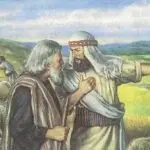
- Picture chart showing Isaac and the Philistines
- Flashcards with key Bible verses
- Whiteboard and marker
- Role-play name tags (e.g., Isaac, Philistines, Neighbour, Friend)
Rationale for the Lesson
To help pupils understand and practice the Christian values of patience, love, and peace through biblical examples.
Prerequisite/Previous Knowledge
Pupils have heard Bible stories and can recognize basic Christian virtues like love, peace, and forgiveness.
Lesson Content
Meaning Of Forbearance And Understanding
Forbearance means being patient and not getting angry easily, especially when someone wrongs us. Understanding means knowing how others feel and being kind even when they make mistakes.
Memory Verse: When a man’s ways please the LORD, he maketh even his enemies to be at peace with him. — Proverbs 16:7
Bible Readings
- Genesis 26:17–23
- Proverbs 16:7
Isaac and the Philistines
Isaac moved to a new land after there was trouble where he lived. He began to dig wells so he could get water. But every time Isaac’s servants dug a well, the people in the land—called the Philistines—quarreled with him and took the wells away.
Instead of fighting back, Isaac moved away and dug another well. This happened more than once, but Isaac did not argue. At last, he dug a well and nobody argued with him. Isaac chose peace over fighting. Because of this, God blessed him greatly.
Lessons from Isaac’s Story
Isaac showed forbearance and understanding. He did not fight his enemies, and he stayed peaceful. In the end, even the people who quarreled with him made peace with him.
How to Turn Enemies into Friends
We can turn our enemies into friends by showing love and peace. Even if someone treats us badly, we should not fight back. We should be kind and understanding, just like Isaac.
The following are ways to turn enemies into friends:
- Speak kindly to those who are rude
- Forgive people who offend you
- Help others even when they hurt you
- Pray for those who dislike you
- Do not keep anger in your heart
Teaching Methods
To deliver this lesson, the teacher will adopt the following methods: Storytelling, Explanation, Discussion, Visual Aids, Group Work, Role Play
Instructional Procedures
To deliver this lesson, the teacher will adopt the following steps:
Step 1: Introduction
Time: 5 mins
Teaching Skill: Set Induction
Teacher’s Activity: Tells a story about a child who chooses peace over fighting with a classmate, then asks pupils what they would do
Pupils’ Activity: Pupils listen and respond to questions
Learning Point: Connects real-life to Bible values
Step 2: Meaning of Forbearance and Understanding
Time: 5 mins
Teaching Skill: Explanation
Teacher’s Activity: Defines forbearance and understanding with examples; writes the definitions on the board
Pupils’ Activity: Pupils listen, repeat, and copy definitions
Learning Point: Understands basic meaning of key concepts
Step 3: Isaac and the Philistines
Time: 10 mins
Teaching Skill: Storytelling
Teacher’s Activity: Reads and narrates the story from Genesis 26:17–23 using Bible and visual aids
Pupils’ Activity: Pupils listen and watch with interest
Learning Point: Learns from Isaac’s example
Step 4: Lessons from Isaac’s Story
Time: 5 mins
Teaching Skill: Discussion
Teacher’s Activity: Explains how Isaac acted and what we learn from it; discusses Bible verses
Pupils’ Activity: Pupils discuss and share their understanding
Learning Point: Identifies moral lessons
Step 5: Turning Enemies into Friends
Time: 5 mins
Teaching Skill: Group Work
Teacher’s Activity: Leads group discussion on how to turn enemies into friends, with pupils giving examples
Pupils’ Activity: Pupils give suggestions and join in class discussion
Learning Point: Applies moral lesson to real life
Step 6: Note Taking
Time: 3 mins
Teaching Skill: Writing
Teacher’s Activity: Writes summary of the lesson on the board for pupils to copy
Pupils’ Activity: Pupils copy the note into their exercise books
Learning Point: Reinforces lesson points
Step 7: Evaluation
Time: 5 mins
Teaching Skill: Assessment
Teacher’s Activity: Asks questions on meaning, Isaac’s actions, and ways to turn enemies into friends
Pupils’ Activity: Pupils answer questions and perform simple tasks
Learning Point: Tests understanding of topic
Step 8: Conclusion
Time: 2 mins
Teaching Skill: Cognitive, Social
Teacher’s Activity: Recaps the lesson, encourages pupils to practice forbearance in school and at home
Pupils’ Activity: Pupils repeat main points and promise to be more tolerant
Learning Point: Reinforces the values learned
Home Task: Write three lessons learned about Meaning Of Forbearance And Understanding and one suitable way to apply the teaching responsibly.
Lesson Keywords
- Forbearance – To be patient when someone offends you
- Understanding – Knowing how others feel and not getting angry quickly
- Provocation – When someone does something to make you angry
- Tolerance – Accepting others even when they are different or wrong
- Peace – Living without fighting or arguing
Lesson Evaluation
To evaluate the learning, the teacher asks pupils to:
- What is the meaning of forbearance?
- What did Isaac do when the Philistines took his wells?
- Mention one way to turn enemies into friends.
- Say the memory verse for today’s lesson.
- Why is it good to be tolerant?
Differentiation
Teacher will use simple language, visual aids, and group support to help pupils of all learning levels understand and participate.
Note for teachers using this lesson plan
Encourage real-life application by helping pupils reflect on their daily actions. Use role play and storytelling to drive the moral lesson home.



Community Join the conversation Open discussion +