

Class: Primary 2
Term: 3rd Term
Week: 3
Age: 8 years
Duration: 40 minutes
Subject: Christian Religion Studies
Curriculum Theme: Christian Religion Studies
Previous Lesson: God’s Promise For Abraham
Topic: The Faith Of Abraham
Content/Learning Area: Obedience, Faith, Patience, Trust in God, Hope
Performance Objectives
By the end of the lesson, pupils should be able to:
Cognitive Domain: Explain the meaning of faith and describe how Abraham showed faith in God.
Affective Domain: Express willingness to trust and obey God like Abraham.
Psychomotor Domain: Recite the memory verse and participate in role-playing the story of Abraham.
Social Domain: Cooperate in group discussion and dramatization on obedience and trust in God.
Reference Materials
The following resources were used in planning this lesson:
- 9 Years Basic Education Curriculum
- Abuja Educational Resource Centre Scheme of Work
- NAPPS National Unified Scheme of Work
- Online Information from: bob sawvelle – Abraham’s Faith and Obedience
- Relevant Textbooks
Instructional Materials
The teacher will teach this lesson with the aid of:
- Holy Bible
- Story chart of Abraham
- Flash cards with keywords
- Memory verse poster
- Role-play costume props
- Chalkboard and chalk
Rationale for the Lesson
To help pupils learn to trust and obey God through the example of Abraham’s faith.
Prerequisite/Previous Knowledge
Pupils have previously heard stories of people who obeyed God and have basic knowledge about the concept of trust and obedience.
Lesson Content
The Faith of Abraham
Abraham was a man who loved and trusted God very much. God told him to do something very hard, and he obeyed because he had strong faith in God.
Memory Verse: Abraham believed God, and it was counted unto him for righteousness. — Romans 4:3
Bible Readings
- Genesis 12:1–9
- Genesis 15:1–6
- Genesis 22:1–18
- Romans 4:1–5
Abraham’s Call and Obedience
Abraham lived in a place called Haran. One day, God told him to leave his home and go to a new land. Abraham did not know where he was going, but he obeyed God. He believed God’s promise to bless him and make him the father of many nations. Abraham packed his things and left with his wife, Sarah, and his nephew, Lot.
Abraham’s Trust in God’s Promise
God promised Abraham that he would have many children. Abraham and his wife Sarah were very old and had no child. But Abraham still trusted God. One day, God told him to look at the stars and said his children would be as many as the stars. Abraham believed and God was pleased.
Abraham’s Test of Faith
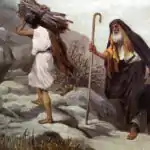
Later, God gave Abraham a son named Isaac. Then God tested Abraham by telling him to offer Isaac as a sacrifice. Abraham obeyed, but God stopped him and provided a ram instead. This showed Abraham’s great faith and obedience.
Lessons from Abraham’s Faith
- Abraham obeyed God even when it was hard.
- He trusted God’s promises even when they seemed impossible.
- He was patient and hopeful.
- God rewarded his faith with great blessings.
Teaching Methods
To deliver this lesson, the teacher will adopt the following methods: Storytelling, Explanation, Discussion, Question and Answer, Role Play, Visual Aids
Instructional Procedures
To deliver this lesson, the teacher will adopt the following steps:
Step 1: Introduction
Time: 5 mins
Teaching Skill: Set Induction
Teacher’s Activity: Tells a short story of a child who obeyed their parent even when unsure why
Pupils’ Activity: Pupils listen and share what they would do in similar cases
Learning Point: Activates interest in the topic of faith
Step 2: Abraham’s Obedience
Time: 7 mins
Teaching Skill: Storytelling
Teacher’s Activity: Narrates how Abraham obeyed God and left his home
Pupils’ Activity: Pupils listen and answer short questions
Learning Point: Understands obedience and trust in God
Step 3: God’s Promise to Abraham
Time: 7 mins
Teaching Skill: Explanation
Teacher’s Activity: Explains how Abraham believed God’s promise of many children
Pupils’ Activity: Pupils discuss what it means to trust a promise
Learning Point: Learns about hope and trust in God
Step 4: The Test of Abraham’s Faith
Time: 7 mins
Teaching Skill: Narrative
Teacher’s Activity: Acts out the story of Abraham and Isaac using role play
Pupils’ Activity: Pupils participate in the dramatization
Learning Point: Understands how Abraham’s faith was tested
Step 5: Lessons from Abraham
Time: 4 mins
Teaching Skill: Discussion
Teacher’s Activity: Leads discussion on how children can obey and trust God like Abraham
Pupils’ Activity: Pupils share ideas and experiences
Learning Point: Learns to apply faith and obedience in daily life
Step 6: Note Taking
Time: 3 mins
Teaching Skill: Writing
Teacher’s Activity: Writes key points on the board for pupils to copy
Pupils’ Activity: Pupils copy notes into their notebooks
Learning Point: Retains lesson content
Step 7: Evaluation
Time: 4 mins
Teaching Skill: Assessment
Teacher’s Activity: Asks oral questions on story and memory verse
Pupils’ Activity: Pupils answer and recite memory verse
Learning Point: Measures understanding and participation
Step 8: Conclusion
Time: 3 mins
Teaching Skill: Instructional/Cognitive
Teacher’s Activity: Summarizes key points, encourages obedience and prayer habits
Pupils’ Activity: Pupils sing a short chorus and give examples of obedience
Learning Point: Reinforces moral lessons from Abraham’s story
Home Task: Write one lesson learned about The Faith Of Abraham and one suitable way to apply the teaching responsibly.
Lesson Keywords
- Faith – Trusting and believing in God
- Obedience – Doing what God says
- Promise – Something someone says they will surely do
- Sacrifice – Giving up something valuable to show love or faith
- Blessing – Good things God gives to people
Lesson Evaluation
To evaluate the learning, the teacher asks pupils to:
- Who was Abraham?
- What did God tell Abraham to do?
- Why did Abraham leave his home?
- How did Abraham show faith in God?
- Mention two lessons we can learn from Abraham.
- Recite the memory verse.
Differentiation
The teacher will use visual aids, repetition, and group activities to help all learners understand the lesson, including those who learn slower.
Note for teachers using this lesson plan
Use storytelling and role play to make the story more engaging. Reinforce concepts with clear examples pupils can relate to. Allow all pupils to participate in the discussion.



Community Join the conversation Open discussion +