

class: Primary Two
Term: Second Term
Subject: Pre-vocational Studies
curriculum Theme: Agricultural Science
Previous Lesson: Meaning Of Ornamental Crops
Topic: Ornamental Crops
Content/Learning Area: Identifying and naming ornamental crops, appreciating the importance of ornamental crops, demonstrating the ability to observe and differentiate ornamental crops, collaborating in identifying ornamental crops
Time Allocation: 40 minutes
Performance Objectives
By the end of the lesson, pupils should be able to:
- Cognitive Domain:
1. Identify and name at least four examples of ornamental crops.
2. Explain the importance of ornamental crops.
- Affective Domain:
1. Appreciate the beauty and importance of ornamental crops in the surroundings.
- Psychomotor Domain:
1. Demonstrate the ability to observe and differentiate ornamental crops.
- Social Domain:
1. Collaborate with classmates in identifying ornamental crops during the activity.
Reference Materials
- 9 – Years Basic Education Curriculum
- abuja Educational Resource Center Scheme of Work
- NAPPS National Unified Scheme of Work
- Relevant Textbooks
Instructional Materials
To deliver this lesson, the teacher will use the following materials:
- Pictures of various ornamental crops
- Whiteboard or chart paper
- Markers
Rationale for the Lesson
Understanding ornamental crops helps pupils appreciate the environment and the role of plants in beautifying our surroundings. This knowledge is valuable for future gardening and environmental awareness.
Prerequisite/Previous Knowledge
The teacher will start by asking pupils what they know about plants and their uses. The teacher will then show pictures of different plants, prompting pupils to identify those used for beauty.
Lesson Content
Examples of Ornamental Crops
Ornamental crops are plants grown for their beauty. They decorate gardens, parks, and homes. Reasons for growing them include:
- Adding beauty to our surroundings.
- Improving air quality (some flowering plants).
- Providing shade (trees and shrubs).
- Enhancing property value.
- Creating a relaxing environment.
Types of Ornamental Crops
Ornamental crops are classified by growth habit:
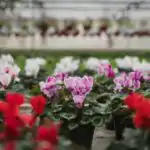
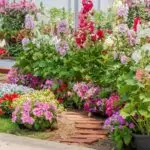
- Flowers: Roses, marigolds, sunflowers, daisies, tulips, lavender, petunias, lilies, and orchids.
- Trees: Oak trees, maple trees, cherry trees, palm trees, cedar trees, and flamboyant trees.
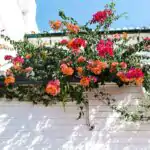
- Shrubs: Rhododendrons, azaleas, hydrangeas, hibiscus, bougainvillea, and gardenias.
- Vines: Ivy, clematis, honeysuckle, wisteria, morning glory, and climbing roses.
Common Ornamental Plants
Ornamental plants are grown mainly to make a home, school, street or garden attractive. Examples include hibiscus, croton, rose, bougainvillea and ixora. Some are valued for flowers, while others have colourful leaves or useful shapes.
Pupils may identify a plant by its leaf, flower and growth form. They should not taste an unfamiliar plant because an attractive plant may still irritate or poison the body.
Teaching Methods
To deliver this lesson, the teacher will adopt the following methods: discussion, Question and Answer, Group Activity, Show and Tell.
Instructional Procedures
To deliver this lesson, the teacher will adopt the following steps:
Step 1: Introduction
Time: 5 minutes
Teaching Skill: Set Induction
Teacher’s Activity: Asks pupils what they know about plants and their uses. Shows pictures of various plants.
Pupils’ Activity: Respond to teacher’s questions and identify plants.
Step 2: Clarification of Key Concepts
Time: 10 minutes
teaching Skill: Explaining
Teacher’s Activity: Explains the meaning of ornamental crops and their importance.
Pupils’ Activity: Listen attentively and ask clarifying questions.
Step 3: Exhibition/Guided Practice
Time: 10 minutes
Teaching Skill: Demonstrating
Teacher’s Activity: Shows pictures of different ornamental crops and guides pupils in identifying them.
Pupils’ Activity: Observe and identify the crops with teacher’s guidance.
Step 4: Independent Practice
Time: 5 minutes
Teaching Skill: Monitoring
Teacher’s Activity: Divides pupils into groups and assigns them to identify ornamental crops from provided pictures.
Pupils’ Activity: Work in groups to identify and name ornamental crops.
Step 5: Note-Taking
Time: 5 minutes
Teaching Skill: Note-taking
Teacher’s Activity: Guides pupils in taking notes on key concepts and examples.
Pupils’ Activity: Write down critically important points in their notebooks.
Step 6: Evaluation/Review
Time: 5 minutes
Teaching Skill: Questioning
Teacher’s Activity: Asks questions to assess pupils’ understanding.Pupils’ Activity: Answer questions to demonstrate their understanding.
Objective-aligned checks:
- Identify and name at least four examples of ornamental crops.
- Explain the importance of ornamental crops.
- Demonstrate the ability to observe and differentiate ornamental crops.
Step 7: Conclusion
Time: 2 minutes
Teaching Skill: Summarizing
Teacher’s Activity: Summarizes the key points of the lesson.
Pupils’ Activity: Listen attentively.
Lesson Keywords
- Ornamental Crops – Plants grown for their beauty and decorative purposes.
- Flowers – Ornamental plants known for their colorful blooms.
- Trees – Large ornamental plants that provide shade and beauty.
- Shrubs – Medium-sized ornamental plants used for landscaping.
- Vines – Climbing ornamental plants used to cover walls and fences.
Lesson evaluation
To evaluate the learning, the teacher asks pupils to:
- What is one benefit of ornamental crops?
- Name two ornamental crops.
- How did group work help you identify ornamental crops?
- Give examples of ornamental crops with beautiful blooms.
- Give examples of ornamental crops with beautiful leaves.
Assignment/Homework
- Draw your favorite ornamental crop.
- List three reasons why people grow ornamental crops.
- Find pictures of two different ornamental trees and bring them to class next week.
Differentiation
- For slower learners: Provide one-on-one assistance and simpler examples.
- For advanced learners: Assign additional research tasks on different types of ornamental crops.
- For visual/auditory/kinesthetic learners: Use more pictures, verbal explanations, and hands-on activities.
Note for Teachers
Ensure to bring real samples or pictures of ornamental crops to class. Encourage pupils to share their personal experiences with ornamental plants in their homes or communities.
Community Join the conversation Open discussion +