

Class: Primary 5
Term: 2nd Term
Week: 6
Age: 10 years
Duration: 45 minutes
Subject: General Mathematics
Curriculum Theme: Measurement
Previous Lesson: Time, Average Speed Formula, Km/hr Calculations and Word Problems.
Topic: TEMPERATURE
Subject Matter: Meaning of temperature, types of thermometer, reading temperature using thermometer, identifying degrees of hotness in Celsius for objects and locations, word problems and quantitative aptitude on temperature
Specific Objectives
By the end of the lesson, pupils should be able to:
Cognitive Domain:
- Define temperature.
- List types of thermometers.
- Identify temperature values of objects and locations in Celsius.
- Solve word problems involving temperature.
- Solve quantitative aptitude problems involving temperature.
Affective Domain:
- Appreciate the importance of measuring temperature in daily life.
- Show curiosity when observing temperature changes.
Psychomotor Domain:
- Read temperature scales accurately using thermometers.
- Measure the temperature of people, objects, and locations.
Social Domain:
- Participate actively in class discussions on temperature.
Reference Materials
The following resources were used in planning this lesson:
- 9 Years Basic Education Curriculum for Primary Mathematics.
- State Unified Scheme of Work for Primary 5 Mathematics.
- New General Mathematics for Primary Schools, Book 5.
Instructional Materials
The teacher will teach this lesson with the aid of:
- A real thermometer (clinical and/or laboratory).
- Charts or diagrams of various thermometers.
- Objects with different temperatures (e.g., warm water, cold water).
- Quantitative aptitude examples on charts.
Rationale for the Lesson
This lesson helps pupils understand what temperature is and how to measure it. Understanding temperature is important for daily activities like cooking, checking body health, and understanding weather conditions around them.
Prerequisite/Previous Knowledge
Pupils can identify hot and cold objects and have basic knowledge of numbers and simple addition and subtraction.
Lesson Content/Board Summary
TEMPERATURE
Meaning of Temperature
Temperature is the measure of the degree of hotness or coldness of a body or a place. It tells us how hot or cold something is.
Types of Thermometer
A thermometer is an instrument used to measure temperature. Different types of thermometers are used for different purposes.
The following are common types of thermometers:
- Clinical Thermometer: Used to measure human body temperature.
- Laboratory Thermometer: Used in laboratories to measure temperatures of substances, often over a wider range.
Reading Temperature Using a Thermometer
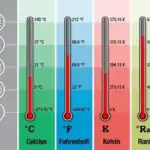
Temperature is usually measured in degrees Celsius (°C) or degrees Fahrenheit (°F). In Nigeria, Celsius is commonly used.
To read a thermometer:
- Look at the scale carefully.
- Identify the main markings and the smaller divisions.
- Read the level where the mercury (or alcohol) column stops.
- State the reading with the correct unit, e.g., 37°C.
Identifying Degrees of Hotness in Celsius for Objects and Locations
Different objects and locations have different temperatures.
The following are some common temperature values in Celsius:
- Freezing point of water: 0°C
- Normal human body temperature: approximately 37°C
- Boiling point of water: 100°C
- Average room temperature: 25°C to 30°C
Word Problems on Temperature
Word problems involving temperature often require addition or subtraction.
Example 1: The temperature in Kaduna was 28°C in the morning. It rose by 7°C in the afternoon. What was the temperature in the afternoon?
Solution:
Step 1: Identify the initial temperature. Initial temperature = 28°C.
Step 2: Identify the change in temperature. Rise in temperature = 7°C.
Step 3: Add the rise to the initial temperature. Afternoon temperature = 28°C + 7°C = 35°C.
Answer: The temperature in the afternoon was 35°C.
How to solve for another value: If the afternoon temperature was 35°C and it rose by 7°C, to find the morning temperature, subtract the rise from the afternoon temperature: 35°C – 7°C = 28°C.
Example 2: The temperature inside a refrigerator is 4°C. The temperature outside is 32°C. What is the difference in temperature?
Solution:
Step 1: Identify the two temperatures. Outside temperature = 32°C, Inside temperature = 4°C.
Step 2: Subtract the smaller temperature from the larger temperature to find the difference. Difference = 32°C – 4°C = 28°C.
Answer: The difference in temperature is 28°C.
How to solve for another value: If the outside temperature is 32°C and the difference is 28°C, the inside temperature can be found by subtracting the difference from the outside temperature: 32°C – 28°C = 4°C.
NOTE: Always remember to include the unit (°C) in your answers.
Quantitative Aptitude on Temperature
Quantitative aptitude problems on temperature test your ability to observe patterns or compare values.
Example 1: Complete the sequence: 5°C, 10°C, 15°C, _____, 25°C.
Solution:
Step 1: Observe the pattern. Each number is increasing by 5°C.
Step 2: Add 5°C to the last given number. 15°C + 5°C = 20°C.
Answer: The missing number is 20°C.
Example 2: Look at the table below and answer the questions:
| Object | Temperature |
|---|---|
| Water | 10°C |
| Milk | 5°C |
| Juice | 12°C |
a) Which liquid is the coldest?
b) Which liquid is the warmest?
Solution:
a) Step 1: Compare the temperatures. 5°C is the lowest.
Answer: Milk is the coldest.
b) Step 1: Compare the temperatures. 12°C is the highest.
Answer: Juice is the warmest.
NOTE: For sequences, identify the rule (addition, subtraction, multiplication, division). For comparisons, identify the highest or lowest value.
Teaching Methods/Instructional Techniques
Discussion, Lecture, Demonstration, Question and Answer, Visual Aids
Instructional Procedures
Step 1: Introduction
Time: 5 minutes
Teaching Skill: Set Induction
Teacher’s Activity: The teacher greets the pupils and asks them to identify objects that are hot and objects that are cold in their environment. The teacher then asks how they know if something is hot or cold, leading to the concept of temperature.
Pupils’ Activity: Pupils respond by naming hot and cold objects and share their ideas on how they differentiate between them.
Learning Point: Pupils recall prior knowledge of hot and cold and are introduced to the lesson topic.
Step 2: Meaning of Temperature and Types of Thermometer
Time: 8 minutes
Teaching Skill: Explanation/Demonstration
Teacher’s Activity: The teacher defines temperature clearly and introduces the thermometer as the instrument for measuring it. The teacher then shows real or diagrammatic examples of clinical and laboratory thermometers, explaining their uses.
Pupils’ Activity: Pupils listen attentively, take notes, and identify the different types of thermometers shown by the teacher.
Learning Point: Pupils understand the meaning of temperature and can identify different types of thermometers.
Step 3: Reading Temperature Using a Thermometer
Time: 10 minutes
Teaching Skill: Demonstration/Practice
Teacher’s Activity: The teacher demonstrates how to read a thermometer scale, emphasizing the Celsius unit (°C). The teacher takes temperature readings of different objects (e.g., warm water, cold water) and asks pupils to read them aloud.
Pupils’ Activity: Pupils observe the teacher’s demonstration, practice reading the thermometer scales, and state the readings in degrees Celsius.
Learning Point: Pupils develop the skill of reading temperature accurately from a thermometer.
Step 4: Identifying Degrees of Hotness in Celsius
Time: 7 minutes
Teaching Skill: Explanation/Illustration
Teacher’s Activity: The teacher provides common temperature values for various objects and locations (e.g., body temperature, boiling point of water, freezing point of water) and writes them on the board for pupils to copy.
Pupils’ Activity: Pupils listen, take notes, and discuss the practical implications of these temperatures.
Learning Point: Pupils can identify and relate common temperature values in Celsius to real-life situations.
Step 5: Word Problems on Temperature
Time: 8 minutes
Teaching Skill: Problem Solving/Guidance
Teacher’s Activity: The teacher explains how to approach word problems involving temperature, focusing on addition and subtraction. The teacher works through the examples from the board summary, explaining each step. The teacher then gives a similar problem for pupils to try.
Pupils’ Activity: Pupils pay attention to the steps, copy the examples, and attempt to solve the new problem given by the teacher.
Learning Point: Pupils learn to apply addition and subtraction to solve real-world temperature problems.
Step 6: Quantitative Aptitude on Temperature
Time: 5 minutes
Teaching Skill: Critical Thinking/Analysis
Teacher’s Activity: The teacher introduces quantitative aptitude problems related to temperature, such as completing sequences or comparing temperatures. The teacher guides pupils through the examples provided in the board summary.
Pupils’ Activity: Pupils observe patterns, make comparisons, and work through the quantitative aptitude examples.
Learning Point: Pupils develop critical thinking skills to solve temperature-related aptitude questions.
Step 7: Evaluation/Review
Time: 5 minutes
Teaching Skill: Questioning/Assessment
Teacher’s Activity: The teacher evaluates the learning by asking the following questions:
- What is temperature?
- Mention two types of thermometers.
- What is the normal human body temperature in Celsius?
- If the temperature rises from 20°C to 35°C, what is the increase in temperature?
- Which is colder: -5°C or 2°C?
Pupils’ Activity: Pupils answer orally and in writing.
Learning Point: Pupils demonstrate understanding of the lesson.
Step 8: Conclusion
Time: 2 minutes
Teaching Skill: Summarization
Teacher’s Activity: The teacher summarizes the key points of the lesson, reiterating the definition of temperature, types of thermometers, how to read them, and how to solve related problems. The teacher then gives homework for practice.
Pupils’ Activity: Pupils listen to the summary and copy down the homework.
Learning Point: Pupils consolidate their understanding of temperature and its measurement.
Home Task: Solve three new exercises on TEMPERATURE. Show each step and check each answer.
Lesson Keywords
- Temperature – The measure of how hot or cold something is.
- Thermometer – An instrument used to measure temperature.
- Celsius (°C) – A common unit for measuring temperature.
- Hot – Having a high temperature.
- Cold – Having a low temperature.
- Degree – A unit of measurement for temperature.
Differentiation
For struggling pupils, the teacher will provide extra visual aids and more one-on-one guidance during practical thermometer reading. For advanced pupils, the teacher will provide more complex word problems and quantitative aptitude challenges, perhaps involving negative temperatures or converting between Celsius and Fahrenheit (as an extension).
Note for teachers using this lesson plan
Ensure that pupils have ample opportunity to handle and read thermometers under supervision. Emphasize the importance of units (°C) in all temperature readings and calculations. Encourage pupils to relate temperature concepts to their daily experiences for better understanding.



Community Join the conversation Open discussion +