

Class: Senior Secondary School 2 (SS2 / SSS2)
Term: First Term
Week: 1
Age: 16 years
Duration: 45 minutes
Subject: Physics
Curriculum Theme: Energy
Previous Lesson: .
Topic: HEAT ENERGY
Subject Matter: Meaning of heat energy (energy transferred due to temperature difference), temperature and its measurement (using thermometers and scales), types of thermometer (clinical thermometer, laboratory thermometer, and more), absolute scale of temperature (Kelvin scale)
Specific Objectives
By the end of the lesson, pupils should be able to:
Cognitive Domain:
- Define heat energy and temperature.
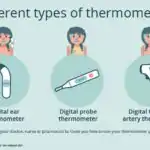
- Identify different types of thermometers.
- Explain the absolute scale of temperature.
- Convert temperatures between Celsius and Kelvin scales.
Affective Domain:
- Appreciate the importance of accurate temperature measurement.
- Show interest in learning about the applications of heat energy.
Psychomotor Domain:
- Use a thermometer safely to measure the temperature of an object.
- Perform calculations involving temperature conversions.
- Describe the principles of thermometer calibration.
Social Domain:
- Collaborate with peers during practical demonstrations involving thermometers.
Reference Materials
The following resources were used in planning this lesson:
- Senior Secondary Schools Education Curriculum
- State Unified Scheme of Work
- New School Physics by M.W. Anyakoha
Instructional Materials
The teacher will teach this lesson with the aid of:
- Textbook
- Equipped laboratory
- Clinical thermometer
- Laboratory thermometer
- Beaker of hot water
- Beaker of cold water with ice
- Ruler and marker (for demonstrating calibration principles)
Rationale for the Lesson
Understanding heat energy and temperature is important because it helps pupils explain everyday phenomena like cooking, weather changes, and fever. This knowledge is fundamental for further studies in physics and other science-related fields.
Prerequisite/Previous Knowledge
Pupils have basic knowledge of different forms of energy and simple measurement concepts from their junior secondary school science classes.
Lesson Content/Board Summary
HEAT ENERGY
Meaning of Heat Energy
Heat energy is the form of energy that is transferred from a region of higher temperature to a region of lower temperature due to a temperature difference. It is a form of kinetic energy associated with the random motion of atoms and molecules.
Temperature and its Measurement
Temperature is the degree of hotness or coldness of a body. It is a measure of the average kinetic energy of the particles within a substance.
Temperature is measured using instruments called thermometers. Common temperature scales include:
- Celsius Scale (°C): Water freezes at 0°C and boils at 100°C.
- Fahrenheit Scale (°F): Water freezes at 32°F and boils at 212°F.
- Kelvin Scale (K): Also known as the absolute scale.
Types of Thermometers
Thermometers are designed for specific uses:
- Clinical Thermometer:
- Used to measure human body temperature.
- Range is typically 35°C to 42°C (or 94°F to 108°F).
- It has a constriction (kink) to prevent the mercury level from falling back quickly, allowing time for reading.
- Laboratory Thermometer:
- Used to measure temperatures in laboratories and experiments.
- Range is typically -10°C to 110°C.
- It does not have a constriction, so the mercury level falls immediately after removal from the heat source.
- Other Types: Examples include resistance thermometers, thermocouples, and pyrometers (for very high temperatures).
Absolute Scale of Temperature (Kelvin Scale)
The Kelvin scale is an absolute thermodynamic temperature scale where absolute zero (0 K) is the theoretical lowest possible temperature at which all molecular motion ceases.
The relationship between the Celsius scale and the Kelvin scale is:
T (K) = θ (°C) + 273.15 (often approximated as 273 for school calculations)
Where:
- T is the temperature in Kelvin (K).
- θ is the temperature in Celsius (°C).
Absolute zero is equivalent to -273.15 °C.
Worked Examples:
Example 1: Convert 25°C to Kelvin.
Step 1: Write down the formula for conversion.
T (K) = θ (°C) + 273
Step 2: Substitute the given Celsius temperature.
T (K) = 25 + 273
Step 3: Calculate the Kelvin temperature.
T (K) = 298 K
Therefore, 25°C is equal to 298 K.
Example 2: Convert 300 K to Celsius.
Step 1: Rearrange the formula to solve for Celsius.
θ (°C) = T (K) – 273
Step 2: Substitute the given Kelvin temperature.
θ (°C) = 300 – 273
Step 3: Calculate the Celsius temperature.
θ (°C) = 27 °C
Therefore, 300 K is equal to 27 °C.
Calibration of a Thermometer
Calibration is the process of marking the scale of a thermometer. It involves using fixed points, which are reproducible temperatures.
- Lower Fixed Point: The melting point of pure ice at standard atmospheric pressure (defined as 0°C or 273 K).
- Upper Fixed Point: The boiling point of pure water at standard atmospheric pressure (defined as 100°C or 373 K).
The interval between these two fixed points is divided into equal divisions (e.g., 100 divisions for the Celsius scale).
Teaching Methods/Instructional Techniques
Discussion, Lecture, Demonstration, Question and Answer, Visual Aids
Instructional Procedures
Step 1: Introduction
Time: 5 minutes
Teaching Skill: Set Induction
Teacher’s Activity: The teacher greets the pupils and asks them questions about common observations related to heat and cold, such as “Why do we wear sweaters in cold weather?” or “What happens when you touch a hot stove?”.
Pupils’ Activity: Pupils respond to the questions, sharing their general understanding of hot and cold.
Learning Point: Pupils recall prior knowledge and are introduced to the concept of heat and temperature.
Step 2: Meaning of Heat Energy
Time: 8 minutes
Teaching Skill: Explanation/Definition
Teacher’s Activity: The teacher defines heat energy as energy transferred due to temperature difference, using simple examples from daily life.
Pupils’ Activity: Pupils listen attentively and copy the definition into their notebooks.
Learning Point: Pupils understand that heat is energy in transit due to temperature differences.
Step 3: Temperature and its Measurement
Time: 8 minutes
Teaching Skill: Explanation/Demonstration
Teacher’s Activity: The teacher defines temperature, explains its importance, and introduces thermometers as instruments for measurement. The teacher shows different temperature scales (Celsius, Kelvin) and mentions Fahrenheit.
Pupils’ Activity: Pupils listen, take notes, and observe the teacher’s explanation of temperature and scales.
Learning Point: Pupils understand temperature as a measure of hotness/coldness and the instruments used to measure it.
Step 4: Types of Thermometers
Time: 8 minutes
Teaching Skill: Demonstration/Classification
Teacher’s Activity: The teacher displays clinical and laboratory thermometers, explaining their features, uses, and safety precautions. The teacher highlights the presence/absence of a constriction.
Pupils’ Activity: Pupils observe the thermometers, ask questions, and identify their distinguishing features and uses.
Learning Point: Pupils can differentiate between clinical and laboratory thermometers and state their specific uses.
Step 5: Absolute Scale of Temperature and Conversion
Time: 8 minutes
Teaching Skill: Explanation/Problem-solving
Teacher’s Activity: The teacher explains the Kelvin (absolute) scale, its significance, and the relationship between Celsius and Kelvin scales. The teacher then works through examples of temperature conversion on the board.
Pupils’ Activity: Pupils pay attention to the explanation, copy the formula, and solve the worked examples in their notebooks.
Learning Point: Pupils understand the absolute scale and can convert temperatures between Celsius and Kelvin.
Step 6: Principles of Thermometer Calibration
Time: 5 minutes
Teaching Skill: Explanation
Teacher’s Activity: The teacher explains the concept of thermometer calibration, defining lower and upper fixed points and how the scale is marked between them.
Pupils’ Activity: Pupils listen to the explanation and understand the basic principles behind thermometer calibration.
Learning Point: Pupils grasp the concept of fixed points and their role in thermometer calibration.
Step 7: Evaluation/Review
Time: 5 minutes
Teaching Skill: Questioning/Assessment
Teacher’s Activity: The teacher evaluates the learning by asking the following questions:
- Define heat energy and temperature.
- Mention two types of thermometers and their uses.
- State the relationship between the Celsius and Kelvin temperature scales.
- Convert 37°C to Kelvin.
Pupils’ Activity: Pupils answer orally and in writing.
Learning Point: Pupils demonstrate understanding of the lesson.
Step 8: Conclusion
Time: 3 minutes
Teaching Skill: Summarization
Teacher’s Activity: The teacher briefly summarizes the key points of the lesson, emphasizing the difference between heat and temperature and the importance of accurate measurement. The teacher gives homework: research other types of thermometers and their applications.
Pupils’ Activity: Pupils listen to the summary and copy down the homework.
Learning Point: Pupils consolidate their learning and are given tasks to extend their knowledge.
Lesson Keywords
- Heat energy – Energy transferred due to temperature difference.
- Temperature – Degree of hotness or coldness of a body.
- Thermometer – Instrument used to measure temperature.
- Celsius – A temperature scale where water freezes at 0° and boils at 100°.
- Kelvin – The absolute temperature scale where 0 K is absolute zero.
- Calibration – The process of marking a thermometer scale using fixed points.
- Fixed points – Standard, reproducible temperatures used for calibration (e.g., melting point of ice, boiling point of water).
Differentiation
The teacher will provide additional examples for pupils who grasp concepts quickly and offer one-on-one support or simplified explanations for those who need more time. Group activities will encourage peer learning and collaboration.
Note for teachers using this lesson plan
Ensure that all safety precautions are observed when handling thermometers and heat sources during demonstrations. Encourage pupils to ask questions and relate the concepts to their daily experiences. Practical demonstrations are key to understanding this topic effectively.


Community Join the conversation Open discussion +