

Class: Primary Two
Term: Third Term
Subject: National Values Education
Curriculum Theme: Civic Education
previous Lesson: How Political Parties Are Formed
Topic: Problems Created by Bad Political Leaders
Content/Learning area: Problems Created By Bad Political leaders, Causes of These Problems
Time Allocation: 40 minutes
Performance Objectives
By the end of the lesson, pupils should be able to:
- Cognitive Domain:
– Identify and list problems caused by bad political leaders.
– Explain the causes of problems created by bad political leaders.
- Psychomotor Domain:
– Participate actively in group discussions.
– Write down notes on the problems and causes discussed.
- Affective Domain:
– Express feelings about the impact of bad political leaders on their community.
– Show empathy towards those affected by bad leadership.
- Social Domain:
– Work collaboratively in groups.
– Respect diverse opinions during discussions.
Reference materials
- 9 – Years Basic Education Curriculum
- abuja educational resource Center Scheme of Work
- NAPPS National Unified Scheme of Work
- Online Details
- Relevant Textbooks
Instructional Materials
To deliver this lesson, the teacher will use a whiteboard or chart paper, markers, and relevant pictures or illustrations.
rationale for the Lesson
Understanding the negative impacts of bad political leaders is crucial for developing responsible citizenship. This lesson helps pupils recognize the importance of good governance and accountability.
Prerequisite/Previous knowledge
The teacher will start by asking pupils to share their understanding of what a political leader is. A brief discussion will follow, leading into the topic of good versus bad leadership.
Lesson Content
Problems Created By Bad Political Leaders
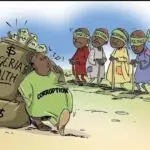
A political leader makes decisions for a contry or community. Sometimes, leaders make bad choices that harm people. These are called bad political leaders. Problems caused by bad political leaders include:
- Corruption: Bad leaders might misuse funds meant for schools and hospitals, leading to unmet needs.
- Poor Infrastructure: Poor money management results in poorly built or maintained roads, schools, and hospitals.
- unemployment: A lack of job creation makes it hard for people to earn a living.
- Insecurity: Poor leadership can lead to increased crime and violence.
- Economic Problems: Bad decisions weaken the economy, making it tough for people to afford necessities.
- Poor Healthcare: Mismanagement of resources can lead to inadequate healthcare facilities and services.
- Educational Decline: Neglect of the education sector can result in poorly equipped schools and underpaid teachers.
Causes of These Problems
These are the reasons why bad political leaders cause problems:
- Greed: Some leaders prioritize personal gain over the needs of the people.
- Lack of Planning: Poor planning leads to wasted resources and unsolved problems.
- Nepotism: Giving jobs to friends and family, irrespective of qualifications, leads to inefficiency.
- Lack of Accountability: Without consequences, bad decisions continue.
- Ignorance: A lack of understanding of roles and community needs leads to poor decisions.
- Tribalism: Favoring one’s own ethnic group over others can lead to unfair distribution of resources and opportunities.
- Impunity: When leaders believe they are above the law, they are more likely to engage in corrupt practices.
Teaching Methods
To deliver this lesson,the teacher will adopt the following methods: Discussion,Group Work,Question and answer.
Instructional Procedures
To deliver this lesson, the teacher will adopt the following steps:
Step 1: Introduction
Time: 5 minutes
Teaching Skill: Set Induction
teacher’s Activity: Asks pupils what they know about political leaders and introduces the topic of bad political leaders.
Pupils’ Activity: Share their prior knowledge and listen attentively.
Step 2: Clarification of Key Concepts
Time: 10 minutes
Teaching Skill: Explanation
Teacher’s Activity: Explains the concept of bad political leaders and the problems they create, using clear examples.
Pupils’ Activity: Listen attentively and ask clarifying questions.
Step 3: Examples of Problems
time: 10 minutes
Teaching Skill: Modeling
teacher’s Activity: Guides pupils through examples of problems caused by bad political leaders, using real-life scenarios or stories.
Pupils’ Activity: Participate in discussions and offer examples.
Step 4: Causes of Problems
Time: 10 minutes
Teaching Skill: group Work
Teacher’s Activity: divides pupils into groups to discuss the causes of problems created by bad political leaders.
Pupils’ Activity: Work collaboratively in groups, sharing ideas and perspectives.
Step 5: Note-Taking
Time: 2 minutes
Teaching Skill: Summarizing
Teacher’s Activity: Guides pupils in summarizing key points and taking notes.
Pupils’ Activity: Write down key points and examples.
Step 6: Evaluation/Review
Time: 3 minutes
Teaching Skill: Questioning
teacher’s Activity: Asks questions to assess pupils’ understanding.
Pupils’ Activity: Answer questions and participate in the review.
Step 7: Conclusion
Time: 2 minutes
Teaching Skill: Summarizing
Teacher’s Activity: Summarizes the key points and assigns homework.
Pupils’ Activity: Listen attentively and note the homework assignment.
Lesson Keywords
- Corruption – Dishonest or fraudulent conduct by those in power.
- Infrastructure – Basic physical and organizational structures needed for a society to function.
- unemployment – The state of being without a job.
- insecurity – The state of being open to danger or threat.
- Nepotism – Favoritism shown to relatives or close friends by those in power.
Lesson Evaluation
To evaluate the learning, the teacher asks pupils to:
- List three problems caused by bad political leaders.
- Explain one cause of these problems.
- Discuss how bad political leaders affect your community.
Assignment/Homework
- Research and write down one example of a problem caused by a bad political leader in Nigeria.
- Suggest one way to prevent bad leadership in your community.
Differentiation
- For slower learners: Provide one-on-one assistance and simplified explanations.
- For advanced learners: Encourage them to research further and present their findings to the class.
- For visual/auditory/kinesthetic learners: Use visual aids, discussions, and hands-on activities to cater to different learning styles.
Note for teachers
Ensure to use local examples and real-life scenarios to make the lesson relatable and engaging for the pupils. Encourage open discussions and critical thinking about the role of good leadership in their community.



Community Join the conversation Open discussion +