

Class: Primary Two
Term: Second Term
Subject: National Values Education
Curriculum Theme: Civic Education
Previous Lesson: Meaning of Community
Topic: The Community
Content/Learning Area: Types Of Community, The community
Time allocation: 40 minutes
Performance Objectives
by the end of the lesson, pupils should be able to:
- Cognitive Domain:
1.Identify two types of communities.
2. List the types of peopel living in different communities.
- Psychomotor Domain:
1. actively participate in class discussions.
2. Take notes on the lesson.
- Affective Domain:
1. Show interest in learning about their community.
2. Appreciate the importance of community living.
- Social Domain:
1. Work cooperatively with classmates.
2. Respect diverse community members.
Reference Materials
- 9 – Years Basic Education Curriculum
- abuja Educational Resource Center Scheme of Work
- NAPPS National Unified Scheme of Work
- Relevant Textbooks
Instructional Materials
To deliver this lesson, the teacher will use a whiteboard or chart paper, markers, and relevant pictures or illustrations.
Rationale for the Lesson
Understanding the concept of community helps pupils appreciate the interconnectedness of people and fosters a sense of belonging. This knowledge is crucial for responsible citizenship and positive social interaction.
Prerequisite/Previous Knowledge
The teacher will begin by asking pupils to share what they know about their own neighborhood or village, encouraging them to describe the people and places they see daily. This will help to connect their prior knowledge to the lesson’s topic.
Lesson Content
the Community
A community is a group of people living in the same area and sharing common interests, values, and goals. It’s like a large family where everyone supports each other. learn more about the meaning of community.
Types Of Community
A community can be categorized based on location, occupation, or shared interests.
Rural Community
These communities are in the countryside, often with farms and fields.People who live here include farmers and villagers.
Urban Community
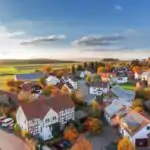
These communities are in cities, with many buildings and shops. People who live here include doctors, teachers, and shopkeepers.
Suburban Community
Located on city outskirts, these communities blend urban and rural features. Residents may include professionals, workers, and those involved in some farming.
Coastal community
These communities are near the coast, with access to the ocean. Fishermen and boat operators are common residents.
Mountainous community
Located in mountainous areas, these communities often have small-scale farmers and mountain guides.
Farming Community
These communities are primarily engaged in agricultural activities. Residents include farmers, farmworkers, and agricultural suppliers.
Fishing Community
These communities rely on fishing as their primary source of income. Common residents are fishermen, boat owners, and fishmongers.
Teaching Methods
To deliver this lesson, the teacher will adopt the following methods: Discussion, Explanation, Question and Answer.
Instructional Procedures
To deliver this lesson,the teacher will adopt the following steps:
Step 1: Introduction
Time: 5 minutes
Teaching Skill: Set Induction
Teacher’s Activity: Ask pupils to share their understanding of the word “community”.
Pupils’ Activity: Respond to the teacher’s questions and share their ideas.
Step 2: Explanation of Key Concepts
Time: 10 minutes
Teaching Skill: Explanation
Teacher’s Activity: Define “community” and explain its characteristics.
Pupils’ Activity: Listen attentively and take notes.
Step 3: Presentation/Guided Practice
Time: 10 minutes
Teaching Skill: Presentation
Teacher’s Activity: Provide examples of different types of communities (rural, urban, suburban, coastal, mountainous) using pictures or illustrations.
Pupils’ Activity: Observe the examples and participate in discussions.
step 4: Autonomous Practice
Time: 5 minutes
Teaching Skill: Guided Practice
Teacher’s Activity: Ask pupils to identify the types of communities shown in the pictures.Pupils’ activity: Identify the types of communities and explain their characteristics.
Step 5: Note-Taking
Time: 5 minutes
Teaching Skill: Note-Taking
Teacher’s Activity: Guide pupils in taking notes on the main points of the lesson.Pupils’ Activity: Write down key concepts and examples.
Step 6: Evaluation/Review
Time: 5 minutes
Teaching Skill: Questioning
Teacher’s Activity: Ask evaluation questions to assess pupils’ understanding.
Pupils’ Activity: Answer the evaluation questions.
Objective-aligned checks:
- Identify two types of communities.
- List the types of peopel living in different communities.
- Show interest in learning about their community.
step 7: Conclusion
Time: 5 minutes
teaching Skill: Summarizing
Teacher’s Activity: Summarize the main points and assign homework.
Pupils’ Activity: Listen to the summary and note the homework.
Lesson Keywords
- Community – A group of people living in the same area and sharing common interests.
- Rural – Relating to the countryside.
- Urban – Relating to a city.
- Suburban – Relating to an area on the outskirts of a city.
- Coastal – Relating to the coast.
- Mountainous – Relating to mountains.
Lesson Evaluation
To evaluate the learning, the teacher asks pupils to:
- What are two main types of communities?
- Name some people who live in a rural community.
- Name some people who live in an urban community.
- Can you think of other community types?
- Why is it significant to be a good community member?
Assignment/Homework
- Draw a picture of your community.
- Write a short paragraph about what you like most about your community.
Differentiation
- for slower learners: The teacher will provide one-on-one assistance and simplified explanations.
- For advanced learners: The teacher will encourage them to research and present additional types of communities.
- For visual/auditory/kinesthetic learners: Use visual aids, discussions, and hands-on activities to cater to different learning styles.
note for Teachers
Encourage pupils to share personal experiences related to their communities to make the lesson more engaging and relevant.



Community Join the conversation Open discussion +