

Class: Primary Two
Term: Third Term
Subject: National Values Education
Curriculum Theme: Civic Education
previous Lesson: The Community Leaders, Title Holders
Topic: The Importance of Title Holding in the Community as a Leader
Content/Learning Area: what is Title Holding?, Crucial Title Holders in Nigerian Communities, Importance of Title Holding in the Community
Time Allocation: 40 minutes
Performance Objectives
By the end of the lesson, pupils should be able to:
- Cognitive Domain:
1. Explain what title holding means in a community.
2. list at least two title holders found in Nigerian communities.
- Psychomotor Domain:
1.Show appreciation for the roles of title holders in their communities through actions and gestures.
- Affective Domain:
1. Show respect for title holders.
- Social Domain:
1. Discuss with peers about the importance of title holders in maintaining community traditions and governance.
Reference Materials
- 9 – Years Basic Education Curriculum
- Abuja Educational Resource Center Scheme of work
- NAPPS National Unified Scheme of Work
- Relevant Textbooks
Instructional Materials
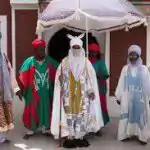
To deliver this lesson, the teacher will use a whiteboard or chart paper, markers, and relevant pictures of title holders.
Rationale for the Lesson
Understanding the importance of title holding fosters respect for traditional leadership and cultural heritage.It helps pupils appreciate community structures and the roles individuals play in maintaining social order and unity.
Prerequisite/Previous Knowledge
The teacher will start by asking pupils to recall the previous lesson on community leaders. A brief discussion about the roles of leaders will follow, leading into the topic of title holding.
Lesson Content
What is Title Holding?
Title holding gives special names to community members with important roles and responsibilities.These titles are like badges of honor, showing that these people are leaders chosen to help keep the community strong and safe.
Crucial Title Holders in Nigerian Communities
Title holders are leaders with specific roles and responsibilities within their communities. These include:
- Oba: The king in Yoruba communities, responsible for the people’s well-being and cultural festivals.
- Emir: A very important leader in Northern Nigeria, overseeing community governance and Islamic practices.
- Obi: The leader of Igbo communities, presiding over meetings and ceremonies.
- Sarkin: A title in various northern communities, often responsible for specific tasks like farming or trade.
- Chief: Found across many tribes, chiefs help with local governance and conflict resolution.
- Baale: A Yoruba community head, often overseeing smaller towns or villages and reporting to the Oba.
- Eze: Another term for a traditional ruler in Igbo communities, similar to Obi, with responsibilities for cultural preservation and conflict resolution.
Importance of Title Holding in the Community
Title holding plays a vital role in maintaining community structure, preserving culture, and ensuring social order. The following are some of the reasons why title holding is important:
- Recognition of Leadership: Title holding clearly identifies community leaders, showing appreciation for their hard work.
- Cultural Preservation: Title holding keeps cultural traditions alive by passing them down through generations.
- Social Structure: Title holders maintain community institution and safety, ensuring rules are followed and disagreements are settled fairly.
- Community Unity: Title holders bring the community together for events, creating a sense of belonging.
- Guidance and Mentorship: Title holders act as role models, teaching young people critically important values and good citizenship.
- resource Management: title holders often manage resources like land and water fairly for all.
- Promoting Development: Title holders can improve the community by advocating for its needs and initiating development projects.
- Conflict Resolution: Title holders often serve as mediators in disputes, helping to resolve conflicts peacefully and maintain harmony.
- Upholding Traditions: Title holders ensure that important customs and practices are respected and followed, strengthening cultural identity.
- Representing the Community: Title holders act as spokespersons for their communities, advocating for their interests and needs at higher levels of government.
Teaching methods
To deliver this lesson, the teacher will adopt the following methods: Discussion, Question and Answer, storytelling.
Instructional Procedures
To deliver this lesson, the teacher will adopt the following steps:
step 1: Introduction
Time: 5 minutes
teaching skill: Set Induction
Teacher’s Activity: Asks pupils to recall the previous lesson on community leaders and initiates a discussion about leadership roles.
Pupils’ Activity: Participate in the discussion, sharing their understanding of leadership.
Step 2: Description of Key Concepts
Time: 10 minutes
Teaching Skill: Explanation
Teacher’s Activity: Explains the concept of title holding, using simple language and examples.
Pupils’ Activity: Listen attentively and ask clarifying questions.
Step 3: Presentation/Guided Practice
Time: 10 minutes
Teaching Skill: Presentation
Teacher’s Activity: Shows pictures of different title holders and explains their roles in the community.
Pupils’ Activity: Observe the pictures and listen to the explanations.
Step 4: Self-Reliant Practice
Time: 5 minutes
Teaching Skill: Guided Practice
Teacher’s Activity: Guides pupils in identifying title holders from their communities.
Pupils’ Activity: Identify and discuss title holders from their communities.
Step 5: Note-Taking
Time: 5 minutes
Teaching Skill: Note-Taking
Teacher’s Activity: Guides pupils in taking notes on key concepts.
Pupils’ Activity: take notes on key concepts.
Step 6: Evaluation/Review
Time: 5 minutes
Teaching Skill: Questioning
Teacher’s Activity: Asks evaluation questions to assess pupils’ understanding.
Pupils’ Activity: Answer the evaluation questions.
Objective-aligned checks:
- Explain what title holding means in a community.
- list at least two title holders found in Nigerian communities.
- Show appreciation for the roles of title holders in their communities through actions and gestures.
Step 7: Conclusion
Time: 5 minutes
Teaching Skill: Summarizing
Teacher’s Activity: Summarizes the key points of the lesson and encourages pupils to respect title holders.
Pupils’ Activity: Listen to the summary and ask any remaining questions.
Lesson Keywords
- Title Holding – Giving special names to community members with critically important roles.
- Oba – The king in Yoruba communities.
- Emir – A very critically important leader in Northern Nigeria.
- Obi – the leader of Igbo communities.
- Chief – A leader who helps with local governance and conflict resolution.
Lesson Evaluation
To evaluate the learning, the teacher asks pupils to:
- What does title holding mean?
- Name two title holders and describe one role for each.
- Why are title holders critically important?
- How do title holders keep the community safe and strong?
- What other roles do title holders play?
Assignment/Homework
- List three title holders in your community or a nearby community.
- Describe one way title holders help your community.
- Draw a picture of a title holder and write a sentence about their role.
Differentiation
- For slower learners: Provide one-on-one assistance and use simpler language.
- For advanced learners: Encourage them to research additional title holders and their roles.
- For visual/auditory/kinesthetic learners: Use visual aids, discussions, and role-playing activities to cater to different learning styles.
Note for Teachers
encourage pupils to respect and value the contributions of title holders in their communities. Use local examples to make the lesson more relatable and engaging.


Community Join the conversation Open discussion +