

class: Primary 6
Term: 3rd Term
Subject: Cultural And Creative Arts
Curriculum Theme:
Previous Lesson:
Topic: Meaning Of Tie And Dye
Content/Learning Area: Meaning Of Tie And Dye
Time Allocation: 40 minutes
Performance Objectives
By the end of the lesson,pupils should be able to:
- Cognitive Domain: Explain the meaning of tie and dye.
- Affective Domain: Show appreciation for locally made fabrics through tie and dye.
- Psychomotor Domain: Demonstrate the tying and dyeing of a small fabric.
- Social Domain: Cooperate with peers during tie and dye group activities.
Reference materials
The following resources where used in planning this lesson:
- 9 Years Basic Education Curriculum
- Abuja Educational Resource Center Scheme of Work
- NAPPS National Unified scheme of Work
- Online Facts from: merriam-webster – TIE-DYEING Definition & Meaning
- Relevant Textbooks
Instructional Materials
To deliver this lesson, the teacher will employ the help of the following materials:
- White cotton fabric
- Bowls of dye
- Rubber bands and string
- Buckets of water
- Sample tie and dye fabrics
- Apron and gloves
- Pictures or charts showing tie and dye process
Rationale for the Lesson
Understanding tie and dye helps pupils appreciate local craft, promote culture, and develop artistic skills in fabric design.
Prerequisite/Previous Knowledge
Pupils have seen colourful fabrics at home, in the market, or during cultural celebrations.
Lesson Content
Meaning Of Tie And Dye
Tie and dye is a way of changing the color of cloth using patterns. It is indeed done by tying parts of the cloth and putting it in dye.
Origin and Importance
Tie and dye has been used for many years in Nigeria and other countries. It is useful for making beautiful clothes for culture and fashion.
Meaning and Pattern Principle of Tie-dye
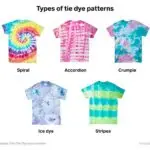
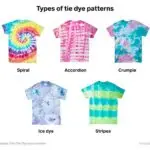
Tie-dye is a resist-dyeing method in which parts of fabric are folded, twisted, tied or clamped so that dye reaches them differently. The resisted areas form rings, stripes or repeated shapes after the ties are removed.
The result depends on fold, tightness, dye and fabric. Pupils first plan a small pattern and use gloves and protective covering.
Teaching methods
To deliver this lesson, the teacher will adopt the following methods: Discussion, lecture, demonstration, description, visual aids, group work
Instructional Procedures
To deliver this lesson, the teacher will adopt the following steps:
Step 1: Introduction
Time: 5 mins
Teaching Skill: Set Induction
Teacher’s Activity: Tells a story about a child whose clothes changed colour after being dyed
Pupils’ Activity: Listen and respond with interest
Step 2: Meaning of Tie and Dye
Time: 5 mins
Teaching Skill: Explanation
Teacher’s Activity: Explains the meaning of tie and dye and asks pupils to say what they know
Pupils’ Activity: Pupils listen and give their ideas
Step 3: Origin and Importance
Time: 5 mins
Teaching Skill: Discussion
Teacher’s Activity: Discusses how tie and dye is used in culture and fashion
Pupils’ Activity: Pupils give examples of clothes they’ve seen with tie and dye
Step 4: Materials Used
Time: 5 mins
Teaching Skill: Visual Demonstration
Teacher’s Activity: Shows the materials used and names them one by one
Pupils’ Activity: Pupils observe and name the materials
Step 5: Steps in Tie and Dye
Time: 10 mins
Teaching Skill: Demonstration
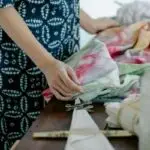
Teacher’s Activity: Demonstrates tying, dyeing and drying process using a small cloth
Pupils’ Activity: Pupils watch the process and ask questions
Step 6: Note-taking
Time: 2 mins
Teaching Skill: Writing
Teacher’s Activity: Guides pupils to copy notes from the board
Pupils’ Activity: Pupils copy the notes
Step 7: Evaluation/Review
time: 5 mins
Teaching Skill: Questioning
Teacher’s Activity: Asks questions from the lesson
Pupils’ Activity: Pupils answer the questions
Objective-aligned checks:
- Explain the meaning of tie and dye.
- Demonstrate the tying and dyeing of a small fabric.
Step 8: Conclusion
Time: 3 mins
Teaching Skill: instructional/Cognitive
Teacher’s Activity: Summarises key points, encourages practise and praises group efforts
Pupils’ Activity: Pupils reflect on what they learned and show appreciation
Lesson Keywords
- Tie – to fasten or hold cloth with rope or string
- Dye – a liquid used to change the colour of cloth
- Pattern – a design or shape made on something
- Fabric – cloth used for making clothes
- Culture – the way of life, dress, and traditions of a people
Lesson Evaluation
to evaluate the learning, the teacher asks pupils to:
- What is tie and dye?
- Mention two uses of tie and dye
- List three materials used in tie and dye
- Say two steps in tie and dye process
- Describe how a cloth can be dyed
Assignment/Homework
(There is no Assignment/homework in the attached lesson note)
Differentiation
- For slower learners: Teacher will assist slower learners with simpler tasks and use group work to support peer learning.
- For advanced learners: (There is no advanced learners differentiation in the attached lesson note)
- For visual/auditory/kinesthetic learners: (there is no visual/auditory/kinesthetic learners differentiation in the attached lesson note)
Note for Teachers
Ensure all safety precautions are taken when handling dye.Use aprons and gloves,and demonstrate each step clearly for pupils to follow.

Community Join the conversation Open discussion +