

Class: Senior Secondary School 1 (SS1, SS 1, SSS1, SSS 1)
Term: 1st Term
Week: 6
Age: 15 years
Duration: 45 minutes
Subject: History
Curriculum Theme: History
Previous Lesson: Origin of the Hausa People and Their Traditions of Origin.
Topic: LAND AND PEOPLE OF NIGERIA CONTINUED; CULTURAL WAYS OF THE LIFE OF THE PEOPLE
Subject Matter: Meaning of culture, cultural ways of life in Nigeria, cultural dressing of Kanem Borno, Hausa, Igbo, Yoruba, Efik and others, identifying ethnic groups using pictures and ethnic maps.
Specific Objectives
By the end of the lesson, pupils should be able to:
Cognitive Domain:
- Define culture.
- State at least three cultural ways of life in Nigeria.
- Identify various ethnic groups based on their cultural dressing from pictures and maps.
Affective Domain:
- Appreciate the cultural diversity of Nigeria.
- Show respect for different cultural practices and traditions.
Psychomotor Domain:
- Point to specific ethnic groups on a map of Nigeria.
- Describe the cultural dressing of at least two Nigerian ethnic groups.
Social Domain:
- Discuss respectfully the cultural differences among Nigerian ethnic groups.
- Collaborate with peers in identifying ethnic groups from provided visuals.
Reference Materials
The following resources were used in planning this lesson:
- 9 Years Basic Education Curriculum
- State Unified Scheme of Work
- Comprehensive History for Senior Secondary Schools 1
Instructional Materials
The teacher will teach this lesson with the aid of:
- Pictures of various ethnic dressings
- Ethnic maps of Nigeria
- Cultural artifacts (if available)
- Whiteboard or chalkboard
- Markers or chalk
Rationale for the Lesson
This lesson helps pupils understand the rich cultural heritage of Nigeria. Learning about different cultures and their practices enables pupils to appreciate diversity and promotes national unity by fostering respect for various traditions among people.
Prerequisite/Previous Knowledge
Pupils have some basic knowledge about the land and people of Nigeria from previous lessons. They can identify Nigeria on a map and name some major ethnic groups.
Lesson Content/Board Summary
CULTURAL WAYS OF LIFE OF THE PEOPLE OF NIGERIA
Meaning of Culture
Culture refers to the shared patterns of behaviour, beliefs, values, customs, arts, and institutions that characterize a group of people. It is the total way of life of a particular society.
Cultural Ways of Life in Nigeria
Nigerian societies display diverse cultural ways of life. These include:
- Language: Over 500 indigenous languages are spoken.
- Food: Different ethnic groups have unique staple foods and culinary practices.
- Dressing: Distinct traditional attires differentiate ethnic groups.
- Music and Dance: Various forms of music and dance for celebrations, rituals, and entertainment.
- Festivals: Annual festivals celebrating harvest, ancestral spirits, or historical events.
- Marriage Customs: Diverse traditional rites and ceremonies for marriage.
- Belief Systems: Traditional religions, alongside Christianity and Islam, influence cultural practices.
Cultural Dressing of Selected Ethnic Groups
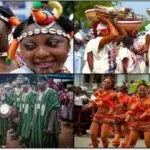
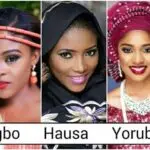
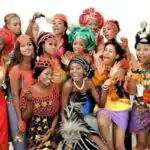
Different ethnic groups in Nigeria are known for their unique traditional dressings. Examples include:
- Kanem Borno: Often associated with flowing robes and head coverings.
- Hausa: Men wear ‘babariga’ with caps (‘fila’), while women wear wrappers (‘zane’) and head ties (‘gyale’).
- Igbo: Men wear Isiagu shirts with trousers, sometimes with a cap. Women wear wrappers (‘akwete’) and blouses, often with coral beads.
- Yoruba: Men wear ‘agbada’ or ‘buba and sokoto’ with a cap (‘fila’). Women wear ‘iro and buba’ with a head tie (‘gele’) and shawl (‘iborun’).
- Efik: Known for their elaborate traditional attires, including ‘onyonyo’ for women and ‘skirt and shirt’ for men, often with coral beads.
Identifying Ethnic Groups
Ethnic groups can be identified through various means, including:
- Their distinct traditional dressing.
- Their unique languages and dialects.
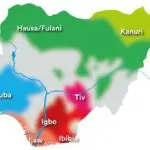
- Their geographical location as shown on ethnic maps.
- Specific cultural artifacts and traditional occupations.
Teaching Methods/Instructional Techniques
Discussion, Lecture, Demonstration, Question and Answer, Visual Aids
Instructional Procedures
Step 1: Introduction
Time: 3 minutes
Teaching Skill: Set Induction
Teacher’s Activity: The teacher greets the pupils and briefly reviews the previous lesson on the land and people of Nigeria. The teacher then introduces the topic by asking pupils to name some things that make different groups of people unique in Nigeria.
Pupils’ Activity: Pupils respond to the greeting and recall points from the previous lesson. They suggest ideas like language, food, and dressing.
Learning Point: Pupils connect previous knowledge to the new topic and are prepared for the lesson.
Step 2: Meaning of Culture
Time: 7 minutes
Teaching Skill: Explanation/Definition
Teacher’s Activity: The teacher explains the meaning of culture, using simple terms and examples related to Nigerian society. The teacher writes the definition on the board.
Pupils’ Activity: Pupils listen attentively, ask questions for clarification, and copy the definition into their notebooks.
Learning Point: Pupils understand the definition of culture.
Step 3: Cultural Ways of Life in Nigeria
Time: 7 minutes
Teaching Skill: Discussion/Elaboration
Teacher’s Activity: The teacher leads a discussion on various cultural ways of life found in Nigeria, such as language, food, music, and festivals. The teacher encourages pupils to give examples from their own communities.
Pupils’ Activity: Pupils participate in the discussion, contributing examples of cultural practices they know.
Learning Point: Pupils identify and understand different aspects of cultural life in Nigeria.
Step 4: Cultural Dressing of Selected Ethnic Groups
Time: 10 minutes
Teaching Skill: Demonstration/Visualisation
Teacher’s Activity: The teacher displays pictures of cultural dressings from various Nigerian ethnic groups (e.g., Hausa, Igbo, Yoruba, Efik, Kanem Borno). The teacher describes the unique features of each dressing.
Pupils’ Activity: Pupils observe the pictures, identify the different attires, and ask questions about the dressing styles.
Learning Point: Pupils recognize and differentiate cultural dressings of selected ethnic groups.
Step 5: Identifying Ethnic Groups
Time: 7 minutes
Teaching Skill: Identification/Mapping
Teacher’s Activity: The teacher displays an ethnic map of Nigeria and points out the geographical locations of various ethnic groups. The teacher then uses the pictures of cultural dressings to ask pupils to identify which ethnic group wears what.
Pupils’ Activity: Pupils actively participate by pointing to locations on the map and identifying ethnic groups based on their dressing.
Learning Point: Pupils can identify ethnic groups using visual aids like pictures and maps.
Step 6: Class Activity/Discussion
Time: 4 minutes
Teaching Skill: Group Work/Collaboration
Teacher’s Activity: The teacher divides pupils into small groups and gives each group a few pictures of cultural dressings or ethnic maps. Each group discusses and identifies the ethnic groups represented.
Pupils’ Activity: Pupils work in groups to identify the cultural items and discuss their findings.
Learning Point: Pupils learn to collaborate and reinforce their understanding of cultural identification.
Step 7: Evaluation/Review
Time: 5 minutes
Teaching Skill: Questioning/Assessment
Teacher’s Activity: The teacher evaluates the learning by asking the following questions:
- Define culture in your own words.
- Mention three cultural ways of life found in Nigeria.
- Describe the traditional dressing of the Yoruba people.
- Identify the ethnic group that typically wears the ‘Isiagu’ shirt.
Pupils’ Activity: Pupils answer orally and in writing.
Learning Point: Pupils demonstrate understanding of the lesson.
Step 8: Conclusion
Time: 2 minutes
Teaching Skill: Summarization
Teacher’s Activity: The teacher summarizes the key points of the lesson, emphasizing the importance of respecting Nigeria’s diverse cultures. The teacher assigns homework: “Draw and label the traditional dressing of your own ethnic group or any other Nigerian ethnic group.”
Pupils’ Activity: Pupils listen to the summary and copy down the homework.
Learning Point: Pupils consolidate their learning and are given a task to reinforce understanding.
Lesson Keywords
- Culture – The shared patterns of behaviour, beliefs, and values of a group of people.
- Ethnic group – A community or population made up of people who share a common cultural background or descent.
- Traditional dressing – Clothing styles specific to a particular ethnic group and passed down through generations.
- Diversity – The state of being varied or different, especially regarding cultures.
Differentiation
For pupils who grasp concepts quickly, the teacher can ask them to research more about the history behind specific cultural dressings or the meanings of certain traditional symbols. For pupils who require more support, the teacher can provide simplified descriptions, focus on identifying only major ethnic groups, or offer direct assistance during identification activities.
Note for teachers using this lesson plan
Encourage pupils to bring in pictures or small cultural items from their own homes to share, if appropriate and safe. This can make the lesson more engaging and personal. Ensure a respectful and inclusive classroom environment where all cultures are valued.
Community Join the conversation Open discussion +