

Class: Senior Secondary School 1 (SS1, SS 1, SSS1, SSS 1)
Term: 2nd Term
Week: 6
Age: 15 years
Duration: 45 minutes
Subject: History
Curriculum Theme: History
Previous Lesson: Jukun: Peculiar Places and Basis of Military Power.
Topic: IFE AND OYO
Subject Matter: theories of Yoruba origin, political organization of Ife and Oyo, craft and industry among Yoruba groups, agricultural activities and economic life, oral traditions and tales of origin
Specific Objectives
By the end of the lesson, pupils should be able to:
Cognitive Domain:
- Define the concept of Yoruba origin.
- List and explain at least two theories of Yoruba origin.
- Describe the political organization of ancient Ife and Oyo.
- Identify the craft, industry, agricultural activities, and economic life of the Yoruba.
Affective Domain:
- Appreciate the rich history and cultural heritage of the Yoruba people.
- Value the importance of oral traditions in understanding history.
Psychomotor Domain:
- Locate Ife and Oyo on a map of Nigeria.
- Participate actively in discussions about Yoruba history.
Social Domain:
- Share their understanding of Yoruba cultural practices and historical narratives.
- Collaborate with peers in group activities related to the lesson.
Reference Materials
The following resources were used in planning this lesson:
- 9 Years Basic Education Curriculum for Senior Secondary Schools.
- State Unified Scheme of Work for History, SSS 1.
- Adediran, A. (2010). History for Senior Secondary Schools, Book 1. University Press Plc.
- https://www.britannica.com/place/Ile-Ife
- https://www.blackpast.org/global-african-history/oyo-empire-ca-1300-1896/
Instructional Materials
The teacher will teach this lesson with the aid of:
- Maps of Nigeria showing the location of Ife and Oyo.
- Charts illustrating the political structures of Ife and Oyo.
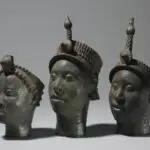
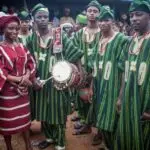
- Pictures of Yoruba crafts (e.g., bronze heads, carvings, woven cloths).
- Whiteboard and markers.
Rationale for the Lesson
This lesson helps pupils understand the origins and historical development of the Yoruba people, including their political systems and economic activities. It enables pupils to appreciate the diversity of Nigerian cultures and the importance of preserving historical knowledge through oral traditions.
Prerequisite/Previous Knowledge
Pupils have a basic understanding of early Nigerian societies and the concept of ethnic groups in Nigeria.
Lesson Content/Board Summary
Ife and Oyo Kingdoms: Theories of Yoruba Origin, Political & Economic Life
Introduction to Yoruba Origin
The Yoruba people are one of the largest ethnic groups in Nigeria, with a rich history rooted in ancient kingdoms like Ife and Oyo. Understanding their origin is key to knowing their culture and traditions.
Theories of Yoruba Origin
There are different accounts regarding the origin of the Yoruba people. The main theories include:
- Oduduwa Origin Theory: This theory states that the Yoruba race originated from Ile-Ife, where Oduduwa descended from heaven to create land and became the first ruler. His children later founded other Yoruba kingdoms.
- Migration Theory: This theory suggests that the Yoruba people migrated from the East, possibly from Egypt or Mecca, before settling in Ile-Ife. This migration is often linked to the legend of Lamurudu and his son Oduduwa.
Political Organization of Ife and Oyo
The ancient kingdoms of Ife and Oyo had well-structured political systems:
- Ife Political Organization:
- The Oni of Ife was the spiritual and political head, considered a sacred ruler.
- The Ogboni secret society played a significant role in administration and served as a check on the Oni’s power.
- Other chiefs and title holders assisted in governance.
- Oyo Political Organization:
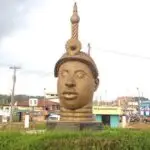
- The Alafin of Oyo was the supreme political and spiritual ruler.
- The Oyo Mesi, a council of seven principal chiefs, advised the Alafin and could even depose him.
- The Ogboni society also had considerable influence, especially in judicial matters.
- The Are Ona Kakanfo was the commander-in-chief of the Oyo army, expected to die in battle rather than face defeat.
Craft and Industry among Yoruba Groups
The Yoruba were skilled artisans. The following are examples of their crafts and industries:
- Bronze casting (especially in Ife, known for naturalistic sculptures).
- Wood carving (masks, statues, house posts).
- Textile weaving (Aso-Oke, Adire).
- Pottery.
- Dyeing.
- Blacksmithing.
Agricultural Activities and Economic Life
Agriculture formed the backbone of the Yoruba economy:
- Agricultural Activities:
- Farming of crops such as yam, maize, cassava, beans, and kola nuts.
- Raising of livestock like goats, sheep, and chickens.
- Economic Life:
- Trade was active, with goods exchanged in local markets and with neighbouring communities.
- Cowries were used as a form of currency.
- Craft products, agricultural produce, and slaves were important trade items.
Oral Traditions and Tales of Origin
Oral traditions are important in understanding Yoruba history and culture. These include:
- Myths and legends passed down through generations.
- Folktales, proverbs, and songs that convey historical information and moral lessons.
- The use of griots and oral historians to preserve and transmit historical accounts.
Teaching Methods/Instructional Techniques
Discussion, Lecture, Demonstration, Question and Answer, Visual Aids
Instructional Procedures
Step 1: Introduction
Time: 5 minutes
Teaching Skill: Set Induction
Teacher’s Activity: The teacher greets the pupils, reviews the previous lesson briefly, and then introduces the new topic, “Ife and Oyo,” by asking pupils what they know about the Yoruba people.
Pupils’ Activity: Pupils respond to the teacher’s questions and listen attentively.
Learning Point: Pupils are prepared for the new lesson and connect it to prior knowledge.
Step 2: Theories of Yoruba Origin
Time: 10 minutes
Teaching Skill: Explanation/Illustration
Teacher’s Activity: The teacher explains the concept of Yoruba origin and presents the two main theories: the Oduduwa theory and the Migration theory, using simple language and examples. The teacher may use a map to point out Ile-Ife.
Pupils’ Activity: Pupils listen, ask questions for clarification, and take notes. They identify Ile-Ife on the map.
Learning Point: Pupils understand the different accounts of Yoruba origin.
Step 3: Political Organization of Ife and Oyo
Time: 10 minutes
Teaching Skill: Description/Analysis
Teacher’s Activity: The teacher describes the political structures of Ife (Oni, Ogboni) and Oyo (Alafin, Oyo Mesi, Ogboni, Are Ona Kakanfo), highlighting the roles of key figures and bodies. Charts of political structures are displayed.
Pupils’ Activity: Pupils observe the charts, listen to the explanations, and identify the important political figures and bodies.
Learning Point: Pupils grasp the hierarchical and functional aspects of governance in Ife and Oyo.
Step 4: Craft and Industry among Yoruba Groups
Time: 5 minutes
Teaching Skill: Demonstration/Visualisation
Teacher’s Activity: The teacher displays pictures of various Yoruba crafts such as bronze heads, carvings, and woven cloths. The teacher explains the significance of these crafts in the Yoruba economy and culture.
Pupils’ Activity: Pupils observe the pictures and mention types of Yoruba crafts they know.
Learning Point: Pupils identify various craft and industrial activities of the Yoruba.
Step 5: Agricultural Activities and Economic Life
Time: 5 minutes
Teaching Skill: Explanation/Listing
Teacher’s Activity: The teacher explains the primary agricultural activities of the Yoruba and describes their economic life, including trade and currency. The teacher lists examples of crops and trade items.
Pupils’ Activity: Pupils listen and list the major agricultural products and economic activities.
Learning Point: Pupils understand the economic foundation of the Yoruba kingdoms.
Step 6: Oral Traditions and Tales of Origin
Time: 5 minutes
Teaching Skill: Discussion/Narration
Teacher’s Activity: The teacher discusses the role of oral traditions in preserving Yoruba history and identity, giving examples of tales or myths related to origin. The teacher emphasizes the importance of these traditions.
Pupils’ Activity: Pupils share any Yoruba tales they know and discuss the importance of oral traditions.
Learning Point: Pupils appreciate the value of oral traditions in historical understanding.
Step 7: Evaluation/Review
Time: 5 minutes
Teaching Skill: Questioning/Assessment
Teacher’s Activity: The teacher evaluates the learning by asking the following questions:
- Define Yoruba origin.
- Mention two theories of Yoruba origin.
- List two key political figures in the ancient Ife kingdom.
- State two craft industries common among the Yoruba.
Pupils’ Activity: Pupils answer orally and in writing.
Learning Point: Pupils demonstrate understanding of the lesson.
Step 8: Conclusion
Time: 5 minutes
Teaching Skill: Summarization/Assignment
Teacher’s Activity: The teacher summarizes the key points of the lesson, reiterating the importance of Ife and Oyo in Yoruba history. The teacher assigns homework: “Research and write a short paragraph on the differences between the political structures of Ife and Oyo.”
Pupils’ Activity: Pupils listen to the summary and copy the homework assignment.
Learning Point: Pupils consolidate their learning and prepare for further study.
Lesson Keywords
- Yoruba Origin – The historical beginning or ancestral source of the Yoruba people.
- Oduduwa – The mythical progenitor and first king of the Yoruba people, believed to have founded Ile-Ife.
- Oni – The traditional ruler and spiritual head of Ile-Ife.
- Alafin – The traditional ruler and political head of the Oyo Empire.
- Oyo Mesi – The council of seven principal chiefs in the Oyo Empire, who advised the Alafin.
- Ogboni – A secret society or council that played a significant role in administration and judicial matters in Yoruba kingdoms.
- Oral Tradition – Historical and cultural information passed down by word of mouth from one generation to another.
Differentiation
For pupils who grasp concepts quickly, the teacher can ask them to research and present more detailed information on specific Yoruba crafts or political offices. For pupils who require more support, the teacher will provide simplified explanations, use more visual aids, and pair them with stronger pupils for collaborative learning and discussion.
Note for teachers using this lesson plan
Encourage pupils to share any personal knowledge or family stories related to Yoruba history or traditions to make the lesson more engaging. Ensure the maps and pictures are clear and visible to all pupils. Emphasize the historical significance of both Ife as a spiritual center and Oyo as a political and military power.
Community Join the conversation Open discussion +