

Class: Senior Secondary School 1 (SS1, SS 1, SSS1, SSS 1)
Term: 3rd Term
Week: 6
Age: 15 years
Duration: 45 minutes
Subject: History
Curriculum Theme: History
Previous Lesson: Early External Influence: Islam in Kanem-Bornu.
Topic: Early External Influence Continued: Islam (Impacts)
Subject Matter: Islam in North Africa and the Sahara before spread; impacts of Islam on Kanem-Bornu governance and culture; changes in education and trade links; acceptance of Islam by the Kanem court; examples of early rulers and court influence.
Specific Objectives
By the end of the lesson, pupils should be able to:
Cognitive Domain:
- Describe Islam in North Africa and the Sahara before its spread into the Central Sudan.
- Explain how Islam was accepted by the Kanem-Bornu court.
- State impacts of Islam on Kanem-Bornu governance.
- State impacts of Islam on culture and social life in Kanem-Bornu.
- Explain changes in education brought by Islam in Kanem-Bornu.
- Explain how Islam strengthened trade links in Kanem-Bornu.
- Mention examples of early rulers and court influence connected to Islam in Kanem-Bornu.
Affective Domain:
- Show interest in learning about cultural contact and religious influence in African history.
- Demonstrate respect for different religions and cultures during classroom discussion.
- Appreciate peaceful exchange of ideas through trade, learning, and diplomacy.
Psychomotor Domain:
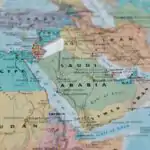
- Locate North Africa, the Sahara, and Kanem-Bornu on a map.
- Draw a simple map route showing movement of ideas and trade across the Sahara.
- Complete a chart showing impacts of Islam on governance, culture, education, and trade.
Social Domain:
- Work in groups to discuss and list impacts of Islam on Kanem-Bornu.
- Share group findings clearly and listen to other groups respectfully.
- Participate in class discussion using examples of changes in society and government.
Reference Materials
The following resources were used in planning this lesson:
- 9 Years Basic Education Curriculum
- State Unified Scheme of Work
- History for Senior Secondary Schools (relevant topics on Kanem-Bornu and external influences)
- Encyclopaedia Britannica: Kanem-Bornu
- Encyclopaedia Britannica: Islamic World
- National Geographic Education: Sahara Desert
Instructional Materials
The teacher will teach this lesson with the aid of:
- Map of Africa showing North Africa, the Sahara, and the Kanem-Bornu area
- Charts showing areas of Islamic influence and trans-Saharan links
- Pictures of historical centres and manuscripts where available
- Board/marker or chalk
- Handout for impact chart (governance, culture, education, trade)
Rationale for the Lesson
This lesson helps pupils to understand how contact with other regions shaped African societies through religion, learning, and trade. It also helps pupils to see how ideas can influence government, culture, and economic life over time.
Prerequisite/Previous Knowledge
Pupils have learned about early external influences and have basic knowledge of Kanem-Bornu as an important pre-colonial state.
Lesson Content/Board Summary
Early External Influence Continued: Islam and Its Impacts on Kanem-Bornu
Islam in North Africa and the Sahara Before the Spread
Islam was established in North Africa and became linked with desert routes through trade and travel across the Sahara.
The following are key points about Islam in North Africa and the Sahara before its spread:
- Islam grew in North African towns and spread through merchants, scholars, and travellers.
- Caravan trade connected North Africa with areas south of the Sahara.
- Arabic became important for religious learning and record keeping.
- Islamic learning centres developed in towns along trade routes.
- Religious teachers and traders carried Islamic ideas to other regions.
Acceptance of Islam by the Kanem-Bornu Court
Islam entered Kanem-Bornu mainly through contact with Muslim traders and scholars, and it was first accepted strongly at the royal court.
The following are ways Islam was accepted by the Kanem-Bornu court:
- Rulers and court officials adopted Islam for diplomacy and wider recognition.
- Muslim scholars were invited to advise the court and teach.
- Islamic practices were introduced in the palace and among elites.
- Arabic writing supported communication and administration.
- Religious links strengthened relations with North African Muslim states.
Impacts of Islam on Governance in Kanem-Bornu
Islam influenced leadership, administration, and legal ideas, especially at the centre of government.
The following are impacts of Islam on governance:
- Use of literate officials who could read and write Arabic for administration.
- Improved record keeping, communication, and diplomacy.
- Introduction of Islamic legal ideas in court decisions in some areas.
- Strengthening of royal authority through new religious legitimacy.
- Increased contact with other Muslim governments for advice and support.
Impacts of Islam on Culture and Social Life
Islam affected social customs, religious life, and cultural practices, while some local traditions remained.
The following are cultural and social impacts of Islam:
- Growth of Islamic worship and religious festivals in towns and court areas.
- Spread of Arabic names and greetings among Muslims.
- Influence on dressing styles and modesty in some communities.
- Changes in marriage practices among those who adopted Islamic rules.
- Development of Islamic arts such as calligraphy and manuscript decoration.
Changes in Education Due to Islam
Islam encouraged literacy and learning through religious education and scholarship.
The following are changes in education brought by Islam:
- Establishment of Qur’anic schools for religious instruction.
- Teaching of reading and writing, especially in Arabic.
- Training of scholars, judges, and teachers to support society and government.
- Use of written texts for learning and preservation of knowledge.
Impacts of Islam on Trade Links
Islam strengthened trans-Saharan links and encouraged wider trade relations.
The following are impacts of Islam on trade links:
- Stronger trade connections between Kanem-Bornu and North Africa.
- More trust and cooperation between Muslim traders across regions.
- Growth of markets and trading towns along routes.
- Exchange of goods, ideas, and skills through caravan movement.
- Improved diplomatic ties that supported safer trade relationships.
Examples of Early Rulers and Court Influence
The following are examples of early rulers and court influence connected to Islam in Kanem-Bornu:
- Mai (King) who adopted Islam at the court and supported Muslim scholars.
- Court officials who used Arabic writing for administration and diplomacy.
- Religious teachers and advisers who influenced policy and education.
- Links with North African Muslim centres through trade and learning.
Teaching Methods/Instructional Techniques
Discussion, Lecture, Demonstration, Question and Answer, Visual Aids
Instructional Procedures
Step 1: Introduction
Time: 5 minutes
Teaching Skill: Set Induction
Teacher’s Activity: The teacher displays a map of Africa and asks pupils to locate North Africa, the Sahara, and the Kanem-Bornu area, then links the previous lesson to today’s focus on Islam and its impacts.
Pupils’ Activity: Pupils point out the areas on the map and answer recall questions from the previous lesson.
Learning Point: Location and contact routes help to explain how external influence reached Kanem-Bornu.
Step 2: Islam in North Africa and the Sahara Before the Spread
Time: 8 minutes
Teaching Skill: Explanation with Visual Aids
Teacher’s Activity: The teacher explains the background of Islam in North Africa and the Sahara and shows trade-route charts.
Pupils’ Activity: Pupils listen, copy notes, and list key points about trade and movement across the Sahara.
Learning Point: Trade and travel across the Sahara supported the spread of Islamic ideas.
Step 3: Acceptance of Islam by the Kanem-Bornu Court
Time: 7 minutes
Teaching Skill: Questioning and Explanation
Teacher’s Activity: The teacher explains how Islam reached Kanem-Bornu and how the court accepted it, focusing on rulers, scholars, and diplomacy.
Pupils’ Activity: Pupils describe ways Islam was accepted by the court and give reasons for acceptance.
Learning Point: Islam was first strongly adopted by the royal court through contact with traders and scholars.
Step 4: Impacts of Islam on Governance
Time: 7 minutes
Teaching Skill: Discussion
Teacher’s Activity: The teacher guides pupils to list impacts of Islam on governance and records points on the board.
Pupils’ Activity: Pupils contribute points and copy the list into their notebooks.
Learning Point: Islam influenced administration, literacy, diplomacy, and legal ideas in governance.
Step 5: Impacts on Culture, Education, and Trade Links
Time: 6 minutes
Teaching Skill: Explanation
Teacher’s Activity: The teacher explains cultural, educational, and trade impacts using pictures and a simple impact chart.
Pupils’ Activity: Pupils complete a chart under culture, education, and trade, using examples from the lesson.
Learning Point: Islam influenced daily life, learning, and economic links through trade and education.
Step 6: Examples of Early Rulers and Court Influence
Time: 5 minutes
Teaching Skill: Illustration
Teacher’s Activity: The teacher mentions examples of early rulers and court influence and explains the role of scholars and officials in spreading Islamic practices.
Pupils’ Activity: Pupils mention examples of court influence and state one impact connected to each example.
Learning Point: Rulers and court officials helped Islam to influence governance and society.
Step 7: Evaluation/Review
Time: 5 minutes
Teaching Skill: Questioning/Assessment
Teacher’s Activity: The teacher evaluates the learning by asking the following questions:
- Describe Islam in North Africa and the Sahara before its spread to Kanem-Bornu.
- State three ways Islam was accepted by the Kanem-Bornu court.
- List four impacts of Islam on governance in Kanem-Bornu.
- Explain two impacts of Islam on education and two impacts on trade links in Kanem-Bornu.
Pupils’ Activity: Pupils answer orally and in writing.
Learning Point: Pupils demonstrate understanding of the lesson.
Step 8: Conclusion
Time: 2 minutes
Teaching Skill: Summary and Reinforcement
Teacher’s Activity: The teacher summarizes the lesson and gives an assignment for pupils to write a short note on how Islam affected Kanem-Bornu under governance, culture, education, and trade.
Pupils’ Activity: Pupils copy the summary and assignment.
Learning Point: Islam influenced Kanem-Bornu through the court, learning, culture, and trans-Saharan trade.
Lesson Keywords
- Islam – A major world religion that spread through teaching, trade, and scholarship.
- Kanem-Bornu – A major pre-colonial state around the Lake Chad region.
- Sahara – The desert region that linked North Africa with areas south of the desert through trade routes.
- Trans-Saharan trade – Trade across the Sahara using caravan routes.
- Royal court – The centre of government around a king and top officials.
- Governance – The way a state is ruled and administered.
- Qur’anic school – A school that teaches Islamic religion and basic literacy.
- Diplomacy – Relations and agreements between states through communication and negotiation.
Differentiation
Pupils who need support will use a guided table with headings for governance, culture, education, and trade to fill in examples. Pupils who progress faster will draw a simple route map and write a short paragraph explaining how court acceptance helped the spread of Islam in Kanem-Bornu.
Note for teachers using this lesson plan
Use maps and charts to make the routes and locations clear, and keep discussion focused on historical evidence and change over time. Emphasize that cultural contact can bring both continuity and change, and encourage respectful discussion of religion and culture.


Community Join the conversation Open discussion +