

Class: Senior Secondary School 1 (SS1, SS 1, SSS1, SSS 1)
Term: 3rd Term
Week: 4
Age: 15 years
Duration: 45 minutes
Subject: History
Curriculum Theme: History
Previous Lesson: Early External Influence: Commodities of Trans-Saharan Trade.
Topic: EARLY EXTERNAL INFLUENCE CONTINUED
Subject Matter: Causes of Trans-Saharan Trade, Economic Benefits of the Trade, Social and Cultural Impacts, Disadvantages and Challenges of the Trade, Long-Term Influence on West Africa
Specific Objectives
By the end of the lesson, pupils should be able to:
Cognitive Domain:
- State the main causes of the Trans-Saharan Trade.
- List the economic benefits derived from the Trans-Saharan Trade.
- Explain the social and cultural impacts of the Trans-Saharan Trade on West Africa.
- Identify the disadvantages and challenges associated with the Trans-Saharan Trade.
- Describe the long-term influence of the Trans-Saharan Trade on West African societies.
Affective Domain:
- Appreciate the historical significance of the Trans-Saharan Trade in shaping West African societies.
- Recognize the diverse influences that shaped West African history.
- Value the importance of trade in cultural exchange and development.
Psychomotor Domain:
- Discuss the various aspects of the Trans-Saharan Trade with peers.
- Present explanations of the causes and impacts of the trade clearly.
Social Domain:
- Collaborate with classmates during group discussions on the trade’s effects.
- Share ideas on how trade routes influenced the spread of ideas and goods.
Reference Materials
The following resources were used in planning this lesson:
- 9 Years Basic Education Curriculum for History (Senior Secondary Education).
- State Unified Scheme of Work for History SSS 1.
- Adeleke, R. (2018). Comprehensive History for Senior Secondary Schools 1. University Press PLC.
Instructional Materials
The teacher will teach this lesson with the aid of:
- Charts showing Trans-Saharan trade routes.
- Maps of West Africa indicating ancient trade cities.
- Diagrams illustrating goods exchanged during the trade.
Rationale for the Lesson
This lesson helps pupils understand how early external influences, particularly the Trans-Saharan Trade, played an important role in the economic, social, and cultural development of West Africa. Understanding this historical trade provides insight into the origins of many West African states and the enduring connections between North Africa and sub-Saharan Africa.
Prerequisite/Previous Knowledge
Pupils are expected to have some prior knowledge of early West African kingdoms and general concepts of trade from their basic social studies lessons.
Lesson Content/Board Summary
THE TRANS-SAHARAN TRADE
Introduction to Trans-Saharan Trade
The Trans-Saharan Trade refers to the network of trade routes connecting sub-Saharan Africa with North Africa across the Sahara Desert. This trade was active from ancient times and peaked between the 8th and 17th centuries, facilitating the exchange of goods, ideas, and cultures.
Causes of Trans-Saharan Trade
The following are the main causes that led to the development of the Trans-Saharan Trade:
- Availability of valuable goods: West Africa had abundant gold, kola nuts, and slaves, while North Africa and Europe offered salt, textiles, and manufactured goods.
- Emergence of powerful empires: Empires like Ghana, Mali, and Songhai controlled trade routes and provided security, encouraging trade.
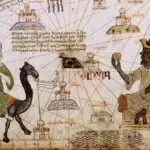
- Introduction of the camel: Camels made long-distance travel across the Sahara possible and efficient, replacing earlier methods.
- Demand for goods: Growing demand for gold in Europe and salt in West Africa fueled the trade.
- Spread of Islam: Muslim traders from North Africa brought goods and Islam, which facilitated trade through shared language and legal systems.
Economic Benefits of the Trade
The Trans-Saharan Trade brought several economic benefits to West Africa:
- Wealth generation: African empires grew rich from taxes on trade and control of gold mines.
- Development of urban centers: Cities like Timbuktu, Gao, and Djenne became major commercial and intellectual hubs.
- Introduction of new currencies: Cowries and gold dust were used as forms of currency, standardizing exchange.
- Access to foreign goods: West Africans gained access to salt, horses, textiles, and other goods not available locally.
- Growth of specialized crafts: Demand for goods stimulated local industries such as weaving, metalwork, and leatherwork.
Social and Cultural Impacts of the Trade
The trade had significant social and cultural impacts on West African societies:
- Spread of Islam: Islam was introduced and spread widely, influencing law, education, and social practices.
- Development of Islamic scholarship: Cities like Timbuktu became renowned centers of Islamic learning and scholarship.
- Introduction of Arabic language: Arabic became the language of commerce and administration in many areas.
- New architectural styles: Islamic architectural styles were introduced and adapted.
- Changes in social structure: The trade led to the rise of a merchant class and increased social stratification.
- Cultural exchange: Ideas, customs, and technologies were exchanged between different regions.
Disadvantages and Challenges of the Trade
Despite its benefits, the Trans-Saharan Trade also presented disadvantages and challenges:
- Slave trade: It facilitated and expanded the transatlantic slave trade, leading to the capture and sale of many Africans.
- Harsh desert conditions: Travel across the Sahara was dangerous due to extreme heat, sandstorms, and lack of water.
- Raids and banditry: Trade caravans were often targets for raids by desert nomads, leading to loss of goods and lives.
- Disease: The movement of people led to the spread of diseases.
- Dependence on foreign goods: Some West African economies became overly reliant on imported goods.
Long-Term Influence on West Africa
The long-term influence of the Trans-Saharan Trade on West Africa is profound:
- Enduring Islamic presence: Islam remains a dominant religion in many parts of West Africa.
- Historical legacy of empires: The trade contributed to the rise and fall of powerful West African empires.
- Cultural fusion: It created a unique blend of indigenous African and Islamic cultures.
- Development of written traditions: Arabic script was used to record local histories and literature, such as the Timbuktu manuscripts.
- Establishment of trade networks: It laid the foundation for future trade routes and economic interactions.
Teaching Methods/Instructional Techniques
Discussion, Lecture, Demonstration, Question and Answer, Visual Aids
Instructional Procedures
Step 1: Introduction
Time: 5 minutes
Teaching Skill: Set Induction
Teacher’s Activity: The teacher greets the pupils and reviews the previous lesson on early external influences. The teacher then introduces the topic, “Early External Influence Continued: The Trans-Saharan Trade,” by asking pupils if they know of any ancient trade routes across the desert.
Pupils’ Activity: Pupils respond to the teacher’s questions and state what they remember from the previous lesson. They listen attentively to the new topic.
Learning Point: Pupils recall prior knowledge and are introduced to the new lesson.
Step 2: Causes of Trans-Saharan Trade
Time: 10 minutes
Teaching Skill: Explanation/Demonstration
Teacher’s Activity: The teacher uses a map to show the Sahara Desert and ancient trade routes, explaining the key causes of the Trans-Saharan Trade, such as the availability of goods, the role of empires, and the use of camels. The teacher writes key points on the board.
Pupils’ Activity: Pupils observe the maps and charts, listen to the explanations, and note down the causes of the trade.
Learning Point: Pupils understand the factors that led to the development of the Trans-Saharan Trade.
Step 3: Economic Benefits of the Trade
Time: 8 minutes
Teaching Skill: Elucidation/Discussion
Teacher’s Activity: The teacher explains the economic benefits derived from the Trans-Saharan Trade, using examples of wealth generation, urban development, and introduction of new currencies. The teacher encourages pupils to mention any economic benefits they can infer.
Pupils’ Activity: Pupils listen, ask questions, and contribute ideas about the economic benefits, making notes.
Learning Point: Pupils identify the economic advantages gained by West African societies from the trade.
Step 4: Social and Cultural Impacts
Time: 7 minutes
Teaching Skill: Explanation/Illustration
Teacher’s Activity: The teacher discusses the social and cultural impacts of the trade, particularly focusing on the spread of Islam, Arabic language, and the development of Islamic scholarship in cities like Timbuktu. The teacher uses charts to illustrate these points.
Pupils’ Activity: Pupils listen to the explanations, observe the charts, and participate by mentioning cultural changes they recall.
Learning Point: Pupils understand how the trade influenced the social and cultural fabric of West Africa.
Step 5: Disadvantages and Challenges
Time: 5 minutes
Teaching Skill: Analysis/Problem-solving
Teacher’s Activity: The teacher explains the disadvantages and challenges of the Trans-Saharan Trade, including the slave trade, harsh desert conditions, and banditry. The teacher asks pupils to reflect on the negative aspects of such long-distance trade.
Pupils’ Activity: Pupils listen and identify the difficulties and negative consequences of the trade.
Learning Point: Pupils recognize the drawbacks and challenges faced during the Trans-Saharan Trade.
Step 6: Long-Term Influence on West Africa
Time: 5 minutes
Teaching Skill: Synthesis/Conclusion
Teacher’s Activity: The teacher summarizes the long-term influence of the trade, emphasizing the enduring presence of Islam, the legacy of empires, and cultural fusion. The teacher links these influences to modern West Africa.
Pupils’ Activity: Pupils listen and explain in their own words the lasting effects of the trade.
Learning Point: Pupils understand the lasting impact of the Trans-Saharan Trade on the region.
Step 7: Evaluation/Review
Time: 5 minutes
Teaching Skill: Questioning/Assessment
Teacher’s Activity: The teacher evaluates the learning by asking the following questions:
- Mention three causes of the Trans-Saharan Trade.
- List two economic benefits of the Trans-Saharan Trade.
- Explain one social impact and one cultural impact of the trade on West Africa.
- State two disadvantages or challenges associated with the Trans-Saharan Trade.
Pupils’ Activity: Pupils answer orally and in writing.
Learning Point: Pupils demonstrate understanding of the lesson.
Step 8: Conclusion
Time: 2 minutes
Teaching Skill: Summarization
Teacher’s Activity: The teacher summarizes the key points of the lesson, reinforcing the importance of the Trans-Saharan Trade in shaping West African history. The teacher assigns homework: “Write a short essay (one page) on how the Trans-Saharan Trade contributed to the rise of West African empires.”
Pupils’ Activity: Pupils listen to the summary and copy the homework assignment.
Learning Point: Pupils review the lesson and prepare for further study.
Lesson Keywords
- Trans-Saharan Trade – A network of trade routes across the Sahara Desert linking sub-Saharan Africa with North Africa.
- Caravan – A group of traders, pilgrims, or travelers journeying together, especially across a desert.
- Gold-Salt Trade – The primary exchange of gold from West Africa for salt from the Sahara and North Africa.
- Timbuktu – An ancient city in Mali that became a major intellectual and commercial center during the Trans-Saharan Trade.
- Islam – A monotheistic religion introduced to West Africa through the Trans-Saharan Trade, influencing culture and governance.
Differentiation
For pupils who grasp concepts quickly, the teacher can provide additional research questions on specific trade goods or empires. For pupils needing more support, the teacher will use simpler language, provide more visual aids, and encourage peer-assisted learning during group activities.
Note for teachers using this lesson plan
Ensure that maps and charts are clear and visible to all pupils. Encourage active participation and critical thinking by asking open-ended questions. Emphasize the long-term consequences of the trade, both positive and negative, to provide a balanced historical perspective.



Community Join the conversation Open discussion +