

Class: Senior Secondary School 1 (SS1, SS 1, SSS1, SSS 1)
Term: Second Term
Week: 7
Age: 15 years
Duration: 45 minutes
Subject: History
Curriculum Theme: History
Previous Lesson: Ife and Oyo: Yoruba Origin Theories and Political Organization.
Topic: BENIN
Subject Matter: stages of Benin development, notable rulers of Benin kingdom, relationship between Benin and neighbouring states, Benin economy, technology craft and industry in Benin
Specific Objectives
By the end of the lesson, pupils should be able to:
Cognitive Domain:
- Describe the stages of Benin Kingdom’s development.
- Identify and mention notable rulers of the Benin Kingdom.
- Explain the economic activities of the Benin Kingdom.
- List the technologies, crafts, and industries that thrived in Benin.
Affective Domain:
- Appreciate the rich cultural heritage and historical significance of the Benin Kingdom.
- Value the contributions of the Benin people to Nigerian history and art.
- Recognize the importance of peaceful coexistence between kingdoms and states.
Psychomotor Domain:
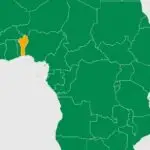
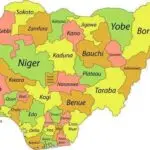
- Locate the historical region of the Benin Kingdom on a map of Nigeria.
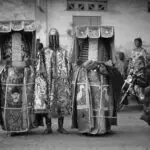
- Identify visual representations of Benin art and artifacts, such as bronzes.
Social Domain:
- Discuss the nature of Benin’s relationship with its neighbouring states.
Reference Materials
The following resources were used in planning this lesson:
- 9 Years Basic Education Curriculum (Senior Secondary History)
- State Unified Scheme of Work for Senior Secondary Schools
- Adeleke, A. (2016). *History for Senior Secondary Schools Book 1*. University Press Plc.
- Maps showing historical kingdoms of Nigeria.
- Pictures of Benin bronzes and artifacts.
Instructional Materials
The teacher will teach this lesson with the aid of:
- Maps showing the boundaries of the Benin Kingdom and its neighbours.
- Pictures or charts displaying Benin bronzes, carvings, and other artifacts.
- Whiteboard and markers/chalk.
Rationale for the Lesson
Learning about the Benin Kingdom helps pupils understand the rich history and cultural achievements of early Nigerian societies. It enables pupils to appreciate how advanced kingdoms developed politically, economically, and technologically, thereby connecting them to their national heritage.
Prerequisite/Previous Knowledge
Pupils have prior knowledge of the general history of early West African societies and the concept of kingdoms and empires in pre-colonial Nigeria.
Lesson Content/Board Summary
The Benin Kingdom
Stages of Benin Development
The Benin Kingdom, located in what is now Edo State, Nigeria, developed through distinct phases, evolving from a small settlement to a powerful empire.
The main stages of Benin’s development include:
- Ogiso Dynasty (c. 900 AD – 1170 AD): This was the earliest period, ruled by a line of kings known as Ogisos. The kingdom was primarily a collection of village-states under a central ruler.
- Oranmiyan and the Oba Dynasty (c. 1170 AD onwards): Following a period of instability, Prince Oranmiyan of Ile-Ife was invited to restore order. His son, Eweka I, became the first Oba (king) of Benin, establishing the current dynasty.
- Expansion and Consolidation (13th – 16th Centuries): Under powerful Obas like Ewuare the Great, Ozolua, and Esigie, the kingdom expanded significantly, conquering neighbouring territories and establishing a well-structured administrative system.
- Golden Age (15th – 17th Centuries): This period saw the peak of Benin’s power, wealth, and artistic achievements, especially in bronze casting and ivory carving.
- Decline and British Annexation (18th – 19th Centuries): Internal conflicts, slave trade, and European encroachment led to a decline, culminating in the British punitive expedition of 1897 and the annexation of the kingdom.
Notable Rulers of the Benin Kingdom
The Benin Kingdom was shaped by a succession of powerful and influential Obas. These rulers were not only political heads but also spiritual leaders.
Some notable Obas include:
- Eweka I: First Oba of the present dynasty, son of Oranmiyan.
- Ewuare the Great (c. 1440-1473): Transformed Benin into an empire, reformed administration, and introduced new festivals. He is credited with building the city walls and moats.
- Ozolua (c. 1481-1504): A warrior king who further expanded the empire and established contact with the Portuguese.
- Esigie (c. 1504-1550): Promoted learning, art, and maintained strong diplomatic ties with Portugal. His mother, Idia, was a powerful Queen Mother.
- Ovonramwen Nogbaisi (1888-1897): The last independent Oba before the British punitive expedition and annexation.
Relationship between Benin and Neighbouring States
Benin maintained various forms of relationships with its neighbours, ranging from warfare and conquest to trade and diplomatic alliances.
The nature of these relationships included:
- Conquest and Domination: Benin frequently expanded its territory through military force, bringing smaller states and communities under its control. Conquered states often paid tribute to the Oba.
- Diplomacy and Alliances: Benin also formed alliances with some states, often through marriage or treaties, to secure borders or facilitate trade.
- Trade Relations: Benin engaged in extensive trade with its neighbours, exchanging goods such as cloth, agricultural products, and craft items.
- Cultural Exchange: There was significant cultural diffusion, particularly in art forms and political structures, between Benin and some of its neighbours, notably Ile-Ife.
Benin Economy
The economy of the Benin Kingdom was diverse and robust, supporting a large population and a complex social structure.
Key economic activities included:
- Agriculture: The primary economic activity, involving the cultivation of yams, plantains, maize, and other food crops.
- Trade: Extensive internal and external trade. Benin traded with its neighbours and later with European powers (Portuguese, Dutch, British) along the coast. Exports included ivory, pepper, palm oil, and later slaves. Imports included firearms, cloth, and brass.
- Crafts and Industries: Production of various goods for local consumption and trade, such as textiles, pottery, leather goods, and metalwork.
- Hunting and Fishing: These activities supplemented the diet and provided raw materials like hides and ivory.
Technology, Craft, and Industry in Benin
Benin was renowned for its advanced technological skills and sophisticated artistic traditions, particularly in metalwork.
Notable areas of technology, craft, and industry included:
- Bronze Casting: Benin was famous for its exquisite bronze plaques, statues, and heads, produced using the lost-wax technique. These artworks depicted historical events, Obas, and court life.
- Ivory Carving: Skilled artisans carved intricate designs on ivory tusks, often used for ceremonial purposes or as gifts.
- Wood Carving: Production of masks, stools, doors, and other wooden objects for religious, ceremonial, and domestic use.
- Iron Smelting and Blacksmithing: Iron was smelted and forged to produce tools, weapons, and implements for agriculture and warfare.
- Weaving and Textile Production: Production of various cloths, including ceremonial robes and everyday wear, using local cotton and other fibres.
- Pottery: Production of earthenware for storage, cooking, and ritual purposes.
Teaching Methods/Instructional Techniques
Discussion, Lecture, Demonstration, Question and Answer, Visual Aids
Instructional Procedures
Step 1: Introduction
Time: 5 minutes
Teaching Skill: Set Induction
Teacher’s Activity: The teacher greets the pupils and reviews the previous lesson briefly. The teacher then asks pupils if they have heard of the Benin Kingdom or seen any images of Benin art. The teacher introduces the topic, “The Benin Kingdom,” and states the objectives of the lesson.
Pupils’ Activity: Pupils respond to greetings, recall previous lesson points, and share their prior knowledge or ideas about Benin. They listen attentively to the teacher’s introduction and objectives.
Learning Point: Pupils are introduced to the topic and made aware of what they will learn.
Step 2: Stages of Benin Development
Time: 10 minutes
Teaching Skill: Explanation/Lecture
Teacher’s Activity: The teacher explains the historical development of the Benin Kingdom, starting from the Ogiso Dynasty to the establishment of the Oba dynasty and its periods of expansion, golden age, and eventual decline. The teacher uses a timeline or chart to illustrate these stages.
Pupils’ Activity: Pupils listen, take notes, and ask questions for clarification regarding the different developmental stages.
Learning Point: Pupils understand the chronological progression and key periods in the history of the Benin Kingdom.
Step 3: Notable Rulers of Benin Kingdom
Time: 7 minutes
Teaching Skill: Exposition/Listing
Teacher’s Activity: The teacher lists and briefly describes the contributions of some notable Obas, such as Eweka I, Ewuare the Great, Ozolua, Esigie, and Ovonramwen Nogbaisi, highlighting their impact on the kingdom’s growth and administration.
Pupils’ Activity: Pupils listen carefully, identify the key rulers, and note down their significant achievements as explained by the teacher.
Learning Point: Pupils can mention and briefly describe the roles of important Obas in Benin’s history.
Step 4: Relationship between Benin and Neighbouring States
Time: 7 minutes
Teaching Skill: Discussion/Mapping
Teacher’s Activity: The teacher uses a map to show the location of the Benin Kingdom and its neighbouring states. The teacher then explains the various forms of relationships Benin had with these states, including conquest, trade, and diplomacy.
Pupils’ Activity: Pupils observe the map, participate in discussions, and identify the different types of interactions Benin had with other states.
Learning Point: Pupils understand how Benin interacted with its neighbours and the implications of these relationships.
Step 5: Benin Economy
Time: 5 minutes
Teaching Skill: Explanation/Questioning
Teacher’s Activity: The teacher explains the economic mainstays of the Benin Kingdom, focusing on agriculture, trade (internal and external), and the role of crafts. The teacher asks pupils to identify some major products and trade items.
Pupils’ Activity: Pupils listen, identify key economic activities, and contribute examples of goods traded or produced in Benin.
Learning Point: Pupils can describe the main economic activities that sustained the Benin Kingdom.
Step 6: Technology, Craft, and Industry in Benin
Time: 5 minutes
Teaching Skill: Demonstration/Visual Aid
Teacher’s Activity: The teacher displays pictures of Benin bronzes, ivory carvings, and other artifacts. The teacher explains the advanced craftsmanship and technology, such as the lost-wax method for bronze casting, that made Benin famous.
Pupils’ Activity: Pupils observe the pictures, ask questions about the artifacts, and appreciate the artistic and technological achievements of Benin.
Learning Point: Pupils identify and appreciate the sophisticated technology, crafts, and industries of the Benin Kingdom.
Step 7: Evaluation/Review
Time: 5 minutes
Teaching Skill: Questioning/Assessment
Teacher’s Activity: The teacher evaluates the learning by asking the following questions:
- Describe any three stages of Benin Kingdom’s development.
- Mention two notable rulers of the Benin Kingdom and one achievement for each.
- Explain two ways Benin related with its neighbouring states.
- List three economic activities that were important in the Benin Kingdom.
- Identify two famous crafts or industries for which Benin was known.
Pupils’ Activity: Pupils answer orally and in writing.
Learning Point: Pupils demonstrate understanding of the lesson.
Step 8: Conclusion
Time: 1 minute
Teaching Skill: Summarization
Teacher’s Activity: The teacher summarizes the key points of the lesson, emphasizing the Benin Kingdom’s significance in Nigerian history and its contributions to art and culture. The teacher assigns homework: “Research and write a short paragraph on the impact of the British punitive expedition on Benin art.”
Pupils’ Activity: Pupils listen to the summary and note down the homework assignment.
Learning Point: Pupils consolidate their learning and are given an opportunity for further research.
Lesson Keywords
- Ogiso – The title for the earliest kings of Benin before the Oba dynasty.
- Oba – The traditional ruler and spiritual head of the Edo people, title introduced from Ile-Ife.
- Ewuare the Great – A powerful Oba who significantly expanded the Benin Kingdom in the 15th century.
- Bronze Casting – A highly developed art form in Benin, using the lost-wax technique to create intricate sculptures.
- Lost-wax technique – A method of metal casting in which a molten metal is poured into a mold that has been created by means of a wax model.
- Tribute – Payment made by one state or ruler to another, often as a sign of submission or for protection.
- Punitive Expedition – A military operation undertaken to punish a group or state for perceived wrongdoing, as carried out by the British against Benin in 1897.
Differentiation
The teacher will provide differentiated support by forming mixed-ability groups for discussion, allowing advanced learners to lead discussions and provide more detailed explanations, while offering simplified explanations and visual aids for struggling learners. Additional research questions will be provided for pupils who grasp concepts quickly.
Note for teachers using this lesson plan
Teachers should ensure they have access to relevant maps and high-quality images of Benin artifacts to enhance visual learning. Encourage pupils to ask questions and relate the historical context of Benin to current societal structures where applicable. Emphasize critical thinking about sources and historical interpretations.
Community Join the conversation Open discussion +