

Class: Primary 5
Term: 3rd Term
Subject: National Values Education
Curriculum Theme: Social studies
previous Lesson: Meaning Of Personal Hygiene And Development
Topic: Characteristics Of Physical Development
Content/Learning Area: Characteristics of physical development of children at pre-adolescent stage
Time Allocation: 40 minutes
performance Objectives
By the end of the lesson, pupils should be able to:
- Cognitive Domain: Identify at least four characteristics of physical development during the pre-adolescent stage.
- Affective Domain: Appreciate the importance of physical development during growth.
- Psychomotor Domain: Demonstrate or point out physical features that change as children grow.
- Social Domain: Share experiences of personal physical changes with classmates confidently.
Reference Materials
The following resources were used in planning this lesson:
- 9 Years Basic Education Curriculum
- Abuja educational Resource Center Scheme of Work
- NAPPS National Unified Scheme of Work
- Online Information from: Virtual Lab School – Physical Development: An Introduction
- Relevant Textbooks
Instructional Materials
To deliver this lesson, the teacher will use the following:
- Charts showing stages of child development
- Flashcards with physical changes
- Whiteboard and marker
- Pictures of children at different stages of growth
- Videos or animations about child growth
Rationale for the Lesson
Understanding physical development helps children become aware of body changes and promotes healthy growth practices.
Prerequisite/Previous knowledge
Pupils have observed growth changes in themselves and others and can identify differences in age-based physical features.
Lesson Content
Characteristics Of Physical Development
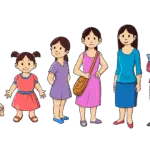
Physical development means the changes that happen in the body as children grow. These changes usually start between the ages of 9 to 12 and continue as they grow older.
Body Growth: Children at this stage experience fast growth in height and weight.The following are signs of body growth:
- Increase in height
- Increase in body weight
- Longer arms and legs
- Larger hands and feet
- Stronger bones
- Increase in shoe size
- Increase in appetite
Changes in Voice and Face: Some parts of the body, like the voice and face, also begin to change during this stage. These include:
- Voice becomes deeper in boys
- Face becomes longer
- Nose and chin may grow larger
- Skin may change slightly
- facial shape begins to mature
- Development of acne or pimples
- Changes in the jawline
Growth of Hair: Hair begins to grow in new parts of the body. The following are common changes:
- Hair grows under the arms
- Hair appears around the private parts
- hair on the arms and legs becomes thicker
- Boys may begin to grow facial hair
- Eyebrows may appear thicker
- Increase in hair density on the scalp
- Changes in hair texture
Development of Muscles and Chest: The body begins to take shape with stronger muscles. These include:
- Broader chest in boys
- Bigger muscles in arms and legs
- Hips widen in girls
- Shoulders widen in boys
- Muscles become more defined
- Increased physical strength
- Improved coordination
Teaching Methods
To deliver this lesson, the teacher will adopt the following methods: Discussion, lecture, storytelling, clarification, visual aids, group work
Instructional Procedures
To deliver this lesson, the teacher will adopt the following steps:
Step 1: Introduction
Time: 5 min
Teaching Skill: Set Induction
Teacher’s Activity: Teacher asks pupils what they notice about their growing bodies
Pupils’ Activity: Pupils respond and share observations
Step 2: Body Growth
Time: 5 min
Teaching Skill: Explanation
Teacher’s Activity: teacher explains what physical development means and introduces body growth signs
Pupils’ Activity: Pupils listen and give examples
Step 3: Changes in Voice and Face
Time: 5 min
Teaching Skill: Illustration
Teacher’s Activity: Teacher describes changes in voice and face with pictures and charts
Pupils’ Activity: Pupils observe and mention similar changes
Step 4: Growth of Hair
Time: 5 min
Teaching Skill: Visual aid
Teacher’s Activity: teacher shows images and explains where and how hair starts to grow
Pupils’ Activity: Pupils identify body parts where hair grows
Step 5: Muscle and Chest Development
Time: 5 min
Teaching Skill: Guided Discussion
Teacher’s Activity: Teacher explains how muscles grow and changes in boys’ and girls’ bodies
Pupils’ Activity: Pupils compare body features in boys and girls
Step 6: Note-Taking
Time: 5 min
Teaching Skill: writing
Teacher’s Activity: Teacher guides pupils to write down the lesson content in their notebooks
Pupils’ Activity: Pupils write neatly in their notebooks
step 7: Evaluation/Review
Time: 5 min
Teaching Skill: questioning
Teacher’s Activity: Teacher asks pupils questions about the lesson
Pupils’ Activity: Pupils answer questions
Objective-aligned checks:
- Identify at least four characteristics of physical development during the pre-adolescent stage.
- Demonstrate or point out physical features that change as children grow.
Step 8: Conclusion
Time: 5 min
Teaching Skill: Cognitive, instructional
Teacher’s Activity: teacher summarizes the lesson and reminds pupils that everyone grows differently
Pupils’ Activity: Pupils listen, ask final questions, and clap for themselves
Lesson Keywords
- growth – Increase in size or height
- Development – Body changes during growing up
- Adolescent – Age between childhood and teenage
- Muscles – Parts of the body that help us move
- Facial Hair – Hair on the face like mustache or beard
Lesson Evaluation
To evaluate the learning, the teacher asks pupils to:
- Mention three signs of body growth in pre-adolescents
- List two changes that happen in the face
- Say where new hair grows on the body
- Name two differences between boys and girls during development
- Share one personal experience of physical development
Assignment/Homework
- Write a short paragraph about the physical changes you have noticed in yourself in the last year.
- Interview a family member about their experiences with physical development during their pre-adolescent years.
- Draw a picture illustrating the different stages of physical development in children.
Differentiation
- For slower learners: Teacher will give extra attention to slow learners by using visual aids and allow more time for responses and writing.
- For advanced learners: Encourage advanced learners to research and present on the hormonal changes that cause these physical developments.
- For visual/auditory/kinesthetic learners: Use visual charts,audio explanations,and physical activities to demonstrate the concepts.
Note for Teachers
Encourage pupils to be respectful and confident when talking about their body changes. Create a safe and supportive class environment.



Community Join the conversation Open discussion +