

Class: Junior Secondary School 3 (JSS3, JSS 3)
Term: 1st Term
Week: 6
Age: 14 years
Duration: 45 minutes
Subject: Cultural And Creative Arts
Curriculum Theme: Cultural And Creative Arts
Previous Lesson: Motif, Types and Examples in Art
Topic: Uses of Motifs and Its Application
Subject Matter: Uses motif: To decorate borders, making of greeting card, designing patterns e.t.c
Specific Objectives
By the end of the lesson, pupils should be able to:
- Cognitive Domain:
(a) Identify various uses of motifs in art and design.
(b) Explain how motifs are applied in decorating objects and creating designs. - Affective Domain:
(a) Appreciate the beauty and importance of motifs in creative works. - Psychomotor Domain:
(a) Create simple motif patterns for borders and greeting cards. - Social Domain:
(a) Work collaboratively in groups to design decorative patterns using motifs.
Reference Materials
The following resources was used in planning this lesson:
- 9 Years Basic Education Curriculum
- Lagos State Unified Scheme of work for Junior Secondary Schools
- Wikipedia – Motif (visual arts)
- Relevant Textbooks
Instructional Materials
The teacher will teach this lesson with the aid of:
- Samples of motif designs and patterns
- Pictures of decorated fabrics, greeting cards, and walls
- Drawing papers and pencils
- Rulers, crayons, and colour markers
- Charts showing types of motifs
- Real-life objects decorated with motifs
Rationale for the Lesson
This lesson helps pupils understand how motifs can be used to beautify objects, express creativity, and develop design skills useful in art and decoration.
Prerequisite/Previous Knowledge
Pupils have previously learned the meaning of motifs, types, and how to draw simple motif patterns; they can recognize motifs in everyday designs like fabrics and walls.
Lesson Content/Board Summary
Uses And Application Of Motifs
Uses of Motifs
Motifs are repeated decorative designs or patterns used to beautify objects and surfaces. They are often inspired by nature, culture, or geometric forms and serve both functional and aesthetic purposes.
The following are uses of motifs:
- To decorate borders of books, cloths, walls, and papers.
- To beautify and design greeting cards and invitation cards.
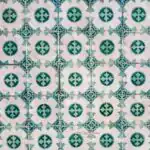
- To create attractive patterns on fabrics, ceramics, and household items.
- To decorate buildings, furniture, and other interior designs.
- To symbolize cultural identity and express artistic ideas.
- To serve as visual elements in logos, posters, and advertisements.
- To enhance the appearance of artworks and crafts.
Application of Motifs
The application of motifs involves arranging repeated patterns to create beauty and balance in design. Motifs can be drawn, painted, stamped, or printed on various materials depending on the purpose of the artwork.
The following are ways motifs can be applied:
- By repeating the motif design in a straight or alternating pattern to form borders.
- By arranging motifs around the edges of greeting cards or paper to make them attractive.
- By printing or drawing motifs on fabrics, ceramics, and wooden surfaces.
- By combining different motifs to create unique patterns in textile or wall designs.
- By using motifs in digital or graphic design to enhance visual appeal.
Importance of Using Motifs
The use of motifs in art and design has several benefits that improve the quality and attractiveness of creative works.
These include:
- Motifs beautify and add value to artistic and commercial designs.
- They help artists express ideas, emotions, and culture visually.
- They create uniformity and balance in decoration.
- Motifs make designs more interesting and meaningful.
- They enhance creativity and promote appreciation for visual arts.
Teaching Methods/Instructional Techniques:
Discussion, Lecture, Explanation, Demonstration, Group Work, Practical Activity, Visual Aids
Instructional Procedures
To deliver this lesson, the teacher will adopt the following steps:
Step 1: Introduction
Time: 5 minutes
Teaching Skill: Set Induction
Teacher’s Activity: The teacher displays different decorated objects and asks pupils what they notice about the designs. The teacher recalls the previous lesson on the meaning and types of motifs.
Pupils’ Activity: Pupils observe, identify, and respond to questions.
Learning Point: Pupils are motivated to learn how motifs are used in decoration and design.
Step 2: Uses of Motifs
Time: 10 minutes
Teaching Skill: Explanation
Teacher’s Activity: The teacher explains the various uses of motifs with examples from fabrics, cards, and walls.
Pupils’ Activity: Pupils listen and take notes on the uses of motifs.
Learning Point: Pupils identify and understand how motifs are used in art and decoration.
Step 3: Application of Motifs
Time: 10 minutes
Teaching Skill: Demonstration
Teacher’s Activity: The teacher demonstrates how motifs can be repeated and arranged on borders and greeting cards.
Pupils’ Activity: Pupils observe and ask questions about the process.
Learning Point: Pupils understand the practical steps of applying motifs in design.
Step 4: Practical Activity – Designing with Motifs
Time: 10 minutes
Teaching Skill: Supervised Practice
Teacher’s Activity: The teacher guides pupils to create simple motif patterns to decorate the borders of paper or make greeting card designs.
Pupils’ Activity: Pupils draw and colour their motif designs.
Learning Point: Pupils demonstrate understanding by producing creative motif-based designs.
Step 5: Note-Taking
Time: 5 minutes
Teaching Skill: Explanation
Teacher’s Activity: The teacher writes the lesson summary on the board for pupils to copy.
Pupils’ Activity: Pupils copy the note into their exercise books.
Learning Point: Pupils record key points for revision.
Step 6: Evaluation/Review
Time: 3 minutes
Teaching Skill: Questioning
Teacher’s Activity: The teacher evaluates the learning by asking the following questions:
- Mention three uses of motifs.
- State three ways motifs can be applied in design.
- Give two reasons why motifs are important in art.
Pupils’ Activity: Pupils respond to the questions orally.
Learning Point: Pupils recall and apply knowledge from the lesson.
Step 7: Conclusion
Time: 2 minutes
Teaching Skill: Reinforcement
Teacher’s Activity: The teacher summarizes the lesson, reinforces key points, and encourages pupils to continue practicing motif design.
Pupils’ Activity: Pupils listen attentively and ask final questions.
Learning Point: Pupils appreciate the role of motifs in beautifying designs.
Lesson Keywords
- Motif – a repeated decorative design or pattern
- Pattern – an arrangement of repeated shapes or colours
- Border – the outer edge or frame of a design
- Decoration – the act of beautifying an object or surface
- Design – a creative plan or arrangement used to make something attractive
Differentiation
Teacher supports slower learners with tracing templates and simplified examples, while advanced learners create original motif patterns using multiple shapes and colours.
Note for teachers using this lesson plan
Encourage creativity by allowing pupils to express their ideas freely in motif creation. Provide constructive feedback and ensure all materials are safely used during practical activities.

Community Join the conversation Open discussion +