

Class: Junior Secondary School 3 (JSS3, JSS 3)
Term: 1st Term
Week: 5
Age: 14 years
Duration: 45 minutes
Subject: Cultural And Creative Arts
Curriculum Theme: Cultural And Creative Arts
Previous Lesson: Nigerian Contemporary Art Work and Income Generation Through Art
Topic: MOTIF
Subject Matter: Meaning of motif (a unit of a design), Types of motifs with examples – Plant motifs, Floral motif, Traditional motifs, Geometrical motifs
Specific Objectives
By the end of the lesson, pupils should be able to:
- Cognitive Domain:
(a) Explain what a motif is as a unit of design.
(b) Identify and describe different types of motifs with examples. - Affective Domain:
(a) Appreciate the importance of motifs in art and cultural decoration.
(b) Develop interest in creating and using motifs in their own designs. - Psychomotor Domain:
(a) Draw simple examples of motifs such as plant, floral, or geometric patterns. - Social Domain:
(a) Work cooperatively in groups to identify and present examples of motifs from their environment.
Reference Materials
The following resources was used in planning this lesson:
- 9 Years Basic Education Curriculum
- Lagos State Unified Scheme of work for Junior Secondary Schools
- Britannica – “Decorative Arts and Motif Design” (https://www.britannica.com/art/decorative-art)
- Relevant Textbooks
Instructional Materials
The teacher will teach this lesson with the aid of:
- Charts showing various motif designs
- Samples of traditional fabric with motifs (e.g., Ankara, Akwete, Adire)
- Drawing papers and pencils
- Coloured markers or crayons
- Projector or printed images of natural and geometric motifs
Rationale for the Lesson
This lesson enables pupils to understand and identify motifs as the smallest units of design, appreciate their aesthetic value, and apply them in creative works.
Prerequisite/Previous Knowledge
Pupils have seen and used decorated materials like fabrics, tiles, and artworks, and can recall previous lessons on patterns and design elements.
Lesson Content/Board Summary
MOTIF
Meaning of Motif
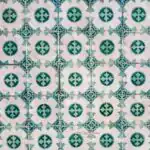
A motif is a unit or element of design that is repeated to form a pattern. It can be a simple shape, symbol, or figure that appears repeatedly in decoration or artwork. Artists and designers use motifs to create harmony, rhythm, and beauty in their designs.
Types of Motifs
There are different types of motifs used in art and design. Each type is inspired by different sources and forms found in the environment.
The following are the main types of motifs:
- Plant Motifs:
These are motifs inspired by leaves, trees, stems, or fruits. They are commonly used in textile designs and decorations.
Examples include banana leaves, palm fronds, and yam tendrils. - Floral Motifs:
Floral motifs are based on flowers and their parts such as petals and buds. They are popular in embroidery, pottery, and architectural decorations.
Examples include hibiscus, sunflower, and rose patterns. - Traditional Motifs:
Traditional motifs are symbols, shapes, or forms that reflect cultural heritage or beliefs. They often carry meanings and are used in local crafts and traditional art forms.
Examples include Adinkra symbols, Nsibidi symbols, and patterns from Akwete cloth or Uli designs. - Geometrical Motifs:
Geometrical motifs are formed from mathematical shapes and patterns such as circles, triangles, squares, and lines. They are common in modern design and architecture.
Examples include zigzag lines, concentric circles, and checkerboard patterns.
Importance of Motifs in Art
Motifs play an important role in visual art and design.
The following are the importance of motifs:
- They add beauty and decoration to artworks.
- They help artists express ideas, beliefs, and culture.
- They create rhythm and balance in design.
- They make fabrics, ceramics, and buildings more attractive.
- They serve as inspiration for creative design.
Teaching Methods/Instructional Techniques:
Lecture, Discussion, Demonstration, Question and Answer, Group Work, Visual Aids, Observation
Instructional Procedures
To deliver this lesson, the teacher will adopt the following steps:
Step 1: Introduction
Time: 5 minutes
Teaching Skill: Set Induction
Teacher’s Activity: The teacher displays patterned fabrics or wall tiles and asks pupils to observe the repeated designs. The teacher leads a short discussion on where they have seen such designs.
Pupils’ Activity: Pupils observe the materials and share their experiences.
Learning Point: Pupils are introduced to the concept of motif as a repeated design element.
Step 2: Explanation of Motif
Time: 10 minutes
Teaching Skill: Explanation
Teacher’s Activity: The teacher defines a motif as a unit of design and explains its role in forming patterns.
Pupils’ Activity: Pupils listen and take notes.
Learning Point: Pupils understand the meaning and function of a motif in design.
Step 3: Types of Motifs
Time: 10 minutes
Teaching Skill: Discussion
Teacher’s Activity: The teacher presents charts and pictures showing different types of motifs (plant, floral, traditional, geometrical) and explains each type with examples.
Pupils’ Activity: Pupils study the charts, discuss, and ask questions.
Learning Point: Pupils can identify and describe the various types of motifs.
Step 4: Drawing and Demonstration
Time: 10 minutes
Teaching Skill: Demonstration
Teacher’s Activity: The teacher guides pupils to draw simple examples of motifs such as leaves, flowers, or geometric patterns.
Pupils’ Activity: Pupils draw and colour their motif designs.
Learning Point: Pupils demonstrate understanding by producing their own motif drawings.
Step 5: Note-Taking
Time: 5 minutes
Teaching Skill: Reinforcement
Teacher’s Activity: The teacher writes the lesson summary on the board for pupils to copy.
Pupils’ Activity: Pupils copy the notes neatly into their notebooks.
Learning Point: Pupils have a written record of the main points of the lesson.
Step 6: Evaluation/Review
Time: 3 minutes
Teaching Skill: Questioning
Teacher’s Activity: The teacher evaluates the learning by asking the following questions:
- What is a motif?
- Mention the four main types of motifs.
- Give one example of each type of motif.
- State two importance of motifs in art.
Pupils’ Activity: Pupils respond orally to the questions.
Learning Point: Pupils demonstrate understanding of the key points of the lesson.
Step 7: Conclusion
Time: 2 minutes
Teaching Skill: Reinforcement
Teacher’s Activity: The teacher summarizes the lesson, corrects errors, and encourages pupils to observe and design motifs from their surroundings.
Pupils’ Activity: Pupils listen attentively and ask relevant questions.
Learning Point: Pupils appreciate the creative use of motifs in art and culture.
Lesson Keywords
- Motif – a unit of design repeated in a pattern
- Floral – relating to flowers or flower designs
- Geometrical – using shapes like circles, triangles, and squares
- Traditional – relating to customs and cultural art forms
- Pattern – repeated arrangement of motifs to decorate a surface
Differentiation
Teacher assists slower learners with guided drawing exercises, while advanced learners create and decorate complex motif patterns using colours.
Note for teachers using this lesson plan
Ensure pupils understand that motifs are the foundation of many art and design works. Encourage creativity by allowing them to design from imagination or their cultural environment.


Community Join the conversation Open discussion +