

Class: Senior Secondary School 2 (SS2 / SSS2)
Term: 2nd Term
Week: 6
Age: 16 years
Duration: 45 minutes
Subject: Biology
Curriculum Theme: Reproduction
Previous Lesson: Reproductive System in Birds and Mammals.
Topic: Reproductive System in Birds and Mammals (Continues); Reproductive System in Plants
Subject Matter: Structural differences in the egg of vertebrates, tabulation and comparison of reproduction in fish, reptiles, birds, and mammals, structure and function of the floral parts, arrangement of the major reproductive parts whorls.
Specific Objectives
By the end of the lesson, pupils should be able to:
Cognitive Domain:
- Describe the structure of a sperm cell.
- State the structural differences in the eggs of various vertebrates.
- Compare the modes of reproduction in fish, reptiles, birds, and mammals.
- Identify and state the functions of the major floral parts.
- Describe the arrangement of floral whorls in a flower.
Affective Domain:
- Appreciate the diversity and complexity of reproductive strategies in living organisms.
- Develop an interest in observing and identifying biological structures.
Psychomotor Domain:
- Draw and label a typical sperm cell.
- Examine and label the parts of a given flower.
- Construct a table comparing reproduction in different vertebrate groups.
Social Domain:
- Participate actively in discussions about reproductive systems.
- Collaborate with peers during practical observations of specimens.
Reference Materials
The following resources were used in planning this lesson:
- Senior Secondary Schools Education Curriculum
- State Unified Scheme of Work
- Modern Biology for Senior Secondary Schools by Ramalingam S. T.
- https://nigerianinfopedia.com.ng/reproductive-system-in-birds-and-mammals/
- https://www.biologyonline.com/tutorials/plant-reproduction-and-development-overview
Instructional Materials
The teacher will teach this lesson with the aid of:
- Prepared slides of mammalian sperm or a fresh sperm specimen from a rat
- Microscope
- Hand lenses
- Various types of fresh flowers (e.g., Hibiscus, Allamanda)
- Dissecting pins and forceps
- Posters illustrating vertebrate eggs and floral parts
- Textbooks
Rationale for the Lesson
This lesson helps pupils understand the intricate mechanisms of reproduction in both animals and plants. It enables them to appreciate the adaptations that ensure the continuity of species and to identify the key structures involved in these processes.
Prerequisite/Previous Knowledge
Pupils should have basic knowledge of cell structure, simple animal and plant classification, and the general concept of reproduction from previous lessons.
Lesson Content/Board Summary
Reproductive Systems in Animals and Plants
Structure of a Sperm Cell
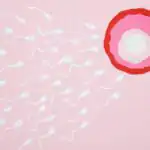
A sperm cell is the male gamete, typically motile and consisting of three main parts:
- Head: Contains the nucleus with haploid genetic material and an acrosome cap which helps in penetrating the egg.
- Midpiece: Packed with mitochondria that provide energy for the tail’s movement.
- Tail (Flagellum): A long, whip-like structure that propels the sperm towards the egg.
Structural Differences in Vertebrate Eggs
Vertebrate eggs show variations adapted to their environment and developmental needs:
- Fish Eggs: Small, numerous, with little yolk, laid in water, often externally fertilized.
- Amphibian Eggs: Moderate size, gelatinous coating, moderate yolk, laid in water, externally fertilized.
- Reptile Eggs: Larger, leathery or calcareous shell, large yolk for nourishment, laid on land, internally fertilized.
- Bird Eggs: Large, hard calcareous shell, very large yolk, laid on land, internally fertilized.
- Mammal Eggs: Very small, microscopic, with very little yolk, develop internally within the mother (except monotremes), internally fertilized.
Comparison of Reproduction in Fish, Reptiles, Birds, and Mammals
The table below highlights key differences in reproductive strategies among these vertebrate groups:
| Feature | Fish | Reptiles | Birds | Mammals |
|---|---|---|---|---|
| Fertilization | External (mostly) | Internal | Internal | Internal |
| Egg Type | Amniotic egg absent, small, no shell | Amniotic egg, leathery shell | Amniotic egg, hard shell | Amniotic egg absent (viviparous), very small |
| Development | External (in water) | External (on land) | External (on land) | Internal (in uterus) |
| Parental Care | Limited or none | Limited | Extensive | Extensive |
| Offspring | Numerous, vulnerable | Moderate number | Few, well-protected | Few, highly protected |
Structure and Function of Floral Parts
A typical flower consists of four main whorls, each with specific parts and functions:
- Calyx: Outermost whorl, made of sepals. Function: Protects the flower bud.
- Corolla: Whorl inside the calyx, made of petals. Function: Attracts pollinators with colour and scent.
- Androecium: Male reproductive whorl, made of stamens. Each stamen has an anther (produces pollen) and a filament (supports the anther). Function: Produces pollen grains containing male gametes.
- Gynoecium (Pistil/Carpel): Innermost whorl, female reproductive part. Consists of stigma (receives pollen), style (connects stigma to ovary), and ovary (contains ovules which develop into seeds). Function: Produces ovules containing female gametes and develops into fruit after fertilization.
Arrangement of Major Reproductive Parts (Whorls)
The floral parts are typically arranged in concentric circles or whorls on the receptacle:
- Calyx (Sepals): Outermost whorl.
- Corolla (Petals): Next whorl inside the sepals.
- Androecium (Stamens): Inside the petals.
- Gynoecium (Pistil/Carpel): Centralmost whorl.
Flowers can be classified as:
- Complete: Possesses all four whorls (calyx, corolla, androecium, gynoecium).
- Incomplete: Lacks one or more whorls.
- Perfect (Bisexual): Has both androecium and gynoecium (male and female reproductive parts).
- Imperfect (Unisexual): Has either androecium or gynoecium, but not both.
Teaching Methods/Instructional Techniques
Discussion, Lecture, Demonstration, Question and Answer, Visual Aids, Practical Observation
Instructional Procedures
Step 1: Introduction
Time: 5 minutes
Teaching Skill: Set Induction
Teacher’s Activity: The teacher greets the pupils and asks them to recall what they learned about reproduction in general, and briefly introduces the lesson as a continuation of animal reproduction and an introduction to plant reproduction.
Pupils’ Activity: Pupils respond to questions and listen attentively to the introduction.
Learning Point: Pupils are prepared for the lesson and connect to prior knowledge.
Step 2: Observation of Sperm Cell
Time: 10 minutes
Teaching Skill: Demonstration/Observation
Teacher’s Activity: The teacher mounts a prepared slide of mammalian sperm under a microscope or shows a poster. The teacher guides pupils to observe, identify, draw, and label the head, midpiece, and tail of the sperm cell.
Pupils’ Activity: Pupils observe the sperm specimen under the microscope or on the poster, then draw and label its parts in their notebooks.
Learning Point: Pupils identify and understand the structure of a sperm cell.
Step 3: Discussion on Vertebrate Egg Differences
Time: 7 minutes
Teaching Skill: Explanation/Discussion
Teacher’s Activity: The teacher explains the structural differences in the eggs of fish, amphibians, reptiles, birds, and mammals, highlighting variations in size, yolk content, and protective coverings.
Pupils’ Activity: Pupils listen, take notes, and ask questions for clarification regarding the different egg structures.
Learning Point: Pupils understand the adaptations of eggs in various vertebrate groups.
Step 4: Comparison of Vertebrate Reproduction
Time: 8 minutes
Teaching Skill: Tabulation/Comparative Analysis
Teacher’s Activity: The teacher facilitates a discussion to compare the reproductive modes (fertilization, development, parental care) in fish, reptiles, birds, and mammals, guiding pupils to construct a comparison table on the board.
Pupils’ Activity: Pupils contribute ideas, participate in the discussion, and copy the comparison table into their notebooks.
Learning Point: Pupils can differentiate and compare reproductive strategies across vertebrate classes.
Step 5: Examination of Floral Parts
Time: 7 minutes
Teaching Skill: Practical/Observation
Teacher’s Activity: The teacher provides fresh flowers to groups of pupils and guides them to carefully examine and identify the different floral parts: sepals, petals, stamens, and pistil/carpel, using hand lenses and dissecting pins.
Pupils’ Activity: Pupils, in groups, examine the flowers, identify the parts, and discuss their observations.
Learning Point: Pupils gain practical experience in identifying flower structures.
Step 6: Explanation of Floral Structure and Whorls
Time: 6 minutes
Teaching Skill: Explanation/Illustration
Teacher’s Activity: The teacher explains the structure and function of each floral part (calyx, corolla, androecium, gynoecium) and describes their arrangement in whorls, using diagrams or posters.
Pupils’ Activity: Pupils listen, take notes, and ask questions to clarify their understanding of floral anatomy and arrangement.
Learning Point: Pupils understand the names, functions, and arrangement of floral parts.
Step 7: Evaluation/Review
Time: 5 minutes
Teaching Skill: Questioning/Assessment
Teacher’s Activity: The teacher evaluates the learning by asking the following questions:
- Describe the three main parts of a sperm cell.
- State two structural differences between a bird’s egg and a mammal’s egg.
- Mention two ways reproduction in fish differs from reproduction in reptiles.
- List the four main floral whorls and state the function of one of them.
Pupils’ Activity: Pupils answer orally and in writing.
Learning Point: Pupils demonstrate understanding of the lesson.
Step 8: Conclusion
Time: 2 minutes
Teaching Skill: Summarization
Teacher’s Activity: The teacher summarizes the key points of the lesson, emphasizing the diversity of reproductive strategies in both animals and plants. The teacher assigns homework: “Draw and label a longitudinal section of a typical flower.”
Pupils’ Activity: Pupils listen to the summary and copy down the assigned homework.
Learning Point: Pupils consolidate their understanding and receive further practice.
Lesson Keywords
- Sperm – The male gamete, typically motile.
- Ovum – The female gamete, or egg cell.
- Yolk – Nutrient-rich substance in an egg, providing food for the embryo.
- Fertilization – The fusion of male and female gametes.
- Oviparous – Animals that lay eggs.
- Viviparous – Animals that give birth to live young.
- Flower – The reproductive structure of flowering plants.
- Sepal – Leaf-like structures forming the outermost whorl (calyx) of a flower, protecting the bud.
- Petal – Often brightly coloured parts of a flower, forming the corolla, attracting pollinators.
- Stamen – The male reproductive part of a flower, consisting of an anther and filament.
- Pistil/Carpel – The female reproductive part of a flower, consisting of stigma, style, and ovary.
- Whorl – A circular arrangement of similar parts, such as leaves, petals, or sepals, around a central point.
Differentiation
For pupils who grasp concepts quickly, the teacher can challenge them to research and present on unusual reproductive strategies (e.g., parthenogenesis, hermaphroditism). For pupils needing more support, the teacher can provide simplified diagrams, extra guidance during practical sessions, and pair them with stronger pupils for collaborative learning.
Note for teachers using this lesson plan
Ensure all necessary specimens (sperm slides, fresh flowers) and equipment (microscopes, hand lenses) are prepared before the lesson. Encourage active participation and hands-on engagement during the practical observation steps. Emphasize the connection between structure and function in both animal and plant reproductive parts. The comparison table is important for understanding evolutionary adaptations.
Community Join the conversation Open discussion +