

Class: Senior Secondary School 2 (SS2 / SSS 2)
Term: First Term
Week: 10
Age: 16 years
Duration: 45 minutes
Subject: Biology
Curriculum Theme: Ecology
Previous Lesson: Decomposition and Tolerance: Decomposers and Limits of Tolerance.
Topic: ECOLOGICAL MANAGEMENT CONTINUES (B) ADAPTATION
Subject Matter: Types of association (symbiosis, mutualism, parasitism, commensalism), features of biological importance possessed by organisms to an association, effect of water availability to adaptive modification, structural adaptation of tadpole and fish to life in water, structural adaptation in birds.
Specific Objectives
By the end of the lesson, pupils should be able to:
Cognitive Domain:
- Define ecological association and adaptation.
- Differentiate between mutualism, parasitism, and commensalism with examples.
- Describe the structural adaptations of tadpoles and fish to aquatic life.
- Identify structural adaptations in birds for flight and feeding.
Affective Domain:
- Appreciate the importance of adaptations for survival in different environments.
- Recognize the interdependence of organisms in their ecosystems.
Psychomotor Domain:
- Observe and identify adaptive features in organisms.
- Draw and label diagrams illustrating structural adaptations.
Social Domain:
- Discuss various examples of ecological associations and adaptations.
- Collaborate with peers during observation activities.
Reference Materials
The following resources were used in planning this lesson:
- Senior Secondary Schools Education Curriculum
- State Unified Scheme of Work
- Modern Biology for Senior Secondary Schools by P.B. Stanfield
Instructional Materials
The teacher will teach this lesson with the aid of:
- Textbook
- Posters showing various ecological associations and adaptations
- Preserved specimens or diagrams of tadpoles, fish, and different bird types
- Live chameleon (if available)
- Ticks (if collected by pupils)
Rationale for the Lesson
This lesson helps pupils understand how different organisms interact with each other and their environment to survive. It enables pupils to recognize the various ways living things have developed special features to cope with their surroundings, which is important for understanding biodiversity and ecological balance.
Prerequisite/Previous Knowledge
Pupils should have prior knowledge of basic ecological concepts such as habitat, niche, population, community, and simple food chains.
Lesson Content/Board Summary
ECOLOGICAL MANAGEMENT: ADAPTATION
1. Ecological Associations
Ecological associations are the relationships between different organisms living together in an ecosystem. These relationships can be beneficial, harmful, or neutral.
The main types of symbiotic associations are:
- Symbiosis: A general term for any close, long-term interaction between two different biological organisms. It includes mutualism, commensalism, and parasitism.
- Mutualism: A type of symbiotic relationship where both organisms benefit from the association.
- Example: Lichens (algae and fungi), nitrogen-fixing bacteria in legume root nodules, bees pollinating flowers.
- Commensalism: A type of symbiotic relationship where one organism benefits, and the other is neither helped nor harmed.
- Example: Remora fish attaching to sharks, barnacles on whales, epiphytes (plants growing on other plants).
- Parasitism: A type of symbiotic relationship where one organism (the parasite) benefits at the expense of the other (the host), causing harm to the host.
- Example: Ticks on dogs/cows, tapeworms in humans, mosquitoes feeding on blood.
2. Adaptation
Adaptation is the process by which organisms develop features or characteristics that enable them to survive and reproduce effectively in their specific environment.
Types of Adaptation:
- Structural Adaptation: Involves physical features of an organism (e.g., body parts, colouration).
- Physiological Adaptation: Involves internal body processes or functions (e.g., venom production, temperature regulation).
- Behavioral Adaptation: Involves the actions or behaviors of an organism (e.g., migration, hibernation, mating rituals).
3. Structural Adaptation of Organisms
a. Structural Adaptation of Tadpole and Fish to Aquatic Life
Organisms living in water possess specific features for movement, respiration, and protection.
- Tadpole:
- Tail: Long, muscular tail for propulsion (swimming).
- Gills: External or internal gills for respiration in water.
- Streamlined body: Reduces water resistance.
- Small size: Allows easy movement in water.
- Fish:
- Streamlined body: Spindle-shaped body to reduce drag while swimming.
- Fins: Paired and unpaired fins for balance, steering, and propulsion.
- Scales: Overlapping scales provide protection and reduce friction.
- Gills: Internal gills covered by operculum for gaseous exchange in water.
- Lateral line: Sensory organ to detect vibrations and pressure changes in water.
- Swim bladder: Regulates buoyancy, allowing the fish to maintain depth.
b. Structural Adaptation in Birds
Birds are adapted for flight and various feeding habits.
- For Flight:
- Feathers: Lightweight, strong, and provide insulation and lift.
- Wings: Modified forelimbs for flight, providing lift and thrust.
- Hollow bones: Reduce body weight, making flight easier.
- Streamlined body: Reduces air resistance during flight.
- Powerful flight muscles: Attached to a keeled sternum (breastbone) for strong wing beats.
- For Feeding:
- Beaks/Bills: Varied shapes and sizes adapted for specific diets (e.g., sharp curved beak for tearing meat, long slender beak for probing nectar, short conical beak for cracking seeds).
- Claws/Talons: Adapted for grasping prey, perching, or scratching the ground.
4. Effect of Water Availability on Adaptive Modification
The availability of water significantly influences the adaptations of plants and animals.
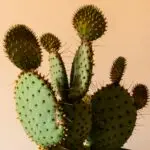
- Xerophytes: Plants adapted to dry conditions (e.g., cacti with succulent stems, reduced leaves, sunken stomata).
- Hydrophytes: Plants adapted to aquatic environments (e.g., water lilies with large floating leaves, air sacs).
- Mesophytes: Plants adapted to moderate water conditions (most common plants).
Teaching Methods/Instructional Techniques
Discussion, Lecture, Demonstration, Question and Answer, Visual Aids
Instructional Procedures
Step 1: Introduction
Time: 5 minutes
Teaching Skill: Set Induction
Teacher’s Activity: The teacher greets the pupils and asks them to recall what they learned in the previous lesson about ecological management. The teacher then introduces the topic: “Ecological Management Continues (B) Adaptation.”
Pupils’ Activity: Pupils respond to the teacher’s questions and listen attentively to the introduction.
Learning Point: Pupils recall previous knowledge and are introduced to the new topic.
Step 2: Ecological Associations
Time: 10 minutes
Teaching Skill: Explanation/Discussion
Teacher’s Activity: The teacher explains the concept of ecological associations and introduces symbiosis as a general term. The teacher then defines mutualism, giving examples like lichens and nitrogen-fixing bacteria.
Pupils’ Activity: Pupils listen, ask questions, and discuss other examples of mutualism they know.
Learning Point: Pupils understand the concept of ecological associations and mutualism.
Step 3: Commensalism and Parasitism
Time: 5 minutes
Teaching Skill: Explanation/Demonstration
Teacher’s Activity: The teacher further explains commensalism with examples such as remora fish and barnacles. The teacher then defines parasitism and uses the collected ticks from cows/dogs as a real-life example to illustrate.
Pupils’ Activity: Pupils observe the ticks (if available), listen to the explanations, and identify the host and parasite.
Learning Point: Pupils differentiate between commensalism and parasitism with practical examples.
Step 4: Introduction to Adaptation
Time: 5 minutes
Teaching Skill: Concept Development
Teacher’s Activity: The teacher defines adaptation and introduces the three main types: structural, physiological, and behavioral adaptations. The teacher emphasizes that these adaptations help organisms survive.
Pupils’ Activity: Pupils listen, take notes, and ask for clarifications on the types of adaptation.
Learning Point: Pupils grasp the definition and types of adaptation.
Step 5: Structural Adaptations (Aquatic Life)
Time: 5 minutes
Teaching Skill: Visualisation/Description
Teacher’s Activity: The teacher uses diagrams or posters to describe the structural adaptations of tadpoles and fish for life in water, focusing on their tails, gills, fins, and body shapes.
Pupils’ Activity: Pupils observe the diagrams, identify the features, and relate them to the function in an aquatic environment.
Learning Point: Pupils understand how tadpoles and fish are structurally adapted to water.
Step 6: Structural Adaptations (Birds and Water Availability)
Time: 5 minutes
Teaching Skill: Observation/Demonstration
Teacher’s Activity: The teacher guides pupils to observe a chameleon (if available) against different backgrounds to see colour change, explaining it as a behavioral and structural adaptation. The teacher then describes structural adaptations in birds for flight and feeding, and briefly touches on how water availability affects plant adaptations (xerophytes, hydrophytes).
Pupils’ Activity: Pupils observe the chameleon, record colour changes, and discuss bird adaptations and plant responses to water.
Learning Point: Pupils learn about adaptations in birds and the influence of water availability.
Step 7: Evaluation/Review
Time: 5 minutes
Teaching Skill: Questioning/Assessment
Teacher’s Activity: The teacher evaluates the learning by asking the following questions:
- Define ecological association and adaptation.
- Differentiate between mutualism, parasitism, and commensalism, giving an example for each.
- List three structural adaptations of a fish to its aquatic habitat.
- Mention two structural adaptations that enable birds to fly.
Pupils’ Activity: Pupils answer orally and in writing.
Learning Point: Pupils demonstrate understanding of the lesson.
Step 8: Conclusion
Time: 5 minutes
Teaching Skill: Summarization/Consolidation
Teacher’s Activity: The teacher summarizes the key points of the lesson, emphasizing the importance of adaptation for survival and the different types of ecological associations. The teacher then assigns homework: “Draw and label a diagram of a fish, indicating its adaptive features for aquatic life.”
Pupils’ Activity: Pupils listen to the summary and copy down the homework.
Learning Point: Pupils consolidate their learning and are given a task to reinforce understanding.
Lesson Keywords
- Ecological Association – The relationship between different organisms living together.
- Symbiosis – A close, long-term interaction between two different organisms.
- Mutualism – A symbiotic relationship where both organisms benefit.
- Commensalism – A symbiotic relationship where one benefits and the other is neither helped nor harmed.
- Parasitism – A symbiotic relationship where one benefits at the expense of the other.
- Adaptation – Features or characteristics that enable an organism to survive and reproduce in its environment.
- Xerophytes – Plants adapted to dry conditions.
- Hydrophytes – Plants adapted to aquatic conditions.
- Streamlined Body – A body shape that reduces resistance to movement through water or air.
Differentiation
For pupils who grasp concepts quickly, the teacher can encourage them to research and present other examples of complex symbiotic relationships or unusual adaptations. For pupils who require more support, the teacher will provide simplified diagrams, one-on-one explanations, and peer support during observation activities.
Note for teachers using this lesson plan
Encourage pupils to bring in relevant examples from their local environment, such as different bird beaks or local plant adaptations. Emphasize the connection between an organism’s structure/behavior and its specific environment. Practical observations, even simple ones like observing insects or plants around the school, can greatly enhance understanding.

Community Join the conversation Open discussion +