

Class: Senior Secondary School 2 (SS2 / SSS 2)
Term: Second Term
Week: 8
Age: 16 years
Duration: 45 minutes
Subject: Biology
Curriculum Theme: Reproduction
Previous Lesson: Reproductive System in Plants: Flowers, Ovaries and Key Terms.
Topic: POLLINATION IN PLANTS
Subject Matter: Definition and types of pollination, features of self-pollinated flower, features of cross pollinated flowers, agents of pollination water wind insect animals.
Specific Objectives
By the end of the lesson, pupils should be able to:
Cognitive Domain:
- Define pollination.
- State and explain the two main types of pollination.
- Identify the features of self-pollinated and cross-pollinated flowers.
- List and describe the various agents of pollination.
Affective Domain:
- Appreciate the importance of pollination in plant reproduction.
- Show interest in observing different flower structures related to pollination.
Psychomotor Domain:
- Draw and label a simple diagram illustrating self and cross-pollination.
- Examine pollen grains and describe their observable features.
Social Domain:
- Discuss the roles of different agents in facilitating pollination.
- Collaborate in identifying flower adaptations to specific pollinating agents.
Reference Materials
The following resources were used in planning this lesson:
- Senior Secondary Schools Education Curriculum
- State Unified Scheme of Work
- Essential Biology for Senior Secondary Schools by M. C. Michael
Instructional Materials
The teacher will teach this lesson with the aid of:
- Textbook
- Posters showing different types of flowers and pollinating agents
- Specimens of various flowers (e.g., hibiscus, maize flower)
- Hand lenses or magnifying glasses
Rationale for the Lesson
This lesson helps pupils understand how plants reproduce sexually, which is a fundamental process in nature. Knowing about pollination explains how fruits and seeds are formed, connecting to agriculture and ecosystem balance.
Prerequisite/Previous Knowledge
Pupils are expected to have prior knowledge of the parts of a flower and the general concept of sexual reproduction in plants.
Lesson Content/Board Summary
Pollination in Plants
Definition of Pollination
Pollination is the transfer of pollen grains from the anther (male part of a flower) to the stigma (female part of a flower).
Types of Pollination
There are two main types of pollination:
- Self-pollination: The transfer of pollen grains from the anther to the stigma of the same flower or to another flower on the same plant.
- Cross-pollination: The transfer of pollen grains from the anther of one flower to the stigma of another flower on a different plant of the same species.
Features of Self-Pollinated Flowers
Self-pollinated flowers often have the following features:
- Anthers and stigmas mature at the same time.
- Anthers and stigmas are usually close to each other.
- Flowers are often small and inconspicuous.
- They produce fewer pollen grains.
- Flowers may remain closed (cleistogamous).
Features of Cross-Pollinated Flowers
Cross-pollinated flowers are adapted to ensure pollen transfer between different plants. Their features depend on the pollinating agent:
- Dichogamy: Anthers and stigmas mature at different times (e.g., protandry – anthers mature first; protogyny – stigmas mature first).
- Self-sterility: Pollen from the same flower cannot fertilize the ovules.
- Herkogamy: Physical barriers prevent self-pollination (e.g., stigma and anthers are positioned far apart).
- Often large, brightly coloured, scented, and produce nectar (for insect/animal pollination).
- Produce a large quantity of light, dry pollen (for wind pollination).
Agents of Pollination
Pollinating agents are factors that help transfer pollen from an anther to a stigma. They include:
- Wind (Anemophily):
- Flowers are small, dull, and scentless.
- No nectar is produced.
- Anthers are large, exposed, and produce abundant, light, dry, smooth pollen.
- Stigmas are large, feathery, and exposed to catch pollen.
- Examples: Maize, grasses, rice.
- Water (Hydrophily):
- Occurs in aquatic plants.
- Pollen grains are released into water and float to reach the stigma.
- Examples: Vallisneria, Zostera.
- Insects (Entomophily):
- Flowers are large, brightly coloured, and often scented.
- Nectar is produced to attract insects.
- Pollen grains are sticky, heavy, and rough, often with hooks.
- Stigmas are usually sticky and sometimes lobed.
- Examples: Hibiscus, sunflower, beans.
- Animals (Zoophily):
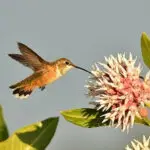
- Includes birds (ornithophily) and bats (chiropterophily).
- Flowers are often large, strong, and may be dull in colour (e.g., for bats).
- Produce large quantities of nectar.
- Pollen grains are often large and sticky.
- Examples: Baobab (bats), bottlebrush (birds).
Teaching Methods/Instructional Techniques
Discussion, Lecture, Demonstration, Question and Answer, Visual Aids
Instructional Procedures
Step 1: Introduction
Time: 5 minutes
Teaching Skill: Set Induction
Teacher’s Activity: The teacher greets the pupils and asks them what they remember about the parts of a flower and their functions, especially the anther and stigma. The teacher then introduces the topic of pollination.
Pupils’ Activity: Pupils respond by naming flower parts and their functions. They listen attentively to the introduction.
Learning Point: Pupils recall prior knowledge and are prepared for the new topic.
Step 2: Definition and Types of Pollination
Time: 8 minutes
Teaching Skill: Explanation/Definition
Teacher’s Activity: The teacher defines pollination and explains the two main types: self-pollination and cross-pollination, using diagrams on a poster. The teacher asks pupils to relate the position of stigma and stamens to the type of pollination.
Pupils’ Activity: Pupils listen, observe the diagrams, and define pollination. They relate stigma and stamen position to pollination type.
Learning Point: Pupils understand the definition and types of pollination.
Step 3: Features of Self-Pollinated Flowers
Time: 6 minutes
Teaching Skill: Description/Observation
Teacher’s Activity: The teacher describes the characteristic features of self-pollinated flowers, such as anther and stigma maturity and proximity. The teacher may show an example of a flower adapted for self-pollination.
Pupils’ Activity: Pupils listen and note the features. They may observe the provided flower specimen.
Learning Point: Pupils identify features that promote self-pollination.
Step 4: Features of Cross-Pollinated Flowers
Time: 6 minutes
Teaching Skill: Description/Comparison
Teacher’s Activity: The teacher explains the features that promote cross-pollination, such as dichogamy, self-sterility, and herkogamy. The teacher also discusses general features like flower size, colour, and scent, comparing them to self-pollinated flowers.
Pupils’ Activity: Pupils listen, take notes, and ask questions for clarification.
Learning Point: Pupils understand the adaptations for cross-pollination.
Step 5: Agents of Pollination – Wind and Water
Time: 6 minutes
Teaching Skill: Explanation/Categorization
Teacher’s Activity: The teacher introduces pollinating agents and describes the characteristics of flowers pollinated by wind (anemophily) and water (hydrophily), using examples and relevant posters. The teacher guides pupils to examine the nature of pollen grains for wind-pollinated flowers.
Pupils’ Activity: Pupils listen, identify wind and water as agents, and observe the features of such flowers and pollen grains.
Learning Point: Pupils learn about wind and water as pollinating agents and associated flower adaptations.
Step 6: Agents of Pollination – Insects and Animals
Time: 6 minutes
Teaching Skill: Explanation/Observation
Teacher’s Activity: The teacher continues by explaining insect (entomophily) and animal (zoophily) pollination, highlighting the specific adaptations of flowers that attract these agents, such as bright colours, scents, and nectar. The teacher encourages pupils to observe pollen grains for insect-pollinated flowers.
Pupils’ Activity: Pupils observe provided flower specimens, describe features of pollen grains, and note adaptations for insect and animal pollination.
Learning Point: Pupils understand insect and animal pollination and their corresponding flower adaptations.
Step 7: Evaluation/Review
Time: 5 minutes
Teaching Skill: Questioning/Assessment
Teacher’s Activity: The teacher evaluates the learning by asking the following questions:
- Define pollination.
- Differentiate between self-pollination and cross-pollination.
- State three features of a wind-pollinated flower.
- List two agents of pollination.
Pupils’ Activity: Pupils answer orally and in writing.
Learning Point: Pupils demonstrate understanding of the lesson.
Step 8: Conclusion
Time: 3 minutes
Teaching Skill: Summarization
Teacher’s Activity: The teacher summarizes the key points of the lesson, emphasizing the importance of pollination for plant reproduction. The teacher assigns pupils to draw and label a diagram showing both self and cross-pollination.
Pupils’ Activity: Pupils listen to the summary and copy down the assignment.
Learning Point: Pupils consolidate their learning and apply it through homework.
Lesson Keywords
- Pollination – Transfer of pollen from anther to stigma.
- Self-pollination – Pollen transfer within the same flower or plant.
- Cross-pollination – Pollen transfer between different plants of the same species.
- Anemophily – Pollination by wind.
- Entomophily – Pollination by insects.
- Hydrophily – Pollination by water.
- Zoophily – Pollination by animals.
Differentiation
For pupils who grasp concepts quickly, the teacher can challenge them to research specific examples of plant-pollinator relationships. For pupils needing more support, the teacher can provide simplified diagrams and allow more time for observation of flower specimens.
Note for teachers using this lesson plan
Encourage pupils to bring different types of flowers from their environment to class for observation. Emphasize the economic importance of pollination, especially for food crops. Ensure clear visual aids are used to illustrate complex concepts.
Community Join the conversation Open discussion +