

Class: Senior Secondary School 1 (SS1, SS 1, SSS1, SSS 1)
Term: 2nd Term
Week: 2
Age: 15 years
Duration: 45 minutes
Subject: Christian Religion Studies
Curriculum Theme: Christian Religion Studies
Previous Lesson: Jesus as the True Vine and Living Bread.
Topic: Spiritual Gifts
Subject Matter: Definition of spiritual gifts, definition of talents, value and distribution of spiritual gifts, use of spiritual gifts in the church, differences between spiritual gifts and talents
Specific Objectives
By the end of the lesson, pupils should be able to:
Cognitive Domain:
- Define spiritual gifts.
- Define talents.
- State the value of spiritual gifts.
- Explain the distribution of spiritual gifts.
- Differentiate between spiritual gifts and talents.
Affective Domain:
- Appreciate the importance of spiritual gifts for the church.
- Show willingness to use their gifts responsibly for God’s glory and the benefit of others.
Psychomotor Domain:
- Identify various spiritual gifts mentioned in the Bible.
- Give examples of how spiritual gifts are used in the church.
Social Domain:
- Promote unity and cooperation within the church through the responsible use of spiritual gifts.
Reference Materials
The following resources were used in planning this lesson:
- 9 Years Basic Education Curriculum for Christian Religious Studies.
- Lagos State Unified Scheme of Work for Christian Religious Studies SSS 1.
- Christian Religious Studies for Senior Secondary Schools Book 1 by A. B. Adeyemi.
- The Holy Bible (e.g., 1 Corinthians 12, Romans 12, Ephesians 4).
Instructional Materials
The teacher will teach this lesson with the aid of:
- Holy Bible.
- Assignment sheet.
- Whiteboard and markers/chalk.
- Charts showing examples of spiritual gifts.
Rationale for the Lesson
This lesson helps pupils understand that God gives every believer special abilities to serve Him and the church. It enables them to recognize these gifts and use them effectively to build up the community and spread the gospel.
Prerequisite/Previous Knowledge
Pupils have basic knowledge of the Bible, the Holy Spirit, and the concept of the Church.
Lesson Content/Board Summary
Spiritual Gifts
Definition of Spiritual Gifts
Spiritual gifts are divine endowments or special abilities given by the Holy Spirit to believers for the purpose of ministering to others and building up the church. They are supernatural abilities, not natural talents.
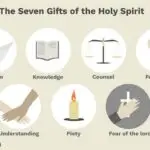
The following are examples of spiritual gifts (1 Corinthians 12:8-10, Romans 12:6-8, Ephesians 4:11):
- Word of Wisdom
- Word of Knowledge
- Faith
- Gifts of Healing
- Working of Miracles
- Prophecy
- Discerning of Spirits
- Different Kinds of Tongues
- Interpretation of Tongues
- Apostleship
- Teaching
- Helps/Serving
- Administration/Leadership
- Giving
- Mercy
- Evangelism
- Pastoring
Definition of Talents
Talents are natural abilities or aptitudes possessed by an individual, often from birth. They can be developed through practice, training, and education, and are not necessarily linked to spiritual rebirth.
The following are examples of talents:
- Singing
- Playing a musical instrument
- Drawing or painting
- Writing
- Public speaking
- Athletic skills
- Mathematical ability
- Leadership skills
Value and Distribution of Spiritual Gifts
Spiritual gifts are valuable for the following reasons:
- They help in the edification and growth of the church (Ephesians 4:12).
- They enable believers to serve God and humanity effectively.
- They help in evangelism and spreading the gospel.
- They promote unity and cooperation among believers.
- They bring glory to God.
The following points explain the distribution of spiritual gifts:
- Spiritual gifts are distributed by the Holy Spirit as He wills (1 Corinthians 12:11).
- Every believer receives at least one spiritual gift.
- They are not given based on human merit, desire, or effort.
- The gifts are diverse, ensuring that all aspects of ministry are covered.
Use of Spiritual Gifts in the Church
Spiritual gifts are used in the church for the following purposes:
- To serve others in love and humility (Galatians 5:13, 1 Peter 4:10).
- To build up and strengthen the body of Christ (Ephesians 4:12).
- To meet the spiritual and physical needs of the congregation.
- To evangelize and bring unbelievers to Christ.
- To maintain order, teach sound doctrine, and provide leadership within the church.
Differences Between Spiritual Gifts and Talents
The following table outlines the key differences:
- Origin: Spiritual gifts originate from the Holy Spirit; Talents are natural, often inherited or developed.
- Possession: Spiritual gifts are possessed only by believers; Talents can be possessed by anyone (believer or non-believer).
- Purpose: Spiritual gifts are primarily for the edification of the church and ministry; Talents are for general use in life, for personal gain, or societal good.
- Nature: Spiritual gifts are supernatural abilities; Talents are natural abilities.
- Acquisition: Spiritual gifts are received at salvation or through a spiritual experience; Talents are often present from birth or developed over time.
Teaching Methods/Instructional Techniques
Discussion, Lecture, Demonstration, Question and Answer, Visual Aids
Instructional Procedures
Step 1: Introduction
Time: 5 minutes
Teaching Skill: Set Induction
Teacher’s Activity: The teacher greets the pupils and asks them to recall any special abilities or skills they have noticed in themselves or others. The teacher then links these to the concept of gifts from God.
Pupils’ Activity: Pupils respond by mentioning various skills and abilities.
Learning Point: Pupils are prepared for the lesson and connect with prior knowledge.
Step 2: Definition of Spiritual Gifts
Time: 10 minutes
Teaching Skill: Explanation/Lecture
Teacher’s Activity: The teacher defines spiritual gifts, explaining their origin from the Holy Spirit and their purpose. The teacher lists and briefly explains examples of spiritual gifts, reading relevant Bible passages like 1 Corinthians 12:4-11.
Pupils’ Activity: Pupils listen attentively, take notes, and ask questions for clarification.
Learning Point: Pupils understand what spiritual gifts are and their divine source.
Step 3: Definition of Talents
Time: 5 minutes
Teaching Skill: Explanation
Teacher’s Activity: The teacher defines talents, highlighting their natural origin and how they can be developed. Examples of talents are provided.
Pupils’ Activity: Pupils listen, take notes, and differentiate between natural abilities and spiritual gifts.
Learning Point: Pupils understand the nature of talents.
Step 4: Value and Distribution of Spiritual Gifts
Time: 7 minutes
Teaching Skill: Discussion/Questioning
Teacher’s Activity: The teacher discusses the importance of spiritual gifts for the church and the world, and how they are distributed by the Holy Spirit. Questions are asked to engage pupils on why God gives gifts.
Pupils’ Activity: Pupils contribute to the discussion and note the values and distribution principles.
Learning Point: Pupils recognize the significance and divine sovereignty in gift distribution.
Step 5: Use of Spiritual Gifts in the Church
Time: 8 minutes
Teaching Skill: Illustration/Discussion
Teacher’s Activity: The teacher explains how spiritual gifts are practically used in the church for ministry, evangelism, and edification. The teacher encourages pupils to think about how they can use their potential gifts.
Pupils’ Activity: Pupils discuss and identify ways spiritual gifts are applied in their church settings.
Learning Point: Pupils understand the practical application of spiritual gifts.
Step 6: Differences Between Spiritual Gifts and Talents
Time: 5 minutes
Teaching Skill: Comparison/Analysis
Teacher’s Activity: The teacher highlights the key differences between spiritual gifts and talents using a comparative approach, emphasizing their distinct origins, purposes, and nature.
Pupils’ Activity: Pupils identify and note the distinctions between spiritual gifts and talents.
Learning Point: Pupils can clearly differentiate between spiritual gifts and talents.
Step 7: Evaluation/Review
Time: 5 minutes
Teaching Skill: Questioning/Assessment
Teacher’s Activity: The teacher evaluates the learning by asking the following questions:
- Define spiritual gifts.
- What are talents?
- State three values of spiritual gifts.
- Mention two ways spiritual gifts are used in the church.
- List three differences between spiritual gifts and talents.
Pupils’ Activity: Pupils answer orally and in writing.
Learning Point: Pupils demonstrate understanding of the lesson.
Step 8: Conclusion
Time: 5 minutes
Teaching Skill: Summarization/Assignment
Teacher’s Activity: The teacher summarizes the key points of the lesson, reinforcing the importance of recognizing and using spiritual gifts for God’s glory. The teacher gives an assignment to research specific examples of spiritual gifts in action in the Bible or in contemporary church life.
Pupils’ Activity: Pupils listen to the summary and copy the assignment.
Learning Point: Pupils consolidate their learning and are encouraged to further explore the topic.
Lesson Keywords
- Spiritual Gifts – Special divine abilities given by the Holy Spirit to believers for ministry.
- Talents – Natural abilities or aptitudes possessed by an individual, often from birth.
- Edification – The act of building up, instructing, or improving morally or spiritually.
- Distribution – The way in which something is shared out among a group or spread over an area.
- Ministry – The service or work of a Christian, especially in the church.
Differentiation
For pupils who grasp concepts quickly, the teacher will encourage them to research and present on a specific spiritual gift. For pupils needing more support, the teacher will provide simplified notes and additional examples, ensuring they understand the core definitions and differences.
Note for teachers using this lesson plan
Teachers should ensure active pupil participation through questions and discussions. Real-life examples from the local church context can be used to illustrate the application of spiritual gifts. Emphasize that all gifts are important and work together for the good of the church.


Community Join the conversation Open discussion +