

Class: Senior Secondary School 1 (SS1, SS 1, SSS1, SSS 1)
Term: 1st Term
Week: 2
Age: 15 years
Duration: 45 minutes
Subject: Basic Electricity
Curriculum Theme: Basic Electricity
Previous Lesson: Structure of Matter.
Topic: CONDUCTORS AND INSULATORS.
Subject Matter: Definition of conductors, definition of insulators, differences between conductors and insulators, examples of conductors, examples of insulators, uses of conductors and insulators.
Specific Objectives
By the end of the lesson, pupils should be able to:
Cognitive Domain:
- Define a conductor and an insulator.
- State three differences between conductors and insulators.
- List at least three examples of conductors and insulators.
- Explain two uses of conductors and insulators in daily life.
Affective Domain:
- Appreciate the importance of conductors and insulators in electrical applications.
- Show interest in identifying different materials as conductors or insulators.
Psychomotor Domain:
- Identify samples of conducting and insulating materials.
- Differentiate conducting materials from insulating materials by observation.
Social Domain:
- Share ideas with peers on the applications of conductors and insulators.
Reference Materials
The following resources were used in planning this lesson:
- 9 Years Basic Education Curriculum for Senior Secondary School.
- State Unified Scheme of Work for Basic Electricity SSS 1.
- Basic Electricity for Senior Secondary Schools by A. O. Okoro.
- Relevant online resources for images and examples.
Instructional Materials
The teacher will teach this lesson with the aid of:
- Samples of copper wire, aluminium foil, steel nail.
- Samples of wood, rubber, glass, plastic.
- A simple circuit with a battery, bulb, and connecting wires for demonstration.
- Whiteboard/chalkboard and markers/chalk.
Rationale for the Lesson
This lesson helps pupils understand how electricity flows through some materials and not others. This knowledge is important for safely handling electrical appliances and understanding how electrical circuits work in their homes and communities.
Prerequisite/Previous Knowledge
Pupils should have a basic understanding of electricity and simple circuits from their Junior Secondary School Basic Technology lessons.
Lesson Content/Board Summary
CONDUCTORS AND INSULATORS
Definition of Conductors
Conductors are materials that allow electric current to pass through them easily. They have free electrons that can move from atom to atom, enabling the flow of electricity.
Definition of Insulators
Insulators are materials that do not allow electric current to pass through them easily. They have tightly bound electrons that cannot move freely, thus resisting the flow of electricity.
Differences Between Conductors and Insulators
The following are key differences between conductors and insulators:
- Conductors allow current to flow, while insulators resist current flow.
- Conductors have low electrical resistance, while insulators have high electrical resistance.
- Conductors have free electrons, while insulators have tightly bound electrons.
- Conductors are used to transmit electricity, while insulators are used to prevent electric shock and confine current.
Examples of Conductors
The following are examples of conductors:
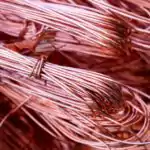
- Copper
- Aluminium
- Iron/Steel
- Silver
- Gold
- Graphite (a form of carbon)
- Water (especially impure water)
Examples of Insulators
The following are examples of insulators:
- Rubber
- Plastic
- Wood (dry)
- Glass
- Ceramic
- Paper
- Air
Uses of Conductors
The following are uses of conductors:
- Making electrical wires and cables (e.g., copper and aluminium wires).
- In heating elements for appliances like electric kettles and heaters.
- In electronic circuits for connections.
- For lightning arresters (e.g., copper rods).
Uses of Insulators
The following are uses of insulators:
- Covering electrical wires to prevent shocks (e.g., plastic or rubber sheathing).
- Making handles of electrical tools (e.g., screwdrivers with plastic handles).
- As protective casings for electrical appliances.
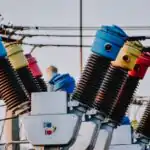
- In power line supports (e.g., ceramic insulators on high-tension poles).
Teaching Methods/Instructional Techniques
Discussion, Lecture, Demonstration, Question and Answer, Visual Aids
Instructional Procedures
Step 1: Introduction
Time: 5 minutes
Teaching Skill: Set Induction
Teacher’s Activity: The teacher greets the pupils and asks them to recall what they know about electricity. The teacher then introduces the topic by asking why some materials allow electricity to pass through them while others do not, relating it to daily experiences like touching a metal spoon vs. a wooden spoon to a hot pot.
Pupils’ Activity: Pupils respond to the teacher’s questions and share their previous knowledge about electricity.
Learning Point: Pupils are prepared for the lesson and connect the topic to real-life situations.
Step 2: Definition of Conductors
Time: 7 minutes
Teaching Skill: Explanation/Definition
Teacher’s Activity: The teacher defines conductors, explaining that they are materials that allow electric current to flow easily. The teacher uses a simple circuit to demonstrate how a copper wire completes the circuit and lights a bulb.
Pupils’ Activity: Pupils listen attentively, take notes, and observe the demonstration. They may attempt to define conductors in their own words.
Learning Point: Pupils understand the definition and basic characteristic of a conductor.
Step 3: Definition of Insulators
Time: 7 minutes
Teaching Skill: Explanation/Definition
Teacher’s Activity: The teacher defines insulators, explaining that they are materials that resist the flow of electric current. Using the same simple circuit, the teacher demonstrates how placing a piece of rubber or wood in the circuit breaks it, preventing the bulb from lighting.
Pupils’ Activity: Pupils listen, take notes, and observe the demonstration. They attempt to define insulators.
Learning Point: Pupils understand the definition and basic characteristic of an insulator.
Step 4: Differences Between Conductors and Insulators
Time: 7 minutes
Teaching Skill: Comparison/Analysis
Teacher’s Activity: The teacher leads a discussion on the key differences between conductors and insulators, highlighting their ability to allow or resist current flow, their resistance levels, and electron behavior. The teacher writes these differences on the board.
Pupils’ Activity: Pupils participate in the discussion, state differences, and copy notes from the board.
Learning Point: Pupils can differentiate between conductors and insulators based on their properties.
Step 5: Examples of Conductors and Insulators
Time: 6 minutes
Teaching Skill: Identification/Categorization
Teacher’s Activity: The teacher displays various samples (copper wire, aluminium, steel, wood, rubber, glass, plastic) and asks pupils to identify which ones are conductors and which are insulators, providing reasons for their choices. The teacher lists examples on the board.
Pupils’ Activity: Pupils identify the samples, give examples, and contribute to the list of examples for both categories.
Learning Point: Pupils can identify and list common examples of conductors and insulators.
Step 6: Uses of Conductors and Insulators
Time: 6 minutes
Teaching Skill: Application/Explanation
Teacher’s Activity: The teacher discusses the practical uses of conductors and insulators in everyday life, such as in electrical wiring, appliance casings, and tool handles. The teacher asks pupils to provide additional examples of their uses.
Pupils’ Activity: Pupils state various uses of conductors and insulators and suggest other applications they know.
Learning Point: Pupils understand the practical applications of conductors and insulators.
Step 7: Evaluation/Review
Time: 5 minutes
Teaching Skill: Questioning/Assessment
Teacher’s Activity: The teacher evaluates the learning by asking the following questions:
- Define a conductor and an insulator.
- State two differences between conductors and insulators.
- List three examples of conductors.
- Mention two uses of insulators.
Pupils’ Activity: Pupils answer orally and in writing.
Learning Point: Pupils demonstrate understanding of the lesson.
Step 8: Conclusion
Time: 2 minutes
Teaching Skill: Summarization
Teacher’s Activity: The teacher summarizes the main points of the lesson, reiterating the definitions, differences, examples, and uses of conductors and insulators. The teacher assigns homework: “List five electrical appliances in your home and identify where conductors and insulators are used in each.”
Pupils’ Activity: Pupils listen to the summary and copy down the homework.
Learning Point: Pupils consolidate their learning and apply it to their home environment.
Lesson Keywords
- Conductor – A material that allows electric current to flow easily.
- Insulator – A material that resists the flow of electric current.
- Electricity – A form of energy resulting from the existence of charged particles.
- Current – The flow of electric charge.
- Resistance – The opposition to the flow of electric current.
Differentiation
For pupils who grasp concepts quickly, the teacher can challenge them to explain why certain materials are better conductors than others (e.g., silver vs. copper). For pupils who need more support, the teacher can provide simplified diagrams and allow more time for hands-on identification of materials.
Note for teachers using this lesson plan
Ensure all sample materials are safe to handle and that the demonstration circuit uses low voltage to prevent any electrical hazards. Encourage pupils to relate the concepts to everyday electrical safety practices.


Community Join the conversation Open discussion +