

Class: Senior Secondary School 1 (SS1, SS 1, SSS1, SSS 1)
Term: 1st Term
Week: 2
Age: 15 years
Duration: 45 minutes
Subject: Basic Electronics
Curriculum Theme: Basic Electronics
Previous Lesson: Electric Current: Structure of Atom.
Topic: CONDUCTORS AND INSULATORS
Subject Matter: Meaning of conductors, meaning of insulators, examples of conductors, examples of insulators, differences between conductors and insulators, atomic structure in conductors and insulators.
Specific Objectives
By the end of the lesson, pupils should be able to:
Cognitive Domain:
- Define conductors and insulators.
- List examples of conductors and insulators.
- Distinguish between conductors and insulators.
Affective Domain:
- Participate actively in discussions about conductors and insulators.
- Appreciate the importance of conductors and insulators in everyday life.
Psychomotor Domain:
- Draw the atomic structure of a conductor and an insulator.
Social Domain:
- Collaborate with peers to identify different types of materials.
Reference Materials
The following resources were used in planning this lesson:
- 9 Years Basic Education Curriculum for Basic Electronics.
- State Unified Scheme of Work for Senior Secondary Schools.
- Basic Electronics for Senior Secondary Schools, Book 1.
Instructional Materials
The teacher will teach this lesson with the aid of:
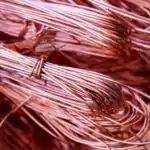
- Copper wire
- Pieces of wood
- Rubber
- Charts showing examples of conductors and insulators.
- Charts illustrating atomic structures of conductors and insulators.
Rationale for the Lesson
This lesson helps pupils understand how different materials behave when electricity passes through them. Knowing the properties of conductors and insulators is important for safe handling of electrical appliances and for understanding basic electrical circuits in daily life.
Prerequisite/Previous Knowledge
Pupils have a basic understanding of electricity and the concept of materials from their previous science lessons.
Lesson Content/Board Summary
CONDUCTORS AND INSULATORS
Meaning of Conductors
Conductors are materials that allow electric current to flow through them easily. They have many free electrons that can move from one atom to another.
Examples of Conductors
The following are common examples of conductors:
- Copper
- Aluminium
- Silver
- Gold
- Iron
- Water (impure)
Meaning of Insulators
Insulators are materials that do not allow electric current to flow through them easily. They have very few or no free electrons.
Examples of Insulators
The following are common examples of insulators:
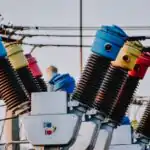
- Rubber
- Plastic
- Wood
- Glass
- Ceramics
- Dry air
Differences Between Conductors and Insulators
The main differences between conductors and insulators are:
- Conductors allow electricity to pass, while insulators resist it.
- Conductors have many free electrons, while insulators have very few.
- Conductors typically have low electrical resistance, while insulators have high electrical resistance.
Atomic Structure in Conductors
In conductors, the outermost electrons (valence electrons) are loosely bound to the nucleus. These electrons become “free electrons” and can easily move throughout the material, carrying electric charge.
Atomic Structure in Insulators
In insulators, the outermost electrons (valence electrons) are tightly bound to the nucleus. They are not free to move, which prevents the flow of electric current.
Teaching Methods/Instructional Techniques
Discussion, Lecture, Demonstration, Question and Answer, Visual Aids
Instructional Procedures
Step 1: Introduction
Time: 5 minutes
Teaching Skill: Set Induction
Teacher’s Activity: The teacher greets the pupils and reviews the previous lesson briefly. The teacher then asks pupils to identify some materials used in electrical wiring and others used to cover them. This leads to the topic of conductors and insulators.
Pupils’ Activity: Pupils respond to questions and identify materials. They listen attentively as the teacher introduces the new topic.
Learning Point: Pupils recall prior knowledge and are prepared for the new lesson.
Step 2: Meaning of Conductors and Insulators
Time: 10 minutes
Teaching Skill: Explanation/Definition
Teacher’s Activity: The teacher defines conductors as materials that allow electricity to pass through them easily and insulators as materials that do not. The teacher explains the role of free electrons in this process.
Pupils’ Activity: Pupils listen, take notes, and ask questions for clarification.
Learning Point: Pupils understand the definitions of conductors and insulators.
Step 3: Examples of Conductors and Insulators
Time: 8 minutes
Teaching Skill: Illustration/Listing
Teacher’s Activity: The teacher shows pupils actual samples (copper wire, wood, rubber) and charts, guiding them to identify and list various examples of conductors and insulators.
Pupils’ Activity: Pupils observe the materials, list examples, and contribute their own examples.
Learning Point: Pupils can identify and list common conductors and insulators.
Step 4: Differences Between Conductors and Insulators
Time: 7 minutes
Teaching Skill: Comparison/Discussion
Teacher’s Activity: The teacher facilitates a discussion, highlighting the key differences between conductors and insulators based on their ability to conduct electricity and the presence of free electrons.
Pupils’ Activity: Pupils participate in the discussion, stating the differences between the two material types.
Learning Point: Pupils can distinguish between conductors and insulators.
Step 5: Atomic Structure in Conductors and Insulators
Time: 7 minutes
Teaching Skill: Demonstration/Visualisation
Teacher’s Activity: The teacher uses a chart to explain and draw the simplified atomic structure of a conductor (showing loosely bound valence electrons) and an insulator (showing tightly bound valence electrons).
Pupils’ Activity: Pupils observe the charts, listen to the explanation, and attempt to sketch the structures in their notebooks.
Learning Point: Pupils understand how atomic structure influences conductivity.
Step 6: Evaluation/Review
Time: 5 minutes
Teaching Skill: Questioning/Assessment
Teacher’s Activity: The teacher evaluates the learning by asking the following questions:
- Define a conductor and an insulator.
- List three examples of conductors.
- Mention three examples of insulators.
- State two key differences between conductors and insulators.
Pupils’ Activity: Pupils answer orally and in writing.
Learning Point: Pupils demonstrate understanding of the lesson.
Step 7: Conclusion
Time: 3 minutes
Teaching Skill: Summarization/Consolidation
Teacher’s Activity: The teacher summarizes the main points of the lesson, reinforcing the definitions, examples, and differences between conductors and insulators. The teacher assigns homework.
Pupils’ Activity: Pupils listen to the summary and copy down the homework.
Learning Point: Pupils consolidate their learning and prepare for independent practice.
Lesson Keywords
- Conductor – A material that allows electric current to flow through it easily.
- Insulator – A material that does not allow electric current to flow through it easily.
- Free electrons – Electrons in a material that are not bound to a specific atom and can move freely.
- Valence electrons – Electrons in the outermost shell of an atom.
- Resistivity – A measure of how strongly a material resists electric current.
Differentiation
For pupils who grasp concepts quickly, the teacher can ask them to research specific applications of different conductors and insulators. For pupils needing more support, the teacher will provide simplified diagrams and allow for peer-assisted learning during the listing of examples.
Note for teachers using this lesson plan
Ensure to have actual samples of conducting and insulating materials for a practical demonstration. Encourage pupils to relate the concepts to everyday electrical safety practices.


Community Join the conversation Open discussion +