

Class: Senior Secondary School 1 (SS1, SS 1, SSS1, SSS 1)
Term: 1st Term
Week: 3
Age: 15 years
Duration: 45 minutes
Subject: Basic Electronics
Curriculum Theme: Basic Electronics
Previous Lesson: Conductors and Insulators: Meaning and Examples.
Topic: APPLICATION OF CONDUCTORS AND INSULATORS.
Subject Matter: Uses of conductors, uses of insulators, identifying objects made of conductors, identifying objects made of insulators, safety reasons for using insulators.
Specific Objectives
By the end of the lesson, pupils should be able to:
Cognitive Domain:
- Define conductors and insulators.
- List at least three uses of conductors.
- State at least three uses of insulators.
- Identify objects made of conductors and insulators.
- Explain the safety reasons for using insulators in electrical applications.
Affective Domain:
- Appreciate the importance of conductors and insulators in daily life.
- Show care when handling electrical appliances due to the presence of conductors and insulators.
Psychomotor Domain:
- Classify various materials as either conductors or insulators using charts.
- Sketch simple diagrams showing the application of insulators for safety.
Social Domain:
- Collaborate with peers to identify and discuss examples of conductors and insulators.
Reference Materials
The following resources were used in planning this lesson:
- 9 Years Basic Education Curriculum for Basic Technology (JSS 1-3).
- State Unified Scheme of Work for Basic Electronics SSS 1.
- Basic Electronics for Senior Secondary Schools by A. O. Oyewole.
- https://www.education.gov.ng
- https://www.nerdc.gov.ng
Instructional Materials
The teacher will teach this lesson with the aid of:
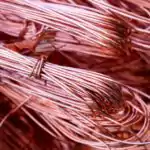
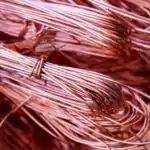
- Sample objects (e.g., copper wire, plastic casing, rubber gloves, metal spoon, wooden stick).
- Charts of conductor and insulator materials.
- Whiteboard and markers.
Rationale for the Lesson
This lesson helps pupils understand how different materials are used in electrical systems based on their ability to conduct or resist electricity. This knowledge is important for understanding how everyday appliances work and for practicing electrical safety at home and in school.
Prerequisite/Previous Knowledge
Pupils have been taught what conductors and insulators are in previous lessons and can differentiate between them.
Lesson Content/Board Summary
APPLICATION OF CONDUCTORS AND INSULATORS
Conductors
Conductors are materials that allow electric current to flow through them easily. They have free electrons that can move from one atom to another.
The following are uses of conductors:
- Making electrical wires and cables (e.g., copper, aluminium).
- Manufacturing heating elements in electrical appliances (e.g., nichrome).
- Constructing electrical contacts and switches.
- Making components for electronic circuits.
- Used in lightning arresters to direct lightning safely to the earth.
Insulators
Insulators are materials that do not allow electric current to flow through them easily. They have tightly bound electrons that cannot move freely.
The following are uses of insulators:
- Covering electrical wires and cables (e.g., plastic, rubber).
- Making protective casings for electrical appliances (e.g., plastic).
- Manufacturing electrical switches and sockets.
- Used in high-voltage transmission lines to support wires and prevent current leakage (e.g., ceramic, glass).
- Making handles of tools used by electricians (e.g., rubber, wood).
Identifying Objects Made of Conductors and Insulators
It is important to identify materials based on their electrical properties for safe and effective use. Metals like copper, iron, and aluminium are conductors. Materials like plastic, rubber, wood, and glass are insulators.
Safety Reasons for Using Insulators
Insulators are used for safety in electrical applications to prevent electric shock and short circuits. By covering conductors with insulating materials, the flow of electricity is confined to the intended path, protecting users from direct contact with live wires and preventing accidental contact between different parts of a circuit.
The following are safety reasons for using insulators:
- To prevent electric shock to users.
- To protect electrical wires from damage and wear.
- To prevent short circuits which can lead to fires.
- To isolate different parts of an electrical system from each other.
- To provide safe handling surfaces for electrical tools and appliances.
Teaching Methods/Instructional Techniques
Discussion, Lecture, Demonstration, Question and Answer, Visual Aids
Instructional Procedures
Step 1: Introduction
Time: 5 minutes
Teaching Skill: Set Induction
Teacher’s Activity: The teacher greets the pupils and reviews the previous lesson on the definition and properties of conductors and insulators. The teacher then introduces the topic by asking pupils to mention some electrical items they use daily and how they are protected.
Pupils’ Activity: Pupils respond to the teacher’s questions and attempt to recall concepts from the previous lesson.
Learning Point: Pupils recall previous knowledge and are prepared for the new topic.
Step 2: Review of Conductors and Insulators
Time: 7 minutes
Teaching Skill: Explanation/Recall
Teacher’s Activity: The teacher briefly reminds pupils of the definitions of conductors and insulators and provides quick examples of each. The teacher uses sample objects to illustrate.
Pupils’ Activity: Pupils listen attentively and contribute examples of conductors and insulators.
Learning Point: Pupils reinforce their understanding of what conductors and insulators are.
Step 3: Uses of Conductors
Time: 8 minutes
Teaching Skill: Explanation/Discussion
Teacher’s Activity: The teacher explains various applications of conductors, such as in electrical wiring, heating elements, and electronic components, using the charts and sample objects. The teacher encourages pupils to give more examples.
Pupils’ Activity: Pupils listen, take notes, and mention other uses of conductors they know.
Learning Point: Pupils learn about the practical applications of conductive materials.
Step 4: Uses of Insulators
Time: 8 minutes
Teaching Skill: Explanation/Demonstration
Teacher’s Activity: The teacher explains and demonstrates the uses of insulators, focusing on their role in covering wires, making casings, and as supports in electrical systems. The teacher uses sample objects like plastic-coated wires and rubber gloves.
Pupils’ Activity: Pupils observe the demonstrations, ask questions, and take notes on the uses of insulators.
Learning Point: Pupils understand the practical applications of insulating materials.
Step 5: Identifying Objects and Safety Reasons
Time: 10 minutes
Teaching Skill: Practical Application/Discussion
Teacher’s Activity: The teacher presents various objects and asks pupils to identify them as conductors or insulators. The teacher then leads a discussion on why insulators are important for electrical safety, emphasizing prevention of shock and short circuits.
Pupils’ Activity: Pupils identify the objects and participate in the discussion, explaining the importance of insulators for safety.
Learning Point: Pupils develop the ability to identify materials and understand the critical role of insulators in ensuring electrical safety.
Step 6: Evaluation/Review
Time: 5 minutes
Teaching Skill: Questioning/Assessment
Teacher’s Activity: The teacher evaluates the learning by asking the following questions:
- Define a conductor and an insulator.
- Mention three uses of conductors.
- State three uses of insulators.
- Why is it important to use insulators in electrical wiring?
Pupils’ Activity: Pupils answer orally and in writing.
Learning Point: Pupils demonstrate understanding of the lesson.
Step 7: Conclusion
Time: 2 minutes
Teaching Skill: Summarization
Teacher’s Activity: The teacher summarizes the key points of the lesson, reiterating the importance of knowing and applying conductors and insulators correctly for safety and functionality. The teacher assigns homework: “List five electrical appliances in your home and identify which parts are made of conductors and which are made of insulators.”
Pupils’ Activity: Pupils listen to the summary and copy the homework.
Learning Point: Pupils consolidate their learning and apply it to real-world scenarios.
Lesson Keywords
- Conductor – A material that allows electric current to flow through it easily.
- Insulator – A material that resists the flow of electric current.
- Electric Shock – A sudden discharge of electricity through a part of the body.
- Short Circuit – An abnormal connection between two nodes of an electric circuit that are intended to be at different voltages.
- Electrical Wiring – The system of cables and components used to distribute electricity.
Differentiation
For pupils who grasp concepts quickly, they will be challenged to research different types of conductors (e.g., superconductors) and insulators (e.g., semiconductors under specific conditions). For pupils who need more support, the teacher will provide simplified charts and more direct examples, possibly pairing them with faster learners for peer support during identification activities.
Note for teachers using this lesson plan
Ensure all sample objects are safe to handle and clearly demonstrate the properties of conductors and insulators. Emphasize safety throughout the lesson, especially when discussing the applications of insulators. Encourage pupils to relate the concepts to their daily experiences to make learning more engaging.


Community Join the conversation Open discussion +