

Class: Senior Secondary School 1 (SS1, SS 1, SSS1, SSS 1)
Term: 1st Term
Week: 2
Age: 15 years
Duration: 45 minutes
Subject: Building Construction
Curriculum Theme: Building Construction
Previous Lesson: Definition of Building: Discipline, Process and Product.
Topic: Classification of Building: Ownership, Use and Height
Subject Matter: Building types by ownership (public and private), building types by use (residential, industrial, commercial, institutional), building types by height (low rise and high rise).
Specific Objectives
By the end of the lesson, pupils should be able to:
Cognitive Domain:
Instructional Materials
The teacher will teach this lesson with the aid of:
- Charts showing different types of buildings.
- Posters illustrating low-rise and high-rise structures.
- Drawings or pictures of residential, industrial, commercial, and institutional buildings.
- Short films or video clips demonstrating various building classifications.
Rationale for the Lesson
This lesson helps pupils understand the fundamental ways buildings are categorized, which is important for future studies in building construction and for understanding the built environment around them. Knowing these classifications enables pupils to better identify the purpose and characteristics of different structures in their daily lives.
Prerequisite/Previous Knowledge
Pupils are assumed to have a basic understanding of what a building is and some general knowledge of common structures in their community.
Lesson Content/Board Summary
Classification of Buildings
1. Classification by Ownership
This classification divides buildings based on who owns them and their primary purpose of operation.
The main types of buildings by ownership are:
- Public Buildings: These are owned and managed by the government or public institutions. They are usually accessible to the general public and serve community needs. Examples include government offices, public schools, public hospitals, libraries, and police stations.
- Private Buildings: These are owned by individuals, families, or private organizations/companies. Access is often restricted to owners, tenants, or authorized persons. Examples include private homes, private offices, private hospitals, shopping malls, and private factories.
2. Classification by Use (Occupancy)
This classification categorizes buildings based on the primary activity or function they are designed to accommodate.
The main types of buildings by use are:
- Residential Buildings: Designed for human habitation and living. Examples include bungalows, flats, duplexes, hostels, and condominiums.
- Industrial Buildings: Used for manufacturing, processing, assembly, storage, and research. Examples include factories, workshops, warehouses, and power plants.
- Commercial Buildings: Used for business and trade activities, providing goods and services. Examples include shops, markets, banks, offices, hotels, restaurants, and cinemas.
- Institutional Buildings: Used for public services, education, healthcare, worship, and social welfare. Examples include schools, hospitals, churches, mosques, prisons, museums, and community centers.
3. Classification by Height
This classification groups buildings based on their number of floors or overall vertical dimension.
The main types of buildings by height are:
- Low-Rise Buildings: These buildings typically have one to four floors. They often do not require complex vertical transportation systems like elevators, though some may have them. Examples include bungalows, two-storey residential buildings, and small office blocks.
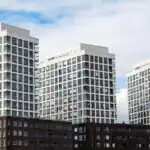
- High-Rise Buildings: These buildings are generally five or more floors high. They usually require elevators or lifts for vertical movement and have complex structural designs and safety systems. Examples include multi-storey apartment blocks, skyscrapers, and large office towers.
Teaching Methods/Instructional Techniques
Discussion, Lecture, Demonstration, Question and Answer, Visual Aids
Instructional Procedures
Step 1: Introduction
Time: 5 minutes
Teaching Skill: Set Induction
Teacher’s Activity: The teacher greets the pupils and asks them to observe the different types of buildings they see on their way to school. The teacher then asks what makes these buildings different from each other (e.g., size, purpose, who uses them). This leads into the topic of building classification.
Pupils’ Activity: Pupils respond to the teacher’s questions, sharing their observations and ideas about different buildings.
Learning Point: Pupils are introduced to the concept of building diversity and the need for classification.
Step 2: Presentation of Building Classification by Ownership
Time: 7 minutes
Teaching Skill: Explanation/Illustration
Teacher’s Activity: The teacher explains the classification of buildings based on ownership (public and private). The teacher uses charts and pictures to show examples of each, explaining their characteristics and typical functions. The teacher encourages pupils to mention local examples.
Pupils’ Activity: Pupils listen attentively, observe the visual aids, and contribute local examples of public and private buildings.
Learning Point: Pupils understand that buildings can be classified by who owns them and their primary purpose.
Step 3: Presentation of Building Classification by Use
Time: 10 minutes
Teaching Skill: Explanation/Categorization
Teacher’s Activity: The teacher explains the classification of buildings based on their use (residential, industrial, commercial, institutional). The teacher uses various pictures and examples to illustrate each type, highlighting the activities that take place within them. The teacher asks pupils to identify the use of buildings in their community.
Pupils’ Activity: Pupils pay attention, identify the use of buildings from examples, and actively participate in discussions by providing local examples.
Learning Point: Pupils learn that buildings are designed for specific functions and can be grouped accordingly.
Step 4: Presentation of Building Classification by Height
Time: 7 minutes
Teaching Skill: Comparison/Differentiation
Teacher’s Activity: The teacher explains the classification of buildings based on height (low-rise and high-rise). The teacher uses posters and drawings to show the visual differences and discusses the general characteristics of each, such as the number of floors and the use of elevators. The teacher asks pupils to compare and contrast examples.
Pupils’ Activity: Pupils observe the visual aids, listen to the explanation, and describe the differences between low-rise and high-rise buildings.
Learning Point: Pupils understand that buildings can also be classified by their vertical dimension and associated features.
Step 5: Group Discussion and Application
Time: 8 minutes
Teaching Skill: Collaboration/Application
Teacher’s Activity: The teacher divides pupils into small groups and gives each group a set of mixed building pictures. The teacher instructs them to classify each building according to ownership, use, and height, justifying their choices. The teacher moves around to guide and assist.
Pupils’ Activity: Pupils work in groups to classify the buildings, discuss their reasoning, and prepare to present their findings.
Learning Point: Pupils apply their understanding of building classification in a practical context and develop teamwork skills.
Step 6: Teacher Summarises Main Points
Time: 3 minutes
Teaching Skill: Consolidation
Teacher’s Activity: The teacher reviews the key concepts covered in the lesson, reiterating the definitions and examples for classification by ownership, use, and height. The teacher ensures all pupils have grasped the core ideas.
Pupils’ Activity: Pupils listen and ask questions for clarification on any unclear points.
Learning Point: Pupils reinforce their understanding of the lesson’s core content.
Step 7: Evaluation/Review
Time: 5 minutes
Teaching Skill: Questioning/Assessment
Teacher’s Activity: The teacher evaluates the learning by asking the following questions:
- Define a public building and give two examples.
- Mention three types of buildings classified by their use.
- Distinguish between a low-rise and a high-rise building.
- List two examples of commercial buildings.
Pupils’ Activity: Pupils answer orally and in writing.
Learning Point: Pupils demonstrate understanding of the lesson.
Step 8: Conclusion
Time: 2 minutes
Teaching Skill: Closure
Teacher’s Activity: The teacher commends the pupils for their participation and assigns homework: “Draw or find pictures of one building for each classification type discussed today (e.g., one public, one residential, one high-rise) and label them appropriately.”
Pupils’ Activity: Pupils note down the homework assignment.
Learning Point: The lesson is brought to a formal close, and learning extends beyond the classroom.
Lesson Keywords
- Public Building – A building owned and managed by the government or public institutions for community use.
- Private Building – A building owned by individuals, families, or private organizations.
- Residential Building – A building designed primarily for people to live in.
- Industrial Building – A building used for manufacturing, production, or storage.
- Commercial Building – A building used for business, trade, or providing services.
- Institutional Building – A building used for public services like education, healthcare, or worship.
- Low-Rise Building – A building typically with one to four floors.
- High-Rise Building – A building typically with five or more floors, often requiring elevators.
Differentiation
For pupils who grasp concepts quickly, the teacher can ask them to research different building materials used in low-rise versus high-rise construction. For pupils needing more support, the teacher will provide simplified definitions and more direct examples, possibly using flashcards with pictures and labels for matching exercises.
Note for teachers using this lesson plan
Ensure that the visual aids are clear and relevant to the Nigerian context. Encourage pupils to share examples from their immediate environment to make the lesson more relatable. Emphasize that some buildings can fall into multiple categories (e.g., a high-rise residential building).

Community Join the conversation Open discussion +