

Class: Senior Secondary School 1 (SS1, SS 1, SSS1, SSS 1)
Term: 2nd Term
Week: 5
Age: 15 years
Duration: 45 minutes
Subject: Building Construction
Curriculum Theme: Building Construction
Previous Lesson: Excavation and Earth Work: Methods and Tools for Excavation.
Topic: Concreting: Materials and Reinforcement Types
Subject Matter: Definition of concreting, materials for concreting, types of reinforcement, and uses of reinforcement in concrete.
Specific Objectives
By the end of the lesson, pupils should be able to:
Cognitive Domain:
- Define concreting.
- Identify the main materials used for concreting.
- List two types of reinforcement bars.
- State at least three uses of reinforcement in concrete.
Affective Domain:
- Appreciate the importance of proper material selection in concreting.
- Show interest in understanding the role of reinforcement in building strength.
Psychomotor Domain:
- Observe and differentiate between various reinforcement bars.
- Identify cement, sand, and gravel as concreting materials.
Social Domain:
- Participate actively in discussions about concreting practices.
Reference Materials
The following resources were used in planning this lesson:
- Senior Secondary Education Curriculum for Building Construction.
- State Unified Scheme of Work for Building Construction SSS 1.
- Building Construction for Senior Secondary Schools by E.O. Adenuga.
- Online resources on concreting and reinforcement.
Instructional Materials
The teacher will teach this lesson with the aid of:
- Samples of cement, sand, and gravel.
- Samples of twisted (deformed) and plain (mild steel) reinforcement bars.
- Pictures or videos showing concreting processes.
- A chart illustrating different types of reinforcement.
Rationale for the Lesson
This lesson helps pupils understand the fundamental components of concrete, a widely used building material. Knowing the materials and the function of reinforcement enables pupils to appreciate how strong and durable structures are built, which is important for safety and quality in construction.
Prerequisite/Previous Knowledge
Pupils should have basic knowledge of common building materials and their general uses.
Lesson Content/Board Summary
Concreting: Materials and Reinforcement Types
Definition of Concreting
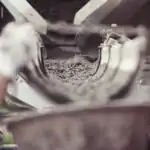
Concreting is the process of mixing cement, sand, gravel (or crushed stone), and water in specific proportions to form a plastic mixture that hardens over time into a solid, strong material called concrete.
Materials for Concreting
The following are the main materials used for concreting:
- Cement: A binding material that reacts with water to form a paste, holding aggregates together.
- Sand (Fine Aggregate): Provides bulk and fills voids between coarse aggregates.
- Gravel or Crushed Stone (Coarse Aggregate): Provides strength and bulk to the concrete.
- Water: Activates the cement and facilitates workability of the mix.
Types of Reinforcement Bars
The two main types of reinforcement bars used in concrete are:
- Twisted Bars (Deformed Bars): These bars have ribs, lugs, or indentations on their surface, which provide a better bond with concrete, improving tensile strength and preventing slippage.
- Plain Bars (Mild Steel Bars): These bars have a smooth surface and are typically used where bonding requirements are less critical, or for stirrups and ties in reinforced concrete.
Uses of Reinforcement in Concrete
Reinforcement is used in concrete for the following reasons:
- To improve the tensile strength of concrete, as concrete is strong in compression but weak in tension.
- To resist cracking caused by bending, shrinkage, or temperature changes.
- To provide structural integrity and stability to concrete elements like beams, columns, and slabs.
- To help the concrete withstand various types of loads and stresses.
Teaching Methods/Instructional Techniques
Discussion, Lecture, Demonstration, Question and Answer, Visual Aids
Instructional Procedures
Step 1: Introduction
Time: 5 minutes
Teaching Skill: Set Induction
Teacher’s Activity: The teacher greets the pupils and asks them to mention some common building materials they know. The teacher then introduces the topic “Concreting: Materials and Reinforcement Types” by relating it to the importance of strong foundations and structures.
Pupils’ Activity: Pupils respond to the teacher’s questions and listen attentively to the introduction.
Learning Point: Pupils are prepared for the lesson and understand its relevance.
Step 2: Definition of Concreting
Time: 7 minutes
Teaching Skill: Explanation/Definition
Teacher’s Activity: The teacher defines concreting, explaining it as the process of mixing specific materials to form concrete. The teacher may show a picture of concrete being mixed.
Pupils’ Activity: Pupils listen, take notes, and orally define concreting in their own words.
Learning Point: Pupils can define concreting.
Step 3: Materials for Concreting
Time: 10 minutes
Teaching Skill: Demonstration/Identification
Teacher’s Activity: The teacher presents samples of cement, sand, and gravel. The teacher explains the role of each material in the concrete mix and asks pupils to identify them. The teacher also mentions water as an essential component.
Pupils’ Activity: Pupils observe the samples, identify the materials, and ask questions for clarification.
Learning Point: Pupils can identify and state the purpose of each material used in concreting.
Step 4: Types of Reinforcement Bars
Time: 8 minutes
Teaching Skill: Demonstration/Classification
Teacher’s Activity: The teacher displays samples of twisted (deformed) and plain (mild steel) reinforcement bars. The teacher explains the differences between them and where each type is commonly used.
Pupils’ Activity: Pupils observe the reinforcement bars, note their characteristics, and differentiate between the two types.
Learning Point: Pupils can identify and distinguish between twisted and plain reinforcement bars.
Step 5: Uses of Reinforcement in Concrete
Time: 5 minutes
Teaching Skill: Explanation/Elaboration
Teacher’s Activity: The teacher explains why reinforcement is necessary in concrete, focusing on concrete’s weakness in tension and how reinforcement overcomes this. The teacher lists the key uses.
Pupils’ Activity: Pupils listen, take notes, and contribute ideas on why reinforcement is important.
Learning Point: Pupils understand the importance and various uses of reinforcement in concrete structures.
Step 6: Evaluation/Review
Time: 5 minutes
Teaching Skill: Questioning/Assessment
Teacher’s Activity: The teacher evaluates the learning by asking the following questions:
- What is concreting?
- Mention three materials used for concreting.
- List two types of reinforcement bars.
- State two uses of reinforcement in concrete.
Pupils’ Activity: Pupils answer orally and in writing.
Learning Point: Pupils demonstrate understanding of the lesson.
Step 7: Conclusion
Time: 5 minutes
Teaching Skill: Summarization
Teacher’s Activity: The teacher summarizes the main points of the lesson, reiterating the definition of concreting, its materials, types of reinforcement, and their uses. The teacher then assigns homework.
Pupils’ Activity: Pupils listen to the summary and copy the homework.
Learning Point: Pupils consolidate their understanding of the lesson.
Lesson Keywords
- Concreting – The process of mixing cement, aggregates, and water to form concrete.
- Cement – A binding material in concrete.
- Sand – Fine aggregate in concrete.
- Gravel – Coarse aggregate in concrete.
- Reinforcement – Steel bars placed in concrete to improve its tensile strength.
- Twisted bars – Reinforcement bars with surface deformations for better bond.
- Plain bars – Smooth-surfaced reinforcement bars.
Differentiation
For pupils who grasp concepts quickly, the teacher may ask them to research the different grades of cement or the various sizes of reinforcement bars. For pupils needing more support, the teacher will provide simplified definitions and focus on identifying the main materials and basic uses of reinforcement through visual aids.
Note for teachers using this lesson plan
Teachers should ensure all instructional materials are available before the lesson. If a site visit is not feasible, use detailed pictures or videos to illustrate the practical application of concreting and reinforcement. Encourage pupils to ask questions and relate the lesson to real-life building examples in their community.


Community Join the conversation Open discussion +